
Reviewed · COMMUNISM TOURS
Prague: 2-Hour Back to Communism Walking Tour
Prague’s Communist-era story isn’t stuck in books. It’s written into buildings, statues that used to stand in public, and neighborhoods that still carry a heavy mood. I love that you get a local guide who lived through the era and can answer real questions, and I also love the theory-to-street-history format, starting with how communism spread and then walking to the places where power was felt. The main drawback to keep in mind is that the experience can depend on the guide that day, including how smoothly the session runs.
The tour is short, 1-2 hours, which makes it a smart add-on when you want real context without losing your whole day to museums. You’ll have time for questions, and the best sessions lean into discussion instead of just talking at you. Do expect a very Soviet-era angle, not a general global tour of every communist movement.
Key Points You Should Know Before You Go
- Local, lived-in perspective: you’re guided by people connected to the era, not just textbook lecturers
- Starts with ideas, then shows locations: you begin with the rise of socialism and how it spread through Central and Eastern Europe
- You’ll visit high-impact sites: former secret communist police headquarters, Stalin statue location, and Communist Party seats
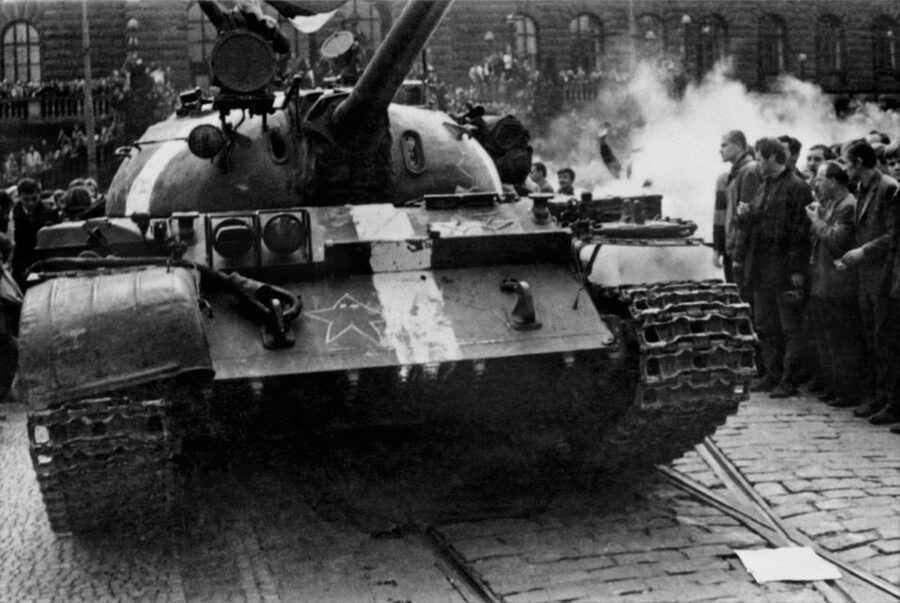
- Protest and occupation context: you walk past places tied to demonstrations, rebellions, revolutions, and Soviet occupation
- Pros and cons, not just slogans: you hear arguments for and against the system, plus what daily life looked like
Why Prague’s Communist Footprints Still Matter on This 1-2 Hour Walk
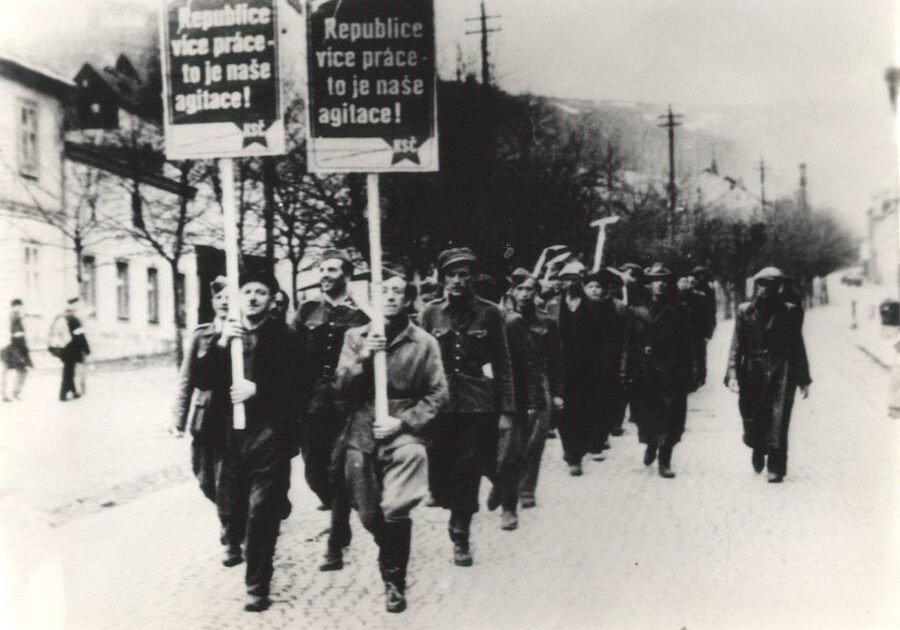
This tour works because Prague does not let you pretend the Cold War was abstract. You’re moving through the city in present tense, using real landmarks that were tied to real control, real fear, and real resistance. In a short time, you get a guided way to read the city like a document.
I also like that the tour does not sell communism as either pure evil or pure utopia. It’s framed as a system with advantages and disadvantages, with room for you to ask where the theory matched reality, and where it didn’t. That balance is what makes the walk feel useful, not just depressing.
One more thing: this isn’t a wander-and-guess stroll. It’s structured. You start with an introduction to socialism and communism, then you head to the places where you can see how ideology turned into policy and daily life.
More communism and Cold War tours:
- Prague: Communism History and Nuclear Bunker Guided Tour
★ 4.7 · 2,417 reviews - Prague Communism History and Nuclear Bunker Tour
★ 5.0 · 1,742 reviews - Communism & Nuclear Bunker Tour + 70s Canteen Lunch (own expense)
★ 5.0 · 1,036 reviews
Your Starting Point in Central Prague, and What That Means for Timing
You’ll begin at one of two central meeting points, depending on what you booked: Na Příkopě 28 or Na Příkopě 864. Either way, you’re positioned in a part of Prague that makes it easy to plug the tour into a normal sightseeing day.
Because the duration is listed as 1-2 hours, you should treat this as a walking experience you’ll want to fit right after other central sights. Don’t plan it as a buffer between far-apart neighborhoods. You’ll be happier if you keep the rest of your schedule tight and simple.
Also, keep your hands free. Large bags and luggage are not allowed, and you’ll want your ID or passport since it’s requested. If you’re traveling light already, this is easy. If you like carrying a day bag with everything in it, consider trimming what you bring.
The Theory Lesson First, Then the Street-Level Stories
Right at the start, you’ll get a comprehensive introduction to the history and theory of socialism and communism. The tour doesn’t jump straight into 1948 or 1968. Instead, you get the longer arc, including how the ideas gained traction in the 19th century and then spread through Central and Eastern Europe.
That upfront context matters. It helps you understand why Prague, as the capital of former Czechoslovakia, became a key stage for both Soviet influence and local political struggle. Without that foundation, the street stops can feel like disconnected monuments.
You’ll then move from “what the system claimed” to “what people actually lived.” Cold War survivors, meaning local guides who can speak from experience, describe daily life during the communist era. And because discussions and questions are welcome, you can steer the conversation. Ask what daily life was like for ordinary people, not just for leaders.
This is one of the reasons the tour works well for curious travelers who like cause-and-effect. You’re not only seeing locations. You’re learning what those locations were meant to accomplish.
Former Secret Communist Police Headquarters, and the Architecture of Fear
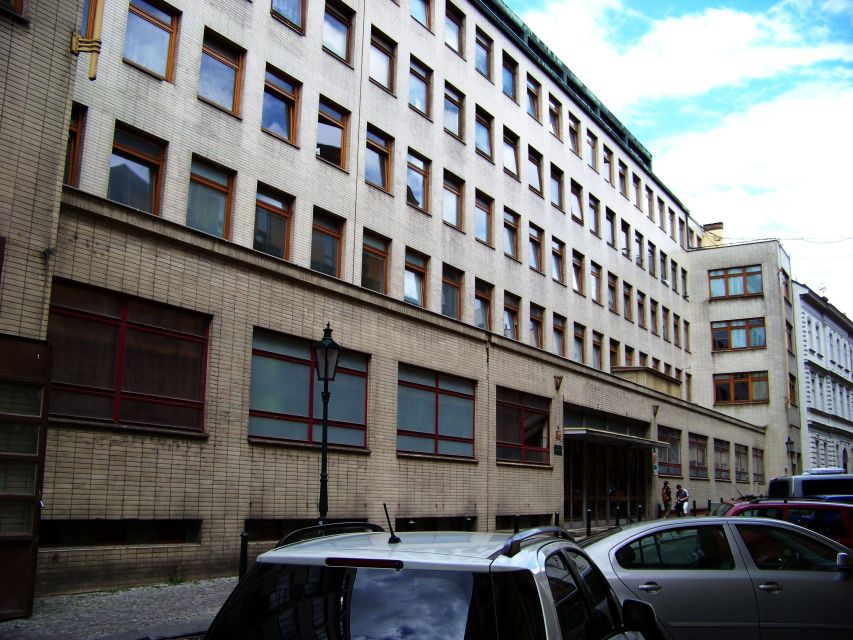
One of the most important stops is the former secret communist police headquarters. Even if you don’t know the exact building’s history before you arrive, the guide’s narration turns it into something concrete.
The value here is how the story shifts your attention. Instead of simply noticing a building’s exterior, you start listening for what made it powerful: the role it played in surveillance, repression, and shaping public life. You also begin to understand how institutions like this can affect behavior, even when you never see the machinery up close.
A walking tour like this also encourages you to look twice. You’ll notice sightlines, corners, and the way streets connect around a major site. Those details matter because control is often about visibility and access. When the guide explains the function of the place, the city layout starts making sense.
If you’re sensitive to heavy topics, plan for it. This tour deals with coercion and oppression. The good news is that it’s guided with context, so it doesn’t feel random. It feels intentional.
More walking tours in Prague:
- Prague: 3-Hour Walking Tour of Old Town & Prague Castle
★ 4.7 · 5,696 reviews - Prague: Ghost Walking Tour Where Legends Come To Life
★ 4.4 · 5,253 reviews - Prague: Jewish Quarter Walking Tour with Admission Tickets
★ 4.7 · 3,729 reviews - Prague Guided Walking Tour and Cruise with Authentic Czech Lunch
★ 5.0 · 3,627 reviews
The Stalin Statue Spot, Party Seats, and How Power Gets Displayed
Another key stop is the former spot of the Stalin statue. A statue is a simple object, but it’s also a loud message. When you stand near where something like that once stood, you can feel how ideology was supposed to look permanent and unstoppable.
From there, you move to current and former seats of the Communist party. This is where the tour becomes political in a very real, physical way. You’re learning how authority used specific spaces to signal hierarchy, legitimacy, and control.
What I like about this portion is the contrast between public symbols and the private reality the guide describes. The tour doesn’t just point to buildings. It connects them to personalities, dates, and milestones. You also get a sense of how the system staged its own credibility.
This section is also a good moment to ask yourself what replaced those symbols later. Even if the buildings changed, the urban memory can linger. The guide’s explanations help you notice that lingering effect.
Protests, Demonstrations, Revolts, and Soviet Occupation Sites You Can Still Feel
You also visit places tied to protests, demonstrations, rebellions, revolutions, and the Soviet occupation. This is where Prague stops being only about control and starts becoming about reactions to control.
Some areas still carry a depressed mood, even today. That isn’t a vague claim. It’s a clue that the guide will help you read the city emotionally as well as historically. You’re learning what people did when they rejected the system, and how conflict played out in public space.
I recommend treating this part like a timeline walk. Let your guide lay out the sequence of events. Then, as you move from site to site, try connecting what you hear to what you see. When you can connect the story to the geography, the history sticks.
If you want a stronger focus on Soviet influence after World War II, this is the segment that fits your interests best. One of the clearest takeaways from the most positive feedback is that the tour is especially suited for people who want to understand communism through the Soviet system and its reach into Europe.
What Daily Life Under Communism Looked Like, Pros and Cons Included
This tour does something I always value in history experiences. It addresses daily life, not only leaders. You’ll hear descriptions of what common life looked like during the communist era, explained by local guides who can speak from lived experience.
Then the conversation shifts to tradeoffs. You’ll hear advantages as well as disadvantages of the system. That part is important because it keeps the tour from becoming one-note. It also helps you compare what communism promised versus what it delivered.
You should also pay attention to how your guide handles contradictions. The best guides can explain why people might have supported the system at times, even while living with restrictions. The goal is understanding, not just condemning.
As you walk, I suggest you jot down two questions in your head. One about daily life, one about political power. When your guide gives you a chance to ask, you’ll get answers that matter to you, not generic facts.
Price, Group Style, and Language Fit for Real-World Value
At $50 per person for a 1-2 hour guided walk, you should judge value by intensity, not by length. This price buys you a specialist guide and an organized route through major sites tied to communism in Prague. It also buys you an approach that mixes theory, locations, and lived stories.
Language options are Czech, English, and German. If you’re comfortable speaking one of those, you’ll get the most out of the discussion and Q&A. One note from feedback is that language quality can vary by session. If fluent German matters a lot to you, choose the language you’re most confident in so you don’t have to work too hard just to keep up.
Group style is another factor. The tour can be run as a private group option, and it’s also described as a group tour. In some situations, you might end up with a more personal feel than the label suggests, especially if group numbers are low. If you love direct conversation and quick answers, a private group is the safer bet.
How to Get the Most From the Walk (Without Burning Out)
This tour is compact, so your brain will do a lot of work. To make it easier, arrive with a tiny bit of context. You don’t need to be a scholar. Just know that you’re walking through the machinery of Soviet influence and communist governance, plus the resistance that came with it.
Bring your ID, and keep your bag small since large luggage is not allowed. Wear comfortable walking shoes. Prague sidewalks can be uneven, and you’ll be on your feet throughout.
Finally, don’t treat the tour like a lecture you have to endure. Use the built-in invitation for questions. If there’s a theme you care about, bring it up. The best versions of this experience are the ones where you talk back.
Should You Book This Back to Communism Walking Tour?
Book this tour if you want a short, structured way to understand communism in Prague through real places and real stories. It’s especially worth it if you’re curious about Soviet-era influence after World War II and you’d like both the theory and the street-level reality.
Skip it if you’re looking for a broad overview of every communist movement and example across the world. This walk has a clear focus, and it’s not trying to cover everything.
If you do book, I’d say your odds of a great experience go up if you choose the language you’re strongest in, show up on time, and plan to ask at least a couple of questions. When you do that, the $50 feels less like a ticket price and more like paying for a guided way to understand a complicated city chapter without getting lost in it.
FAQ
How long is the Prague back to communism walking tour?
The duration is listed as 1-2 hours.
Where does the tour start?
The meeting point may vary depending on the option booked. Two starting locations are Na Příkopě 28 and Na Příkopě 864.
What language is the live guide available in?
Live tour guides are available in Czech, English, and German.
Is the tour wheelchair accessible?
Yes, the tour is wheelchair accessible.
Do I need to bring ID?
Yes. You should bring your passport or ID card.
Are large bags or luggage allowed?
No, luggage or large bags are not allowed.
Does the tour include a professional local guide?
Yes. It is led by professional tour guides, with local guides included.
Can I ask questions during the tour?
Yes. Discussions and questions are more than welcome.
What is the cancellation policy?
Free cancellation is offered up to 24 hours in advance for a full refund.
How much does it cost?
The price is $50 per person.
Recently reviewed around Prague
- 1 Hour Prague Party Hummer Limousine Ride★ 5.0 · 27 reviews
- 1 hour ride in vintage limousine★ 5.0 · 49 reviews
- The Clinic: Escape room in Fun Arena Prague★ 4.7 · 3 reviews
- Tour of Prague Castle in italian language ticket included★ 4.9 · 25 reviews
- The essentials of Prague★ 5.0 · 3 reviews
- Prague: Lobkowicz Palace Ticket & Audio Guide★ 4.5 · 130 reviews
- The best Trike Bike Prague city tour★ 5.0 · 3 reviews
- Prague Castle: Admission Ticket With Transfer And Audioguide★ 4.5 · 111 reviews
Communism Tours, compared.
Communism History and Nuclear Bunker Guided Tour
Read our review →
Prague Communism History and Nuclear Bunker Tour
Read our review →
Communism & Nuclear Bunker Tour + 70s Canteen Lunch (own expense)
Read our review →
Communism and Bunker Tour with 70s Canteen Lunch
Read our review →
Browse the lists this tour appears in