
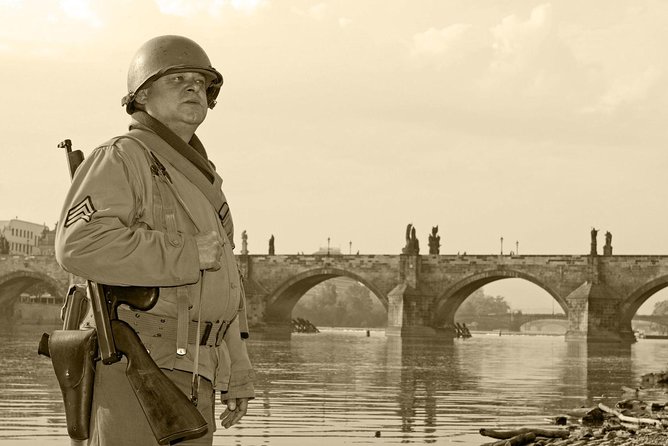
Reviewed · WWII TOURS
Prague Communism and World War II Walking Tour
Prague’s 20th-century story is written on street corners and building facades, and this walking tour strings it into one clear line as you move across town. You get a city orientation plus the human stories behind the Nazi years and the communist era, told by local guides such as Tomas, Martin, and Maria.
Two things I really like are the walk’s strong chronological flow and the way the guide explains what daily life felt like, not just who ruled. One drawback to consider: the subject matter is heavy, and the pace is still a real walking morning, so plan for comfort and listen for context even when politics gets intense.
You start at Křižovnické náměstí around 10:00 am in central Prague, and the tour runs about 2 hours (up to 25 people). You’ll use a mobile ticket, and the tour is offered in English.
Key highlights to look for
- A tight historical storyline from WWII into Soviet-style communism and the road to 1989
- City orientation fast, since the route crosses Old Town into the New Town core
- Real names and real events, including Operation Anthropoid and Václav Havel
- Emotion meets politics at Wenceslas Square, where the tour connects 1968 and 1969
- Small-group feel, with many people reporting a much more intimate experience when numbers are low
- Photo-friendly stops outside, with the castle viewpoint worked into the walk
Why This Prague WWII and Communism Walk Feels Different
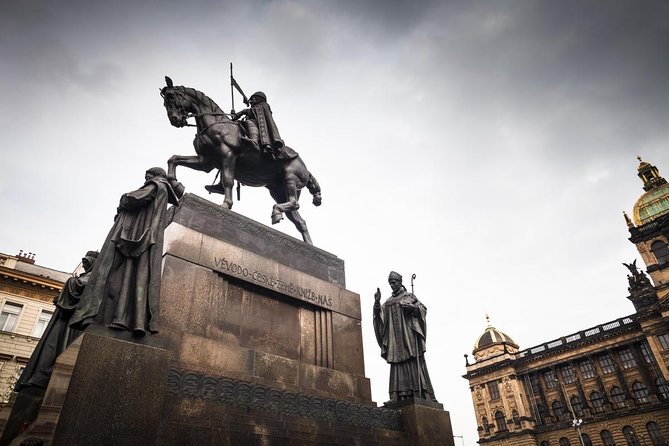
This tour works because it does not treat history like a textbook. Instead, it treats Prague like a living archive. As you walk, you see the places where regimes left marks, then you hear what those marks meant for real people. You end up with a mental map that makes the rest of your trip easier, especially if you want to understand why certain neighborhoods feel the way they do.
I also like that it balances big events with lived experience. The guide’s job is not only to say what happened, but to explain what it changed. That means you’ll hear about the shift from Czech lands under the Austrians to a democratic Czechoslovakia, then how the Nazi Protectorate of Bohemia and Moravia changed daily life, and finally how the communist system turned a society upside down.
Finally, there’s the tone. Expect a guided walk with serious moments, but also some lighter, human detail about what people did once freedom returned. One of the best signs is that multiple guides on this tour are locals with strong command of the topic, including people with personal connections to the era. That kind of storytelling often makes the facts stick.
More WWII and resistance tours in Prague:
- Prague: WWII Guided Tour & The Crypt of Operation Anthropoid
★ 4.7 · 1,030 reviews - WWII in Prague Tour & The Crypt of Operation Anthropoid
★ 5.0 · 817 reviews - Small-Group World War 2 & Operation Anthropoid Tour in Prague
★ 5.0 · 231 reviews
Starting at Křižovnické náměstí, Then Learning Prague’s 20th-Century “Map”

You begin at Křižovnické náměstí, in the Old Town area, near a classic Prague-crossing point for orientation. The location matters because it places you close to two big anchors: the Old Town core and the path toward the castle viewpoint. The tour’s goal here is simple: help you get your bearings quickly before the history heavy-lifts start.
You’ll hear an opening frame that sets the stage up to the WWII years, and then you build from there. Guides tend to use this first stop to lock in themes and terms so later parts make sense. That means when you reach the New Town and Wenceslas Square, you are not just collecting dates. You’re following cause and effect.
Practical tip: arrive a few minutes early so you can settle your phone for the mobile ticket. The tour meets near public transport, so it’s usually easy to get there, but the start is still at street level and you’ll want time to find the group before the story begins.
The Prague Castle View and the Stalin Statue That Once Dominated the City
The first stop includes a standout geography lesson. From the area near the Old Town Bridge Tower, you get a panoramic look toward Prague Castle, the long-time seat of Czech rulers and presidents. It’s a great way to see why this city’s power centers feel so dominant in the landscape.
Then the guide brings in a detail that turns the view into a history lesson. Not far from the castle stood the largest statue of Joseph Stalin in the world. Even if you’ve seen plenty of political monuments elsewhere, this one hits differently because it connects scale, propaganda, and control, all in one image.
From there, you walk with the guide step by step through major turning points. You’re building a sense of how quickly Prague’s “center of gravity” shifted in the 20th century, not just politically but in what people were taught to admire and fear.
If you’re a history buff, this is one of your best value moments. You’re not paying for museum entry. You’re getting a high-impact story tied to a viewpoint you’d likely want to see anyway.
New Town Politics: Austria, Democracy, and the Nazi Protectorate
The walk moves into Nove Město, and this is where the tour gets sharp and analytical. You start hearing about how Czech lands moved from the grip of the Austrian monarchy toward an independent Czechoslovak democratic state. The guide also touches on how strong the economy was in that period and how, after 1933, the region’s politics were not evenly grim everywhere.
This matters because it stops you from thinking of WWII as a single line. Instead, you learn that Czechoslovakia had democratic institutions before the storm arrived, which makes the later collapse feel more personal.
Then the story turns to WWII under the Nazi Protectorate of Bohemia and Moravia. The emphasis is on suffering, and the guide explains how occupation reshaped daily life and civic freedom.
One of the most memorable parts here is Operation Anthropoid, presented as the only successful assassination of a senior Nazi leader during WWII. It’s the kind of event that’s easy to mention in passing elsewhere, but much harder to understand emotionally. On this tour, it’s placed in context so it doesn’t feel like trivia. It becomes a piece of the resistance puzzle, tied to how people thought and acted when power was brutal.
A drawback worth noting: if your interest is narrowly focused on one topic, like only communism or only WWII, this section may feel like it covers too many layers at once. The upside is that you’ll get the connections you need. Prague’s 20th-century history is braided, and the walk shows that braid.
More communism and Cold War tours:
- Prague: Communism History and Nuclear Bunker Guided Tour
★ 4.7 · 2,417 reviews - Prague Communism History and Nuclear Bunker Tour
★ 5.0 · 1,742 reviews - Communism & Nuclear Bunker Tour + 70s Canteen Lunch (own expense)
★ 5.0 · 1,036 reviews - Prague: Communism and Bunker Tour with 70s Canteen Lunch
★ 4.8 · 250 reviews
Wenceslas Square: Prague Spring, 1969 Self-Sacrifice, and 1989’s Turn
The final stretch hits Václavské náměstí (Wenceslas Square), and it is emotionally intense. The guide starts with the optimism of Prague Spring in 1968, then pivots to the reality check: Soviet tanks invading Prague. The tour also references the shooting at the National Museum building on the square, which helps you visualize how quickly hope turned into violence.
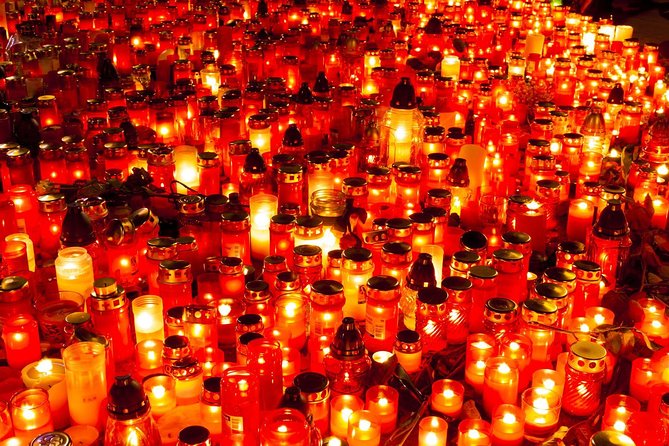
Then you move from 1968 to 1969, when the tour honors the memory of young students who burned themselves alive to unite the nation against the common enemy. That moment is not just a shocking fact. It’s presented as a turning point in how resistance moved from politics into existential sacrifice. If you want to understand why later protests felt different after that, this is the stop that explains it.
As the timeline heads toward the 1970s and 1980s, you’ll hear about the longer, grinding path that led to the Velvet Revolution of 1989. This is where the tour’s storytelling pays off. You already understand the systems, so the victory of democracy after more than 40 years of communism does not land as a generic end of the Cold War. It lands as a hard-won shift.
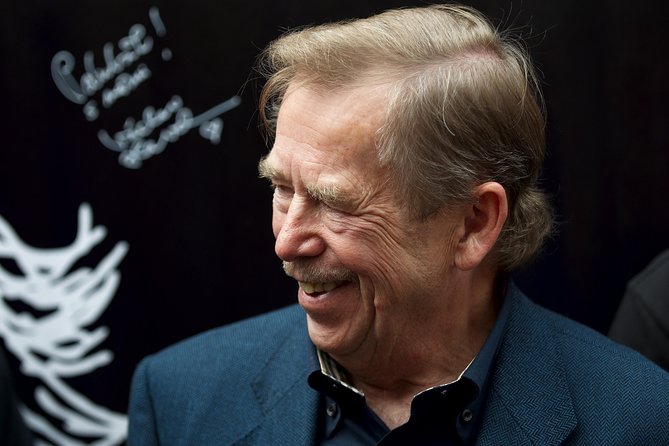
You’ll also hear about key figures and moments, including Václav Havel, the role of courageous students, brutal police forces, and clashes at Narodní třída. The guide often adds humor and obscure stories about the early days of freedom, which can be surprisingly helpful. It reminds you that liberation did not erase ordinary human habits overnight.
One practical note: Wenceslas Square is a major landmark area. Even with low crowds on many mornings, you should still expect noise and foot traffic. The guide keeps it coherent, but you’ll benefit if you’re mentally ready to absorb a lot.
The Local Guides Matter More Than You Think
A tour like this lives or dies by the guide. On this one, you can feel the difference between someone who knows facts and someone who can connect them to real lived experience.
The most praised guides include locals such as Tomas, Martin, Maria, and others named in feedback like Dominick, Michal, and Zdenek. What’s consistent across them is clear explanation plus the willingness to answer questions without rushing you. In some cases, guides share personal ties to the era, including firsthand student experience during the Velvet Revolution. Even when that personal angle is not part of your specific guide’s story, you’re still likely to hear how life felt, not only what the leaders announced.
Another detail I appreciate: guides often talk in a conversational way. One example from guide style is that the tour can stretch longer when your group has questions and your guide stays engaged. That’s not guaranteed, but it signals a thoughtful approach.
If you want the best experience, bring questions that go beyond dates. Ask things like what daily life was like under censorship, how people navigated fear, or what people believed when propaganda filled public space. The tour is set up for that kind of curiosity.
What the Walking Portion Is Like (And How to Prepare)
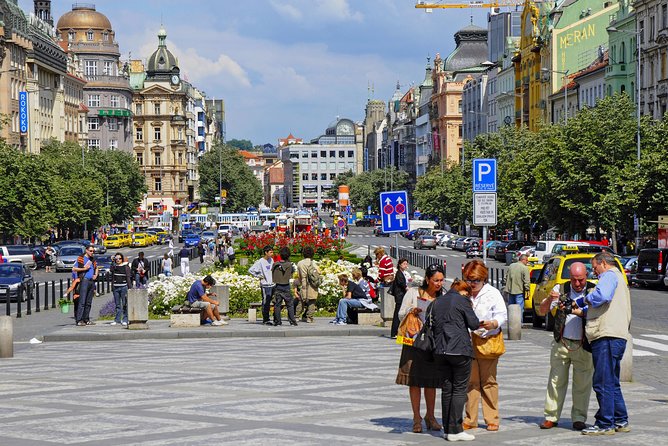
This is a walking tour, and while it is only about 2 hours, it still covers real city ground. The good news is that the route is laid out across central Prague, so you get plenty of natural “break points” at the major story locations rather than long stretches of uninterrupted marching.
Wear comfortable shoes. More than one guide’s feedback highlights that it’s an active walk, and since the topic is intense, you’ll want your body to feel stable so your attention stays on the narrative.
Also plan for language clarity. The tour is offered in English, but you’ll still want to listen actively. The historical storyline spans multiple regimes and terms like Protectorate, Operation Anthropoid, and Velvet Revolution. If you catch one term and miss another, it can be hard to connect later, so stay present.
Finally, bring water or a light snack if you need one. Food and drinks are not included, and the tour’s format is built around walking and story, not refueling.
Value: What $30.12 Gets You in Real Terms
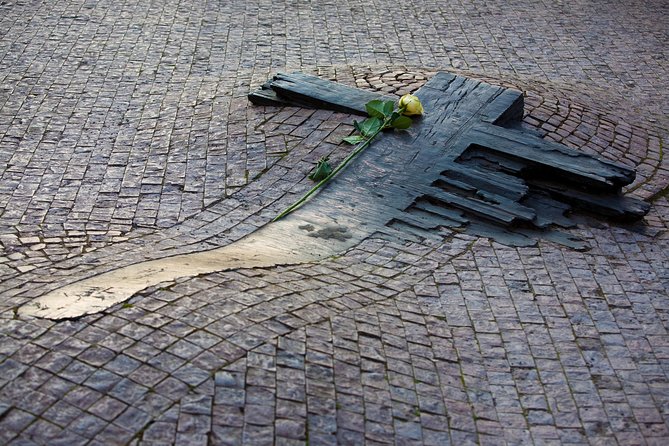
At $30.12 per person for about 2 hours, the value comes from three places.
First, you are paying for a skilled guide to explain the 20th century in a way that links events to the places you’re standing. In a city full of self-guided history, that kind of guided structure often saves you time and confusion.
Second, the stop set is organized so you’re not dependent on paid museum tickets. The tour notes admission ticket free at the listed stops, which helps keep your day budget under control. You’re spending your money on interpretation, not entrances.
Third, this is priced like a tour but can feel like a conversation. The maximum group size is 25, and feedback includes cases where the group was very small, which tends to make Q and A easier. When the group is small, you get more attention, and the guide can tailor explanations to your interests.
If you like Prague primarily for architecture and want history only as a side dish, this might be too heavy. But if you want to understand why Prague’s streets and squares carry such emotional weight, the price feels reasonable for what you take away.
After the Tour: Use the Stories to Better Explore Prague
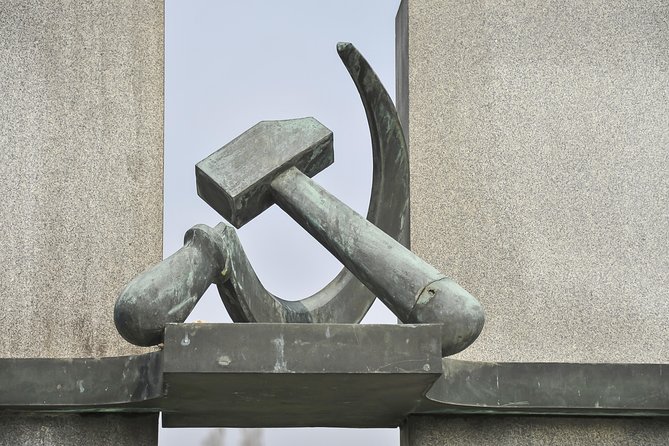
This tour ends back in central Prague, so you’re well positioned to keep exploring on your own right away. Since the guide covers political turning points and key personalities, your independent sightseeing becomes more meaningful. You’ll look at plaques and buildings with more context, and you’ll recognize how the city’s public spaces relate to political power.
A smart move is to ask your guide for practical ideas for the next step while you’re still in the historical frame. Feedback from guide styles suggests that guides often share recommendations for local beer and food after the walk. That’s not part of the ticket, but it’s a useful perk because it turns your day into an experience, not just an education.
You might also want to add a dedicated museum visit on your own if this topic keeps pulling at you. One suggestion that came up was the Museum of Communism, which can complement what you learn on the street.
Should You Book This Prague Communism and WWII Walking Tour?
Book it if you want a guided, chronological explanation of how Prague moved from WWII pressure to communism, then toward the Velvet Revolution. You’ll get a fast orientation, strong story structure, and key events like Operation Anthropoid, Prague Spring, and the events around Wenceslas Square in a way that’s hard to recreate on your own.
Skip it if you prefer lighter sightseeing with minimal politics, or if you want only one time period and no connections between them. Also, if walking long stretches is difficult for you, you should plan accordingly, since this is still a proper city walk.
My rule of thumb: if you enjoy understanding how power reshapes ordinary life, this is a high-value morning in Prague.
FAQ
What’s the duration of the Prague Communism and World War II Walking Tour?
It lasts about 2 hours.
Where does the tour start?
The tour starts at Křižovnické náměstí, 110 00 Prague 1-Staré Město, Czechia.
What time does the tour start?
The start time listed is 10:00 am.
Is the tour offered in English?
Yes, it is offered in English.
How much does it cost?
The price is $30.12 per person.
Is food included?
No. Food and drinks are not included.
How big is the group?
The tour has a maximum of 25 travelers.
Can children participate?
Children must be accompanied by an adult.
Can I cancel and get a refund?
Yes, free cancellation is available if you cancel up to 24 hours in advance for a full refund.
More Walking Tours in Prague
- Prague: 3-Hour Walking Tour of Old Town & Prague Castle
★ 4.7 · 5,696 reviews - Prague: Ghost Walking Tour Where Legends Come To Life
★ 4.4 · 5,253 reviews - Prague: Jewish Quarter Walking Tour with Admission Tickets
★ 4.7 · 3,729 reviews - Prague Guided Walking Tour and Cruise with Authentic Czech Lunch
★ 5.0 · 3,627 reviews
Recently reviewed around Prague
- Savor 10 Course Dinner in Chef’s Kitchen★ 5.0 · 20 reviews
- Prague for Men★ 5.0 · 11 reviews
- Private Lesser Town tour – Historical Treasure Hunt★ 4.5 · 7 reviews
- Photographer in Prague – Couple, engagement & portrait photoshoot★ 5.0 · 22 reviews
- Ebike Sunset tour of Prague★ 5.0 · 19 reviews
- 1-Hour Ride Across the Prague in Mini Hot Rod Car★ 5.0 · 37 reviews
- The Best of – private tour with PERSONAL PRAGUE GUIDE★ 5.0 · 107 reviews
- Religious Prague Walking Tour★ 4.5 · 6 reviews
WWII Tours, compared.
WWII Guided Tour & The Crypt of Operation Anthropoid
Read our review →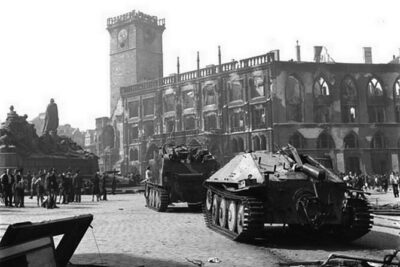
WWII in Prague Tour & The Crypt of Operation Anthropoid
Read our review →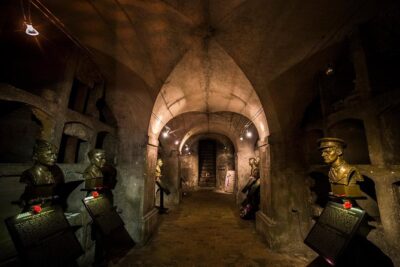
Small-Group World War 2 & Operation Anthropoid Tour in Prague
Read our review →
World War 2 and Operation Anthropoid Walking Tour
Read our review →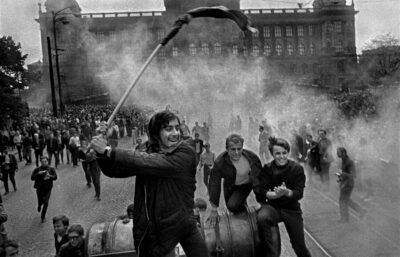
Browse the lists this tour appears in