
Reviewed · PRAGUE
Prague, St. Martin: The Best of World & Czech Music
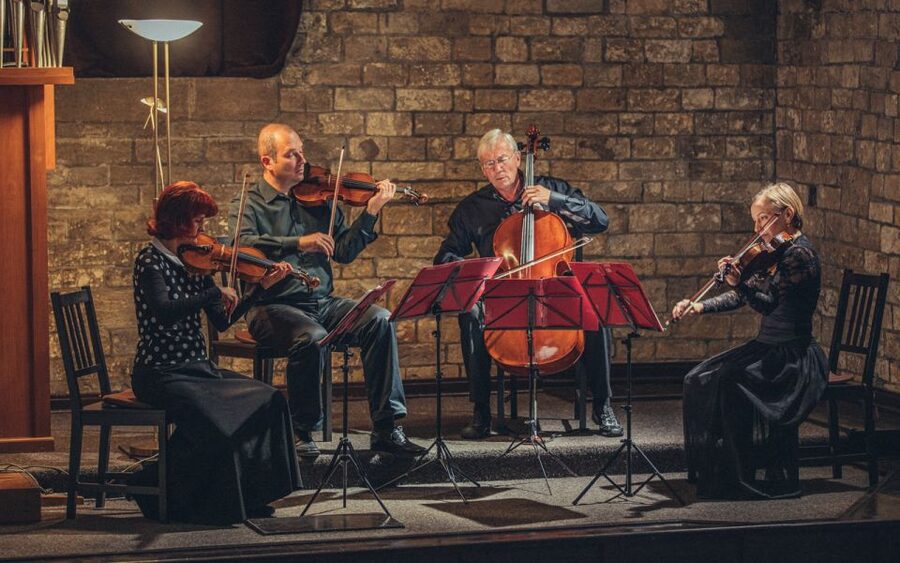
A classical concert in Prague is common, but doing it in the 12th-century St. Martin in the Wall Church is the real draw. I love the way the small string quartet format keeps you close to every bow stroke, and I love the smart Czech-and-world program that jumps from Smetana to Brahms without feeling random.
One possible drawback is pacing. In this church, sound hangs in the air, so if the ensemble takes a faster tempo than you expect, a few intricate details can blur, and the concert may run a touch shorter than the advertised time.
Key Highlights You Should Know Before You Go
- A historic venue with serious acoustics, built on a Romanesque 12th-century base and later reshaped in Gothic and Baroque styles
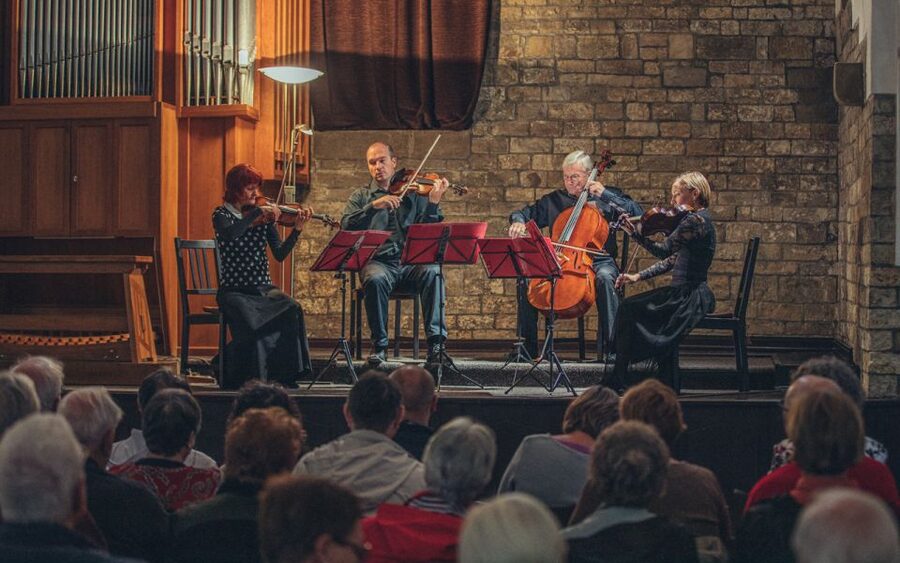
- Old Prague Music Ensemble string quartet performance, with orchestral favorites adapted for strings
- A Czech centerpiece with Smetana’s Vltava (The Moldau) plus Dvorak selections
- A lineup of familiar masterworks, from Bach and Mozart to Bizet (Carmen) and Vivaldi’s Four Seasons
- Close, intimate listening, since this is a small church and the music fills the space
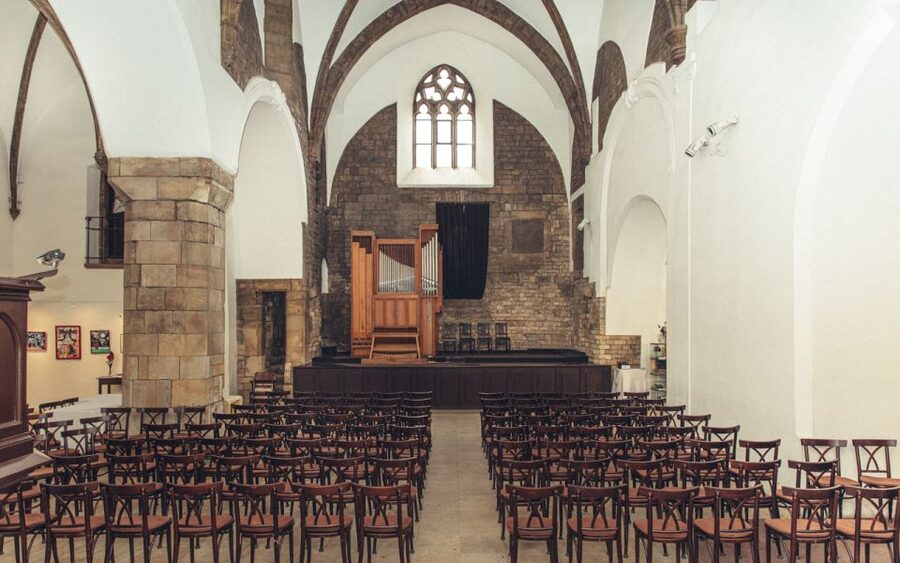
Entering St. Martin in the Wall, Prague’s Medieval Sound Chamber
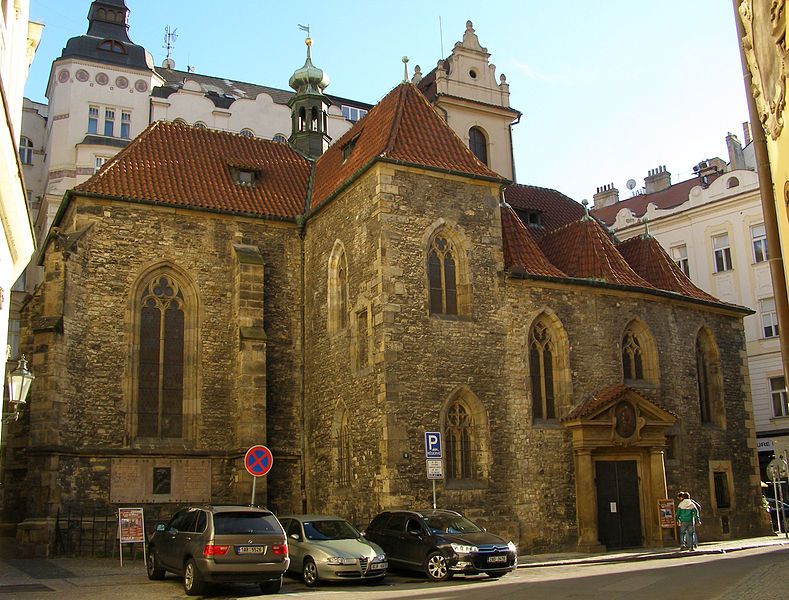
If you like your Prague experiences a little less cookie-cutter, this concert hits the sweet spot. You get famous classical music, but you also get it in a church that looks like it has absorbed centuries of voices. The setting matters, because in a venue like this, you do not just listen, you feel the music settle into the stone.
The church sits at Martinska 8, near Old Town Square and Wenceslas Square. That location is convenient when your day is already packed with walking, and it also makes the concert a nice low-effort evening plan.
The performance itself is about 70 minutes. Plan to arrive a few minutes early so you can get inside, find your spot, and settle in before the first notes.
Other things people book in Prague:
- Prague: 50-Minute Sightseeing Evening Cruise
★ 4.2 · 33,780 reviews - Prague: Medieval Dinner with Unlimited Drinks
★ 4.4 · 19,847 reviews - Prague: Castle Tour with Local Guide and Entry Ticket
★ 4.6 · 10,422 reviews
Getting There Fast, From Mustek to Narodni Trida
This is the kind of activity that becomes easy once you know which side of the city you’re on. If you’re near Old Town Square, you’re looking at about a 15-minute walk. That is a pleasant stroll if you want a built-in warmup, or a quick dash if Prague weather turns.
For public transport:
- Metro: Mustek (lines A and B) and Narodni Trida (line B)
- Trams: lines 6, 9, 18, 22, 91, with the stop at Narodni Trida
If you’re driving, the nearest parking point given here is by the National Theatre (Ostrovni 1). Personally, I find parking in central Prague less fun than walking or metro, but it’s good to have a stated option.
The good news: the activity ends back at the same meeting point. So you are not guessing where you need to go next while you’re still thinking about the last movement.
Why This Church Feels Special, Romanesque Base to Baroque Touches
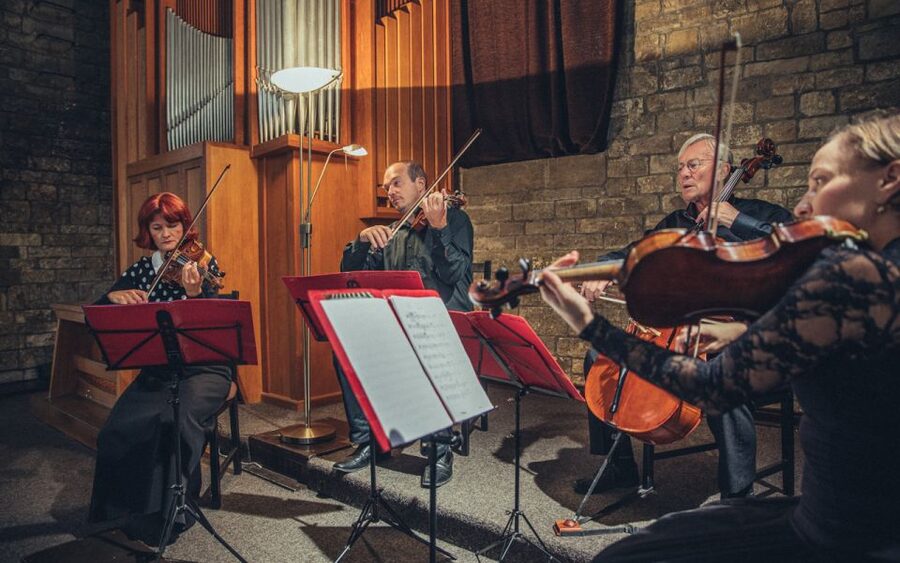
St. Martin in the Wall is a name that says a lot. One wall of the church borders directly with the adjacent house, so the architecture feels tight and lived-in, not grand and detached.
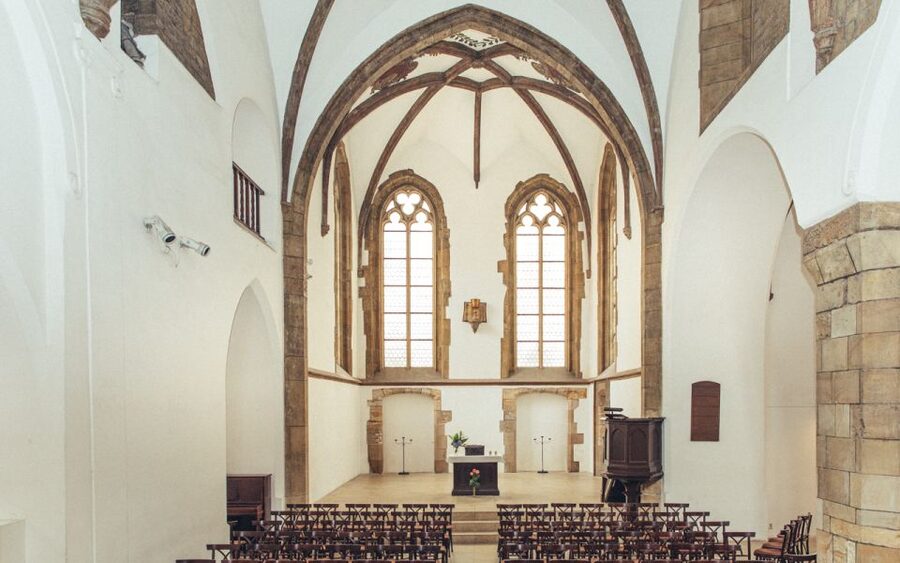
The building’s Romanesque base dates to the 12th century. Later changes brought Gothic and Baroque modifications, which means you’ll likely notice differences in shapes, details, and how surfaces catch the light.
It also helps to know the church once served as a Utraquist Church center, supported by wealthy burghers. That piece of context matters because it explains why this space feels cared for, not temporary. And yes, the famous Baroque sculptor Ferdinand M. Brokoff is buried here, adding another thread of Prague art history to your evening.
None of this requires you to be a medieval architecture expert. You’ll just feel it when you sit down. The room is small enough to feel personal, yet old enough that you can sense the way sound behaves.
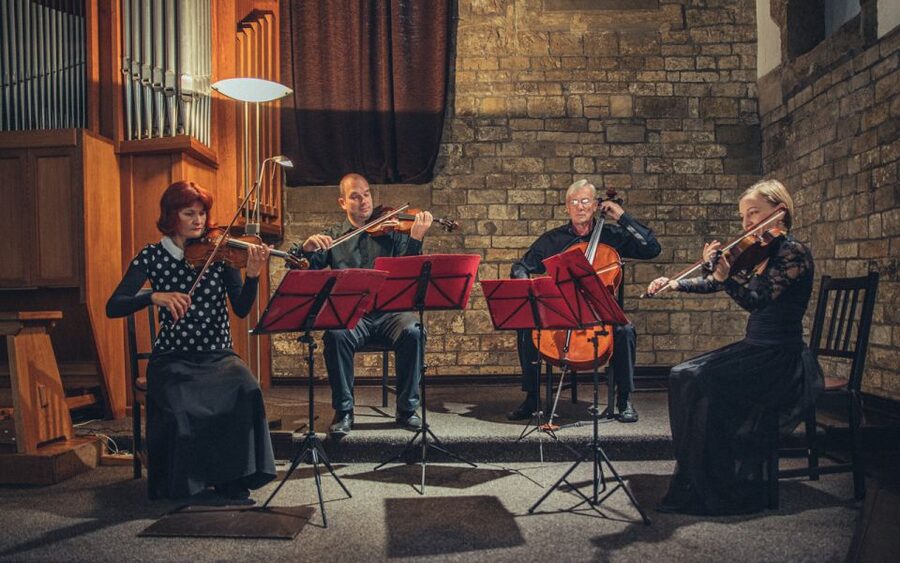
The Old Prague Music Ensemble: A String Quartet in a Big-Feeling Space
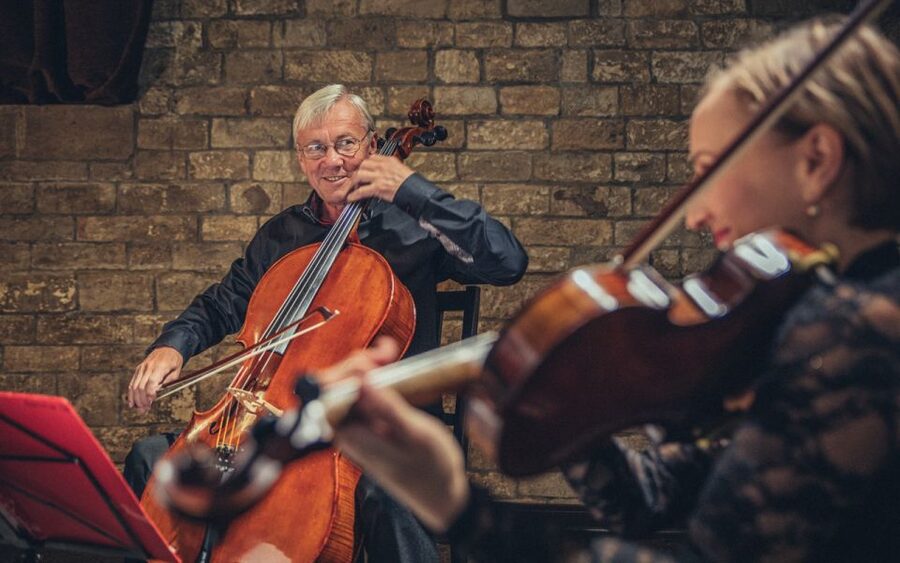
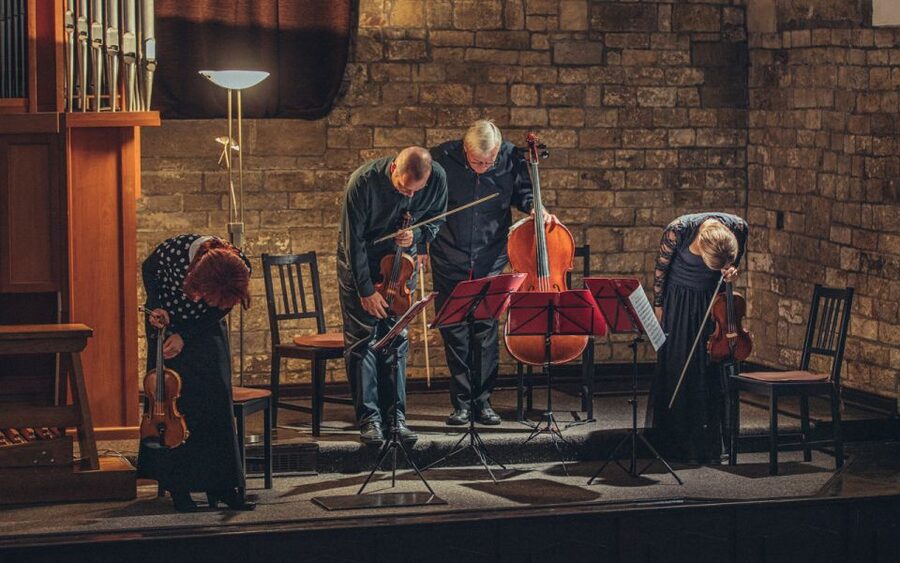
The performers are the Old Prague Music Ensemble, billed as a string quartet. That matters because a quartet changes how you experience orchestral works. Instead of a full symphony, you get concentrated voices, where harmony and melody pass between instruments like a conversation.
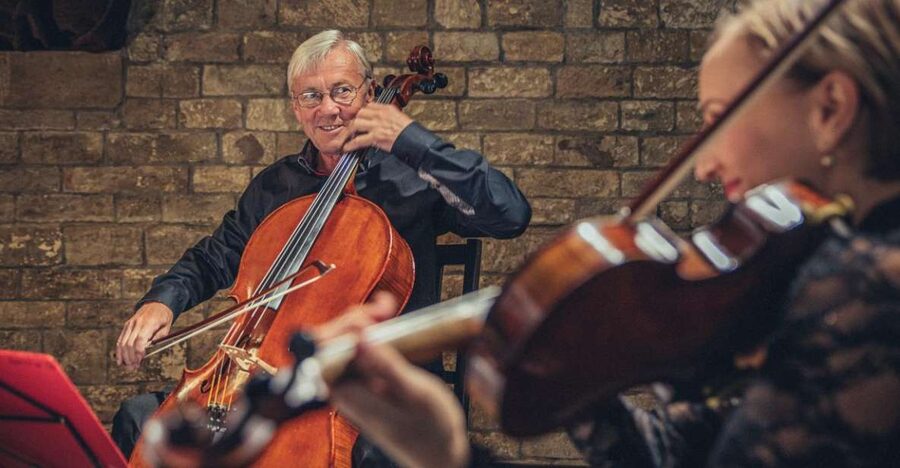
In a small church, the quartet format can be magical. You can often hear the micro-details: bow changes, how vibrato swells, and how players balance one line against another. It also makes the pacing feel more obvious. When they play gently, it’s tender. When they speed up, you can feel the rush.
The ensemble is presenting The Best of World and Czech Music, so expect a program that mixes Czech pride with international favorites. The goal is not to challenge you with deep cuts. It’s to give you the kind of pieces you recognize, and then help you hear what makes them work.
Same city, a completely different kind of day:
- Prague Castle 2.5-Hour Tour Including Admission Ticket
★ 4.7 · 8,927 reviews - Prague: Oldtown, Medieval Underground & Dungeon History Tour
★ 4.2 · 8,244 reviews - Prague: Vltava River Night Cruise with Buffet
★ 4.3 · 7,338 reviews - Prague: Panoramic Vltava River Cruise
★ 4.1 · 7,311 reviews
The Set List, Piece by Piece: What to Listen For
This is a mixed program, and that is a good thing. It keeps your ears awake and gives you multiple ways in, whether you love dramatic melody, rhythmic energy, or lyrical calm.
Smetana: Moldau (Vltava)
Smetana’s Moldau is one of the big “Prague classics” for a reason. Even in a string quartet setting, it tends to sound like water moving, and it often brings out the emotional arc you get from the original orchestration. Listen for how the theme returns and evolves, almost like you’re watching the river widen.
Dvorak: Humoresque, Largo, Walses
Dvorak shows up in three moods, and that’s a smart way to give you variety. The Humoresque brings a light touch, while the Largo is where the quartet can get very expressive. The Walses add motion, and in a church like this, the rhythm tends to feel extra intimate because the sound reflects back quickly.
Pachelbel: Canon in D
The Canon is famous, almost to the point of being background music for some people. Here, you’ll likely notice something different: how each repeating line gains clarity when the instruments are close and the room is small. It’s also a great “listening reset,” because the structure is so steady.
Bizet: Carmen Intermezzo and Overture
Carmen brings drama and punch. In string form, the energy is often sharper, because the quartet can lean into rhythm and articulation. The Intermezzo can feel surprisingly tender, and then the Overture turns it up.
Vivaldi: Four Seasons (Winter)
Vivaldi’s Winter works well in this setting because the music often relies on contrast and vivid phrasing. Even without a full orchestra, the quartet can paint the cold and the urgency through dynamics and bowing. If you’ve ever heard this as a dramatic listening track, here you get to hear how the drama is built note by note.
Bach: Air
Bach’s Air tends to be the calm breath in the middle. In a small church, slow music can feel very close, almost like it’s hovering just in front of you. Pay attention to how the line sings, and how the harmonies hold without getting heavy.
Mozart: Divertimento in F
Mozart in a quartet setting usually feels elegant and clean. The Divertimento can come off as playful, but it is still carefully structured. If you like hearing how musical ideas are passed around, Mozart is one of the best composers for that.
Albinoni: Adagio
This is often the “hold-your-breath” moment. The Adagio can turn into an emotional spotlight, especially when the church acoustics make sustain and decay feel longer than they would in a modern hall. The sound can feel cinematic, but it stays human because it is still a small ensemble.
Brahms: Hungarian Dances Nos. 5 and 6
Brahms closes with energy. Hungarian Dances bring rhythmic lift and character, and they are a fun way to end, because you get a sense of celebration rather than a quiet fade. In a venue like this, the final cadence can feel extra satisfying because the space has already “collected” your attention.
What the 70 Minutes Feel Like in Real Terms
This concert is about time well spent. It is short enough that you do not lose a whole evening, but long enough for the program to create its own emotional arc.
The church’s acoustics are a big part of why the concert works. One reason people love this specific setup is that the sound can pull out detail from the instruments. In other words, you hear not just what the quartet plays, but how they shape it.
Still, there is a practical consideration: the room has natural echo. If the musicians choose a brisk tempo, the echo can make faster passages feel less crisp. The good news is that slower, lyrical selections like the Adagio and Largo usually benefit from the same acoustics.
You should also expect rules that keep the focus on the performance. Flash photography and video recording are not allowed. Bring a normal camera-free mindset, and you’ll enjoy the music more.
Practical Notes That Affect Your Enjoyment
A concert can be wonderful or frustrating based on a few small details, so here’s what you can control.
First, consider that there is no cloakroom included. If you have a heavy coat, big bag, or umbrella, plan how you’ll store it. Since this is a church setting, you do not want to spend the concert worrying about where your stuff goes.
Second, there is no strict dress code, but elegant attire is welcomed. Translation: you do not need formal wear, but clean and comfortable is a safe bet. You want to feel good sitting for about an hour.
Third, the performance is listed as wheelchair accessible. If you use a wheelchair, it’s worth thinking ahead about arrival time so you can get settled calmly before music starts.
Finally, this outing is noted as not suitable for children under 5. If you travel with toddlers, you may want to plan a different activity that allows flexibility.
Value Check: Is $28 Worth It for Prague Music?
At $28 per person, this concert is priced like a “special evening” rather than a budget museum entry. But for what you’re getting, it’s a fair deal.
You’re paying for three things at once:
- A ticket to a live performance by a named ensemble
- A historic venue with built-in acoustics, not a generic concert hall
- A program packed with recognized classical names, including Czech staples
If you’re already spending money on guided tours and transport, this is one of those Prague experiences that gives you a different angle on the city without draining your energy. It’s also a good choice if you want something cultural but not overly structured.
The one value question you should ask yourself is simple: do you enjoy classical music when it is played by a small ensemble? If yes, this is strong value. If you need a full orchestra to feel satisfied, you may find it different, but not worse.
Who This Concert Suits Best
This works especially well for:
- People who want a classical evening that feels authentic and not touristy
- Travelers who enjoy hearing famous pieces in a new arrangement for strings
- Anyone who likes Prague’s older buildings and wants a reason to sit inside one
- Couples and solo travelers, since the experience is quiet and intimate
It may not be ideal if you hate rules about electronics or you need long intermission breaks. But if you’re okay with a focused, short program in a small church, this is an easy win.
Should You Book This Prague Concert?
Yes, I’d book it if you want a short, meaningful evening that blends Czech pride with world-famous composers, all in a church that was shaped by centuries of change. The best part is the combination of close string quartet sound and the real character of St. Martin in the Wall.
Skip it only if you dislike classical music unless it’s performed by a large orchestra, or if you need perfectly predictable running time and slow pacing. Otherwise, arrive early, switch your phone to quiet, and let the music do what it does best in the stone room.
FAQ
Where does the concert start?
The meeting point is St. Martin in the Wall Church, Martinska 8, 11000 Prague. The activity ends back at the same meeting point.
How long is the concert?
The concert runs about 70 minutes. The duration is listed as 1 hour to 65 minutes, so check the available starting times for the exact schedule.
What music will be performed?
The program includes Smetana’s Moldau, Dvorak selections including Humoresque, Largo, and Walses, plus works by Pachelbel, Bizet (Carmen Intermezzo and Overture), Vivaldi (Four Seasons, Winter), Bach, Mozart, Albinoni, and Brahms (Hungarian Dances Nos. 5 and 6).
Is there a dress code?
There is no dress code, though elegant dress is welcomed.
Are photos or videos allowed?
Flash photography is not allowed, and video recording is not allowed.
Is a cloakroom included?
No. A cloakroom is not included.
Is the church wheelchair accessible, and is it okay for small children?
The venue is listed as wheelchair accessible. It is not suitable for children under 5 years.
Recently reviewed around Prague
- 1 Hour Prague Party Hummer Limousine Ride★ 5.0 · 27 reviews
- 1 hour ride in vintage limousine★ 5.0 · 49 reviews
- The Clinic: Escape room in Fun Arena Prague★ 4.7 · 3 reviews
- Tour of Prague Castle in italian language ticket included★ 4.9 · 25 reviews
- The essentials of Prague★ 5.0 · 3 reviews
- Prague: Lobkowicz Palace Ticket & Audio Guide★ 4.5 · 130 reviews
- The best Trike Bike Prague city tour★ 5.0 · 3 reviews
- Prague Castle: Admission Ticket With Transfer And Audioguide★ 4.5 · 111 reviews