
Reviewed · PRAGUE CASTLE TOURS
Prague Castle Walking Tour
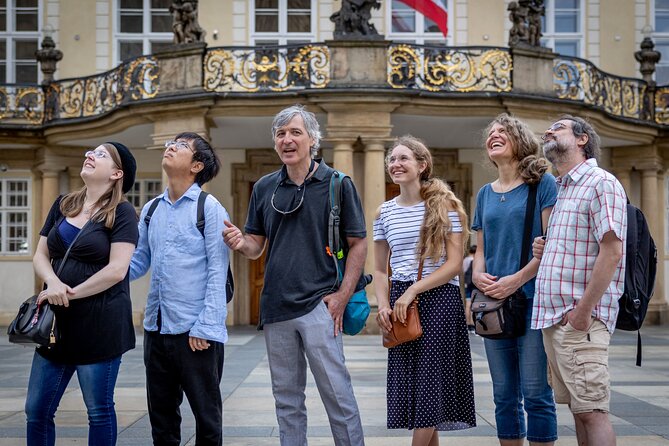
Prague Castle can feel like a stone maze, so this small-group walking tour is interesting because you get the big picture fast, then you walk it in a smart order. I like the small group size (max 8) because you can actually hear your guide, not just your shoes. I also like that the focus is architecture and Czech history, so the buildings stop being random and start meaning something. One drawback to plan for: Prague Castle entrance is not included, so you may still need to buy tickets to go inside key spots.
You start in Malá Strana, then climb toward Hradčany Hill. Along the way, you learn why the castle complex got rebuilt again and again through Romanesque, Gothic, Baroque, Rococo, Renaissance, and Neoclassical eras. And yes, parts of the story include destruction too, like artillery damage, plunder, and the slow wear-and-tear of neglect.
When the main castle time ends, the walk continues around the Royal District with stops like St. Vitus Cathedral, St. George’s Basilica, Golden Lane, and even the area tied to the Gestapo prison site called Domeček, plus Strahov Monastery and its ancient library. If you hate crowds, pick an afternoon slot, since that timing often feels calmer.
Key things to know before you go
- Max 8 people, so the guide can actually pace your group and answer questions
- Architecture-focused walk, with major styles you can spot as you move
- 3 hours on foot, including time at big-ticket spots like St. Vitus Cathedral and Vladislav Hall
- Extra admission may be required for interior visits, even though parts of the complex are free to access
- English-language historian guide, with a storytelling style people remember
- Choose morning or afternoon, with afternoon often a better bet for comfort
Why a small-group Prague Castle walk works better than wandering alone
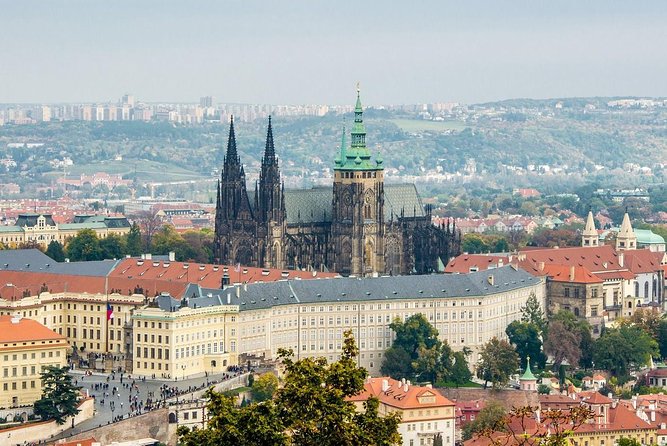
Prague Castle is not just one building. It is a whole world on a hill, with courtyards, gardens, cathedrals, palaces, and streets you would normally miss. This tour makes it easier because you do not have to play map chess for hours. You get an order to follow, and you get context for what you are seeing.
The small-group size matters more than you might think. With a large bus-style group, you get stuck in a moving crowd and your “stop time” turns into waiting. Here, you stay close enough to hear your guide, even when you are standing near busy entry points or craning for views from the Royal District.
I also like the way this tour ties architecture to real events. You learn why the same space can look Romanesque in one corner and Gothic in another, then you connect those styles to rulers, religion, and political chaos. One past guide, Robert, was specifically praised for being entertaining and extremely good at turning regional history into clear, memorable stories. That is the kind of guide style that keeps a walk from turning into a lecture.
Possible consideration: since Prague Castle entrance is not included in the tour price, you should plan your budget early. It is the classic “great tour, but pay the museum ticket too” situation. If you want to see the interiors, you will likely add those official tickets on your own.
More ways to tour Prague Castle:
- Prague Castle 2.5-Hour Tour Including Admission Ticket
★ 4.7 · 8,927 reviews - Prague: 3-Hour Walking Tour of Old Town & Prague Castle
★ 4.7 · 5,696 reviews - Prague: 3-Hour Old Town and Prague Castle Tour in German
★ 4.8 · 5,671 reviews
Meeting in Malá Strana and heading up Hradčany Hill
You meet near Bagel Lounge Malostranská Letenská in Malá Strana, right before your scheduled start. The good news is that this area is easy to reach by public transportation, so you are not forced into a long detour on foot just to start.
From there, you head toward Hradčany Hill with your guide. The climb is part of the experience. It gives you that shifting view of Prague as you move upward, and it sets the mental stage. You are not just touring a building, you are walking the approach to a place that was designed to feel powerful.
As you go, you will hear why the castle complex has a reputation for being both grand and complicated. It was constructed and reconstructed across centuries, which explains the visual “style mix” you will see later. The tour also uses the walk between sights as a teaching moment, not wasted time, so you keep learning even before you reach the big interior doors.
Practical tip: wear solid shoes. You will be on stone and uneven surfaces, and the hills around Hradčany are not gentle. If you are choosing between morning and afternoon, I would lean afternoon if you want a calmer castle atmosphere.
The Royal District at Prague Castle, and what to look for as the styles change
The core of the experience is time inside the Prague Castle complex and the Royal District area above Hradčany Hill. You hear the big story of how the complex grew over roughly 1,100 years, and why it looks the way it does today.
This is where you get the “architecture map” in your head. Your guide points out how Romanesque, Gothic, Baroque, Rococo, Renaissance, and Neoclassical elements show up in different buildings and different renovations. Once you know what to watch for, you start seeing the clues immediately, like how Gothic design emphasizes vertical lines and height, while Renaissance buildings tend to feel more structured and balanced.
You will also cover the dramatic side of castle life: artillery bombardment, plunder by marauding armies, and years of neglect that left parts of the site deteriorating. That context is useful because it stops you from thinking of the castle as only a postcard monument. You start to see it as a political and religious machine that has been fought over and repaired again and again.
The tour time in the castle zone runs about three hours total, with scheduled stops that include both exterior highlights and interior points of interest. Some key areas are marked as admission-free during the tour, but not every interior is free, so do not assume every door you see is included.
Ball Game Hall in the Royal Garden: Renaissance tennis, sgraffito, and small details
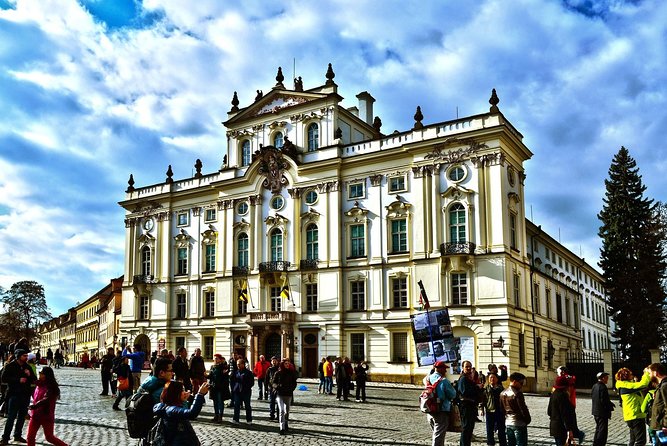
One of the tour stops that feels like a detour into the fun side of history is the Ball Game Hall in the Royal Garden. From the outside, it is easy to overlook, but with a guide pointing out the details, you notice it more.
You learn about the Renaissance idea of courtly sports, where aristocrats played games in a palace setting. The hall is also tied to decorative artwork, including a Renaissance sgraffito with allegories connected to virtues, arts, and sciences. That matters because it shows how rulers used culture and imagery to project power, not only through warfare and laws.
Time here is short, but that is part of its value. It is not another “stand in a line” stop. It is a focused look at how entertainment and symbolism fit into Renaissance court life.
If you like your tours to include at least one surprising story beat, this stop delivers.
More walking tours in Prague:
- Prague: Ghost Walking Tour Where Legends Come To Life
★ 4.4 · 5,253 reviews - Prague: Jewish Quarter Walking Tour with Admission Tickets
★ 4.7 · 3,729 reviews - Prague Guided Walking Tour and Cruise with Authentic Czech Lunch
★ 5.0 · 3,627 reviews - Prague: Old Town and Jewish Quarter Guided Walking Tour
★ 4.6 · 2,847 reviews
Queen Anne’s Summer Palace: Renaissance form and an astronomical observatory
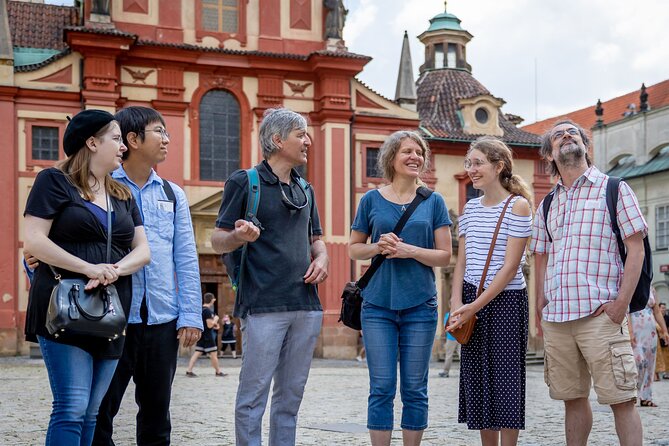
Next comes Queen Anne’s Summer Palace, which you view in the Royal Gardens. This palace is described as a form of Renaissance architecture considered especially pure outside Italy, commissioned by Ferdinand I in the mid 1500s.
Then the story takes an unexpected scientific turn. The palace was converted into an astronomical observatory by Rudolf II. People connected with astronomy were associated with Rudolf’s circle, including Tycho de Brahe and Johannes Kepler. You also hear that even the emperor himself died here after losing his royal title.
The payoff for you is that the palace feels more than pretty architecture. It becomes a clue about how late Renaissance courts could be obsessed with the heavens, not just courtly display. It is a good reminder that cultural power often means investing in knowledge and tools.
Time at this stop is also brief, so it works best if you enjoy compact story stops rather than long museum-style sessions.
St. Vitus Cathedral and St. Wenceslas Chapel: Gothic grandeur with major sacred art
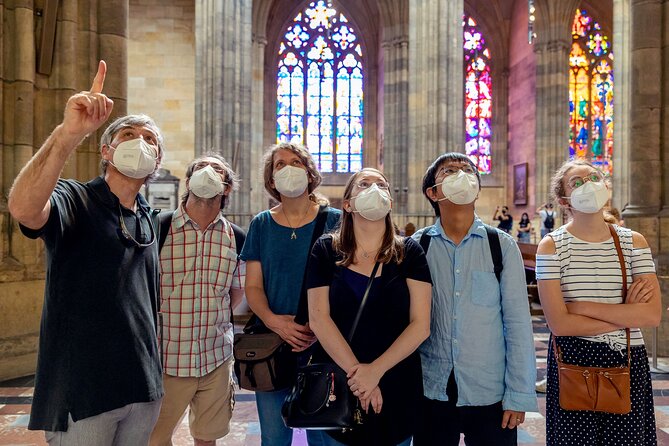
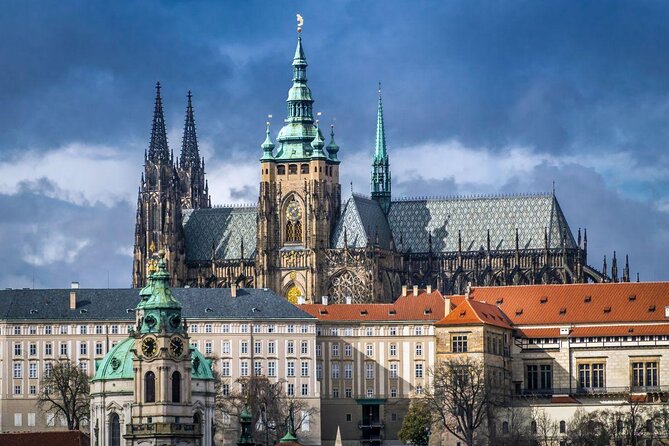
St. Vitus Cathedral is one of the biggest reasons people come to Prague Castle, and this tour gives it a guided slot for about 30 minutes. It is described as one of the most monumental cathedrals in Central Europe and a prominent example of Gothic architecture.
What I think is especially helpful is the “build timeline” context. The cathedral was founded in the first half of the 14th century and was finally completed about 600 years later, in the first half of the 19th century. That long stretch explains why it feels both historic and carefully layered, with design choices shaped across generations.
You also focus on specific features, including:
- the royal crypt of Czech sovereigns and patron saints
- the baroque tomb of St. John of Nepomuk, linked to the first martyr of the seal of the confessional, cast in silver
- St. Wenceslas Chapel, which houses relics of the saint and is a major highlight
Admission is not included for St. Vitus Cathedral in the tour details, so this is where the “budget for entry tickets” planning matters. If you skip interior access, you will still get the big exterior story, but you lose a lot of what makes the cathedral memorable.
Old Royal Palace and Vladislav Hall: jousting drama and political shock
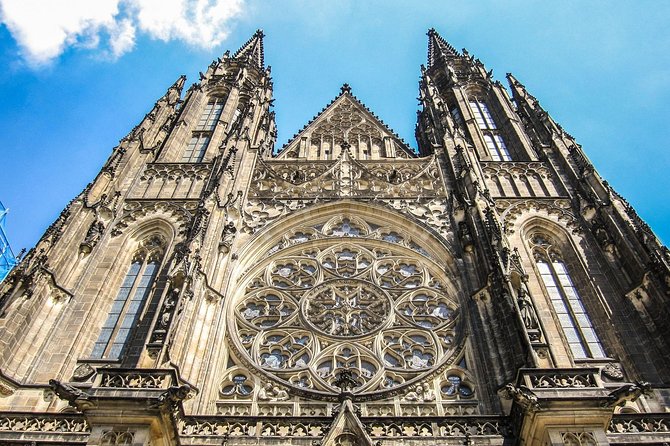
After the cathedral focus, you head into the Old Royal Palace and spend time in Vladislav Hall. This is where the tour leans into spectacle.
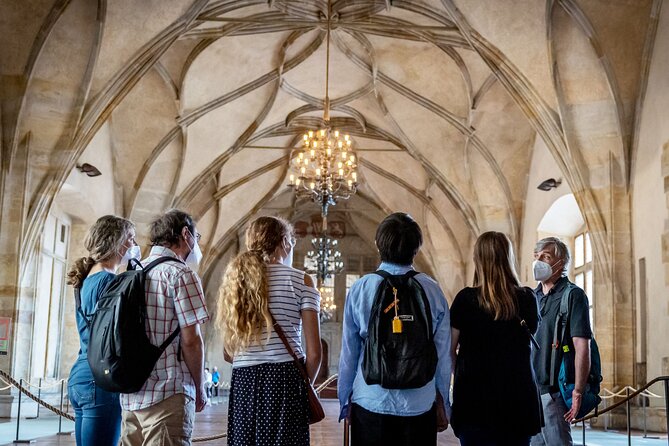
Vladislav Hall was built at the end of the 15th century and blends Late Gothic with Renaissance style. It was used for coronation festivities, banquets, and knights’ tournaments. You will learn about how knights could enter the hall for jousting competitions in full armor and on horseback, using the Riders’ Staircase designed for that purpose.
Then you get the political moment that changed history. In the Ludwig Wing, you see the window connected to the defenestration of two Austrian governors and their scribe. That event is tied to the start of the Thirty Years’ War, one of the most destructive conflicts in European history.
This is one of those stops where a guided explanation changes everything. From the outside, Vladislav Hall is impressive. With the story, it becomes a stage for decisions and violence, not only a room for ceremonies.
Admission is not included for parts of the Old Royal Palace on this tour, so treat it as an “inside ticket” stop.
St. George’s Basilica: Romanesque calm after Gothic intensity
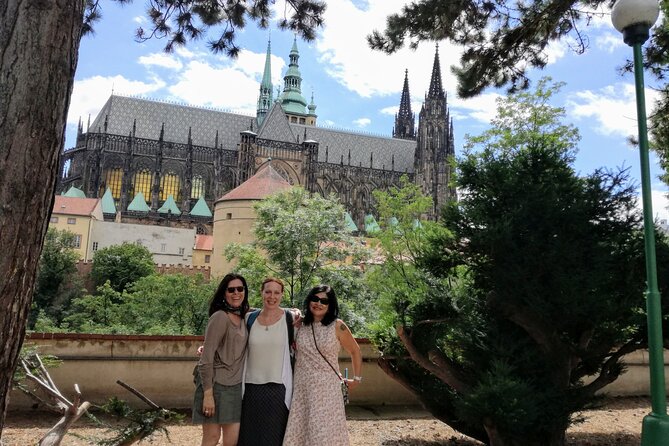
Not far away, you visit St. George’s Basilica, an austere and monumental Romanesque basilica built in the 1100s. This is a great contrast stop after St. Vitus Cathedral.
The Romanesque feel tends to read as heavier and more grounded, and the basilica’s interior is a nice comparison point to what you just saw in Gothic style. Even within a short time slot, you come away with a clearer sense of how Central European architecture evolved over centuries.
Admission is not included for this basilica on the tour schedule, so again, you may need to pay separate entry to fully enjoy the interior.
Golden Lane and Dalibor Tower: small doors, big legends
Next is Golden Lane, a tiny street with a history that sounds almost like a storybook, except it is real.
Golden Lane was originally built in the 16th century to house Rudolf II’s castle guards. Today, it is known for small rooms and current use as a street of souvenir shops. If you want something more than browsing, the area also connects to a museum of medieval armor accessible from Golden Lane.
You also learn about its link to Dalibor Tower, which used to function as a dungeon. That contrast helps Golden Lane feel real. It is not only a charming walk, it is also a reminder of how power worked, including punishment and imprisonment.
Time here is around 20 minutes, which is enough to walk the lane at a comfortable pace, read a few story points, and decide whether you want to step into the armor museum area.
Domeček and Strahov Monastery: the walk after the main castle doors
When the castle interior time ends, the tour continues toward Hradčany, passing through sites that broaden your understanding of Prague beyond the Royal District fantasy.
You will pass Domeček, described as the former prison where political opponents were imprisoned by the Gestapo. That is a heavy stop, and it changes the tone of your visit in a good way. It is a reminder that this hill has always been tied to politics, not only royalty.
Then you head past Strahov Monastery, where an ancient library is housed. Even if you do not go inside everywhere, the monastery area helps you round out the day by adding religion and learning to the mix you already built in earlier stops.
If you like tours that go past the main postcard scenes, this ending segment is worth it.
Price and budget reality: what you really pay for
The tour price is $126.16 per person, and it includes the historic guide. That is where a lot of the value comes from. For Prague Castle, the “hard part” is not just seeing buildings. It is knowing what you are looking at, in what order, and why each renovation mattered.
Your main extra cost is Prague Castle entrance, listed as CZK 450 for adults and CZK 300 for students and seniors. Food and drinks are not included. Hotel pickup and drop-off are also not included.
So is it worth it? In most cases, yes, if you plan to go inside several key sights with the guide’s context. You are paying for someone to connect the dots across centuries, and for a pace that is workable for a three-hour walk. If you already have tickets in hand and you know your architecture basics, you could DIY some of it. But if you want the “why” behind the Romanesque and Gothic mix, and you want a guided path that saves you time and confusion, this price is a reasonable trade.
Who this tour fits best, and who should skip it
This is a strong choice if you:
- want a small-group feel with an English-speaking historian guide
- care about architecture styles and how they link to events
- like a structured route across the castle and the Royal District, plus a few darker and calmer stops afterward
- want either morning or afternoon timing, depending on crowd comfort
It may be less ideal if you:
- only want a quick outside walk and are not interested in cathedral or palace interiors, since extra admission is still part of the picture
- dislike guided speaking time and prefer total silence and self-paced wandering
As for physical comfort, most people can participate, but you should assume a real walking day. Bring water, wear good shoes, and give yourself a little buffer.
Should you book this Prague Castle walking tour?
If your goal is to understand Prague Castle without getting lost in it, I would book it. The combination of max 8 people, a guide who can tell the story clearly (with past praise even for Robert and his presentation style), and the architecture-first focus makes this a high-value way to see the Royal District.
Book it if you want a guided path that covers the major sights, plus the contrast stops around Domeček and Strahov Monastery. Just make sure you also plan for castle admission on top of the tour price, so you do not get surprised when you reach the cathedral and palace interiors.
If you hate crowds, choose an afternoon slot, since that timing often feels less busy.
FAQ
How long is the Prague Castle walking tour?
It is about 3 hours.
What is the price per person?
The price is $126.16 per person.
Is Prague Castle entrance included in the tour price?
No. Prague Castle entrance is not included. Adults are listed at CZK 450, and students and seniors are listed at CZK 300.
What language is the tour offered in?
The tour is offered in English.
What is the maximum group size?
The tour has a maximum of 8 people.
Where do we meet?
The meeting point is Bagel Lounge Malostranská Letenská 118/1, 118 00 Prague 1-Malá Strana, Czechia.
Does the tour include food or drinks?
No. Food and drinks are not included.
Is a mobile ticket provided?
Yes, it includes a mobile ticket.
Can I choose morning or afternoon?
Yes, you can choose between morning or afternoon timings.
What is the cancellation policy?
Free cancellation is available. You can cancel up to 24 hours in advance for a full refund. If you cancel less than 24 hours before the experience starts, the amount you paid will not be refunded.
Recently reviewed around Prague
- Savor 10 Course Dinner in Chef’s Kitchen★ 5.0 · 20 reviews
- Prague for Men★ 5.0 · 11 reviews
- Private Lesser Town tour – Historical Treasure Hunt★ 4.5 · 7 reviews
- Photographer in Prague – Couple, engagement & portrait photoshoot★ 5.0 · 22 reviews
- Ebike Sunset tour of Prague★ 5.0 · 19 reviews
- 1-Hour Ride Across the Prague in Mini Hot Rod Car★ 5.0 · 37 reviews
- The Best of – private tour with PERSONAL PRAGUE GUIDE★ 5.0 · 107 reviews
- Prague on Stylish Retro styled E-Bike – Viewpoints & Sightseeing★ 5.0 · 20 reviews
Prague Castle Tours, compared.
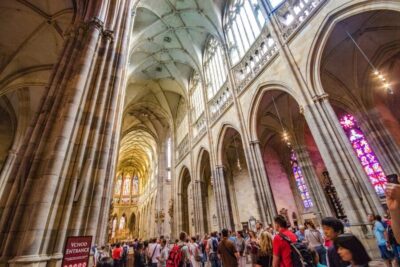
Prague Castle 2.5-Hour Tour Including Admission Ticket
Read our review →
3-Hour Walking Tour of Old Town & Prague Castle
Read our review →
3-Hour Old Town and Prague Castle Tour in German
Read our review →
Prague Castle and Lobkowicz Palace Entry Tickets
Read our review →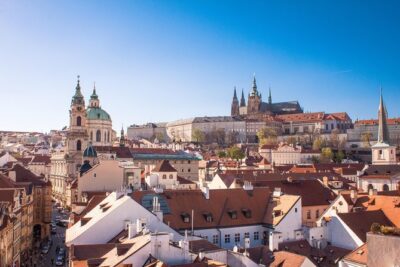
Prague 3-hour Afternoon Walking Tour including Prague Castle
Read our review →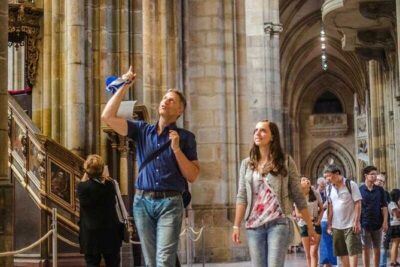
Prague Castle Tour Including Admission Ticket – 2.5 Hour
Read our review →
Prague Castle: Midday Classical Concert at Lobkowicz Palace
Read our review →
Full-Day Prague Tour with Prague Castle, Lunch and Vltava Cruise
Read our review →Browse the lists this tour appears in