
Reviewed · WALKING TOURS
Prague Renaissance and Baroque Gardens Walking Tour
Prague’s garden story is the real hook, because these parks and pleasure palaces reflect power, faith, and taste changing over time. I love how the tour connects Italian Renaissance ambition with Baroque drama, all in a city that rewards careful walking. The best part is that you’re not just looking, you’re learning what each design choice was trying to achieve.
Two highlights I really like are the stop at the Fig House and Orangery (where Mediterranean-style growing mattered) and the descent into Wallenstein Garden, with its albino peacocks and theatrical myth-making fountains. One thing to consider first: the route includes stair climbing and sometimes narrow, steep steps, so it can be tough if you have mobility limits.
Key points to know before you go
- Belvedere Summer Palace details like the flower-relief theme tied to Queen Anne make the Renaissance feel personal.
- The Singing Fountain is explained as bell bronze from 1564, with water producing a resonant note.
- A plant-and-politics story links figs, citrus, and even tulips to elite gift exchanges, not just gardening.
- South Gardens timing works well for photos because you get both garden geometry and broad castle-hill views.
- Wallenstein Garden is theatrical by design, from the grotto wall to the mythical fountains and Mannerist statues.
- Vrtba Garden (1720) feels removed from crowds, with a marine-themed grotto and strong Prague viewpoints.
A 3-hour stroll that makes Prague’s garden politics make sense
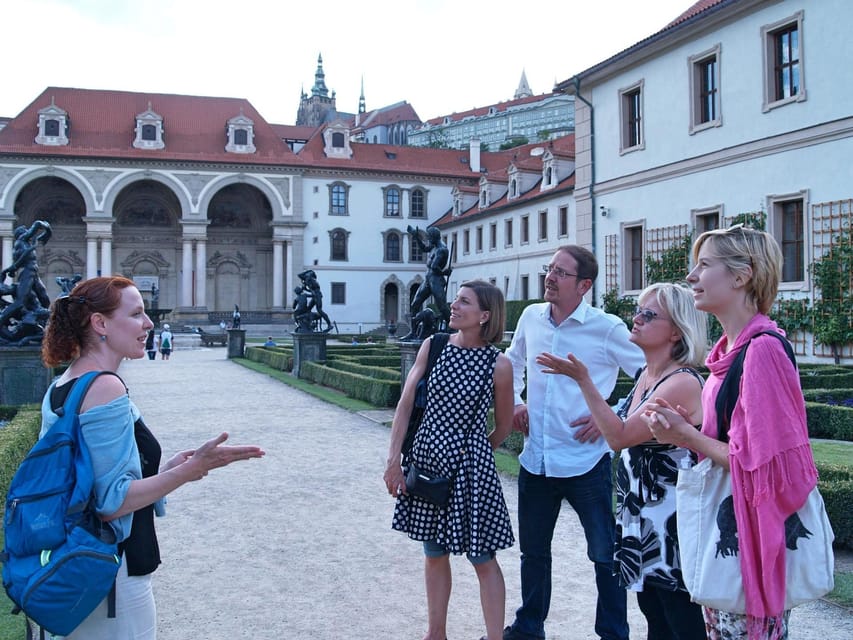
This tour is interesting because Prague’s gardens were never just for beauty. They were power displays, sometimes religious stage sets, and often a way for rulers to show they could import prestige from elsewhere. When you walk through them with a historian guide, the plants, statues, and fountains stop being decorative extras and start acting like readable clues.
I like that the tour frames garden history in a practical way. It explains that early medieval gardens were often about herbs for medicine and food, and that later, the big palace gardens emerged when leaders wanted something grand and Mediterranean.
More walking tours in Prague:
- Prague: 3-Hour Walking Tour of Old Town & Prague Castle
★ 4.7 · 5,696 reviews - Prague: Ghost Walking Tour Where Legends Come To Life
★ 4.4 · 5,253 reviews - Prague: Jewish Quarter Walking Tour with Admission Tickets
★ 4.7 · 3,729 reviews
Getting started at Bagel Lounge Malostranska, and planning for stairs
You’ll meet at the door of Bagel Lounge Malostranska. That location makes it easy to get your bearings before your walking begins, and it sets you up for a route that moves between Prague Castle grounds and the Lesser Town (Mala Strana) later on.
The one consideration is effort. This tour regularly includes walking up and down stairs, and some sections can be narrow or steep. If you think that could slow you down, it’s smart to consider a private tour so your guide can adjust the route and pace, leaving out sites that are hard for you.
For the best experience, wear shoes that handle stone steps comfortably. Bring a light layer if you’re going in cooler months, because you’ll spend a lot of time outdoors on slopes.
Inside Prague Castle Gardens: Belvedere Summer Palace and the Singing Fountain
The Renaissance part of this walk centers on Prague Castle Gardens, and the tour hits the points that help you understand the shift in taste. Emperor Ferdinand I hired Italian gardeners and architects, and the influence shows up in the way the gardens balance structure with pleasure.
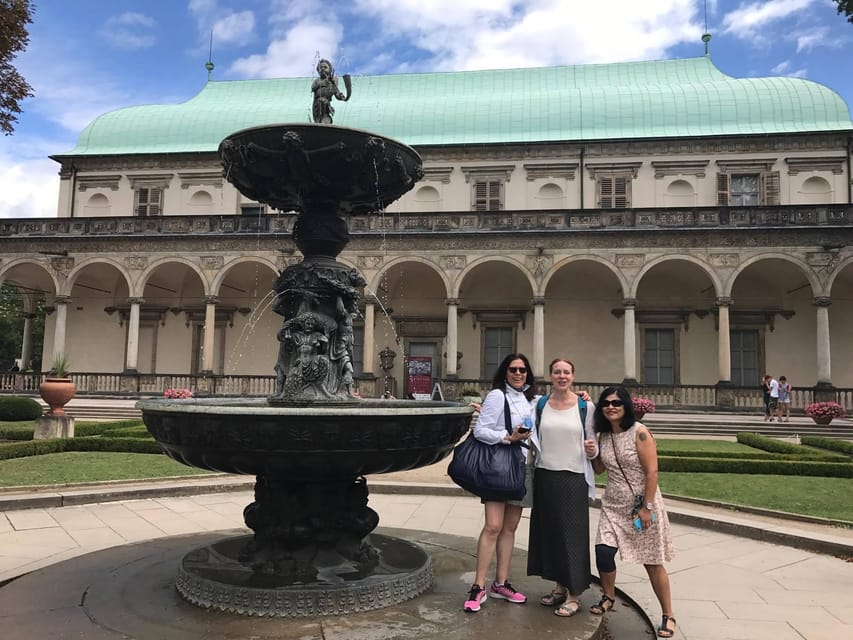
One of the tour’s anchor moments is the Belvedere Summer Palace, commissioned by Ferdinand I as a gift for his wife, Queen Anne. You’ll hear how she did not live to see it completed, which adds a real human note to a project that otherwise sounds purely political. A relief theme connects Ferdinand and Queen Anne through a symbolic flower presentation tied to the Royal Gardens surrounding the palace.
Another standout is the Singing Fountain. It’s cast in bell bronze in 1564, and the explanation is simple and memorable: when water drops into the basin, it resonates or produces a singing effect. It turns a water feature into a piece of designed sound, which is exactly the kind of Renaissance cleverness that makes you look twice.
A practical note: Prague Castle Gardens admission fees are not included. The guide will take you through the included narration and route, but you’ll still need to cover the entrance fee if required for the specific areas.
Fig House and Orangery: Mediterranean plants made Central European
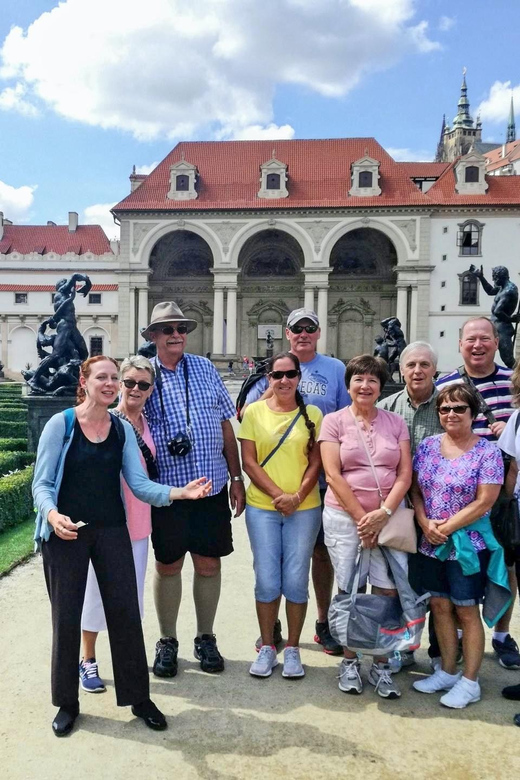
After the palace highlights, your walk moves into the Fig House and Orangery, where the story becomes about plants as status. These structures were part of a push to grow Mediterranean-style crops in Central Europe, including figs, almonds, oranges, and lemons.
What I like about this stop is that the tour uses gardening details to explain cultural ambition. You’re not just seeing a building. You’re seeing a system built to make unfamiliar crops feel normal in a colder climate.
The tour also ties plant introductions to elite connections. As you approach the western end of the garden, you’ll hear how tulips were introduced to the Royal gardens as an exotic gift from the Sultan of Constantinople. That detail changes how you view the gardens, because flowers and fruit become evidence of diplomacy and taste.
Again, keep in mind that garden admission fees under Prague Castle are separate. If you want a smooth start, check in advance how entry timing works for the specific areas the tour covers.
Same city, a completely different kind of day:
- Prague: 50-Minute Sightseeing Evening Cruise
★ 4.2 · 33,780 reviews - Prague: Medieval Dinner with Unlimited Drinks
★ 4.4 · 19,847 reviews - Prague: Castle Tour with Local Guide and Entry Ticket
★ 4.6 · 10,422 reviews - Prague Castle 2.5-Hour Tour Including Admission Ticket
★ 4.7 · 8,927 reviews
Crossing the stag moat and the Bull Stairs to South Gardens
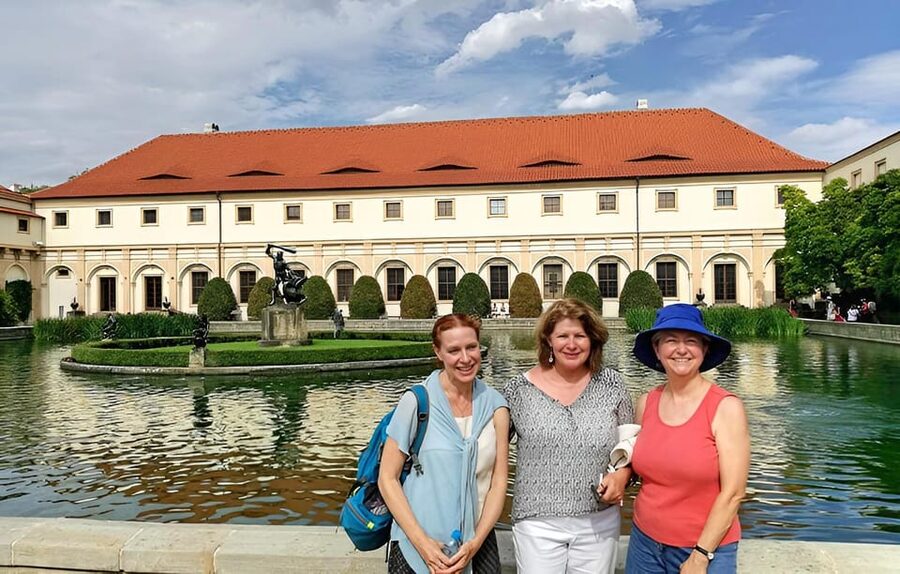
Next comes a change in rhythm, because you’re moving from palace pleasures into the hillside garden sequence. The tour leads you past the stag moat, then through the castle courtyard and down the Bull Stairs to the South Gardens.
This is the part where you can feel the design logic. The gardens are built to guide your movement, not just to sit quietly beside you. Terraces and directions create a sense of progression, like you’re traveling through different chapters of courtly life.
In South Gardens, you’ll visit the Garden of Paradise and the Garden on the Bulwark. The tour explains the design intent behind the shift in philosophies as style changes. Renaissance classicism leans into order and ideal form, while later Baroque ideas are often more about drama, motion, and emotion.
If you’re traveling with a camera, this is a good section to slow down. The combination of stairs, terrace angles, and sightlines gives you more than one kind of photo: close details and wider castle-hill views.
Terraced descent to Wallenstein Garden, where Baroque turns theatrical

As you continue down the hill, you’ll pass multiple terraced gardens. These in-between steps matter because the tour uses them to set expectations for what’s coming next. You’re moving from structured Renaissance pleasure spaces into something more expressive and story-driven.
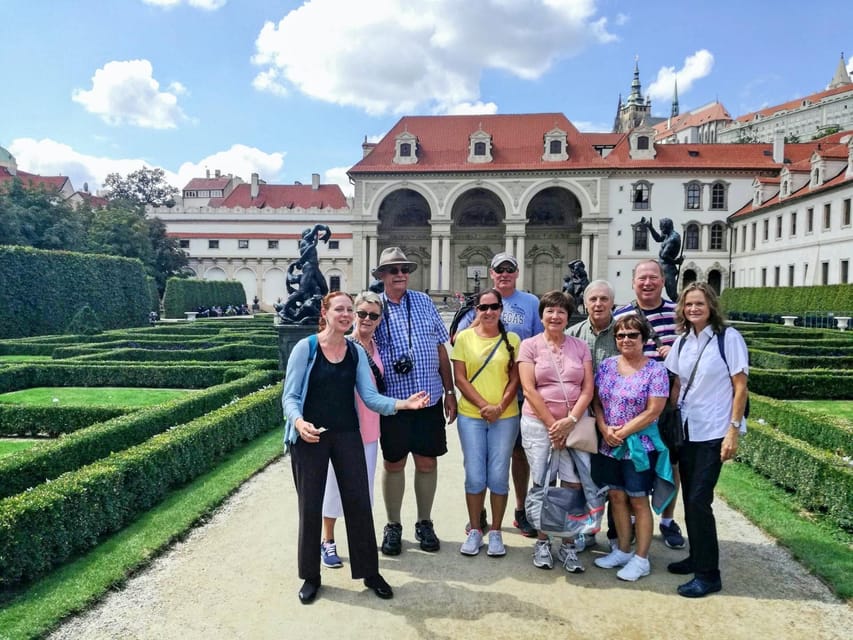
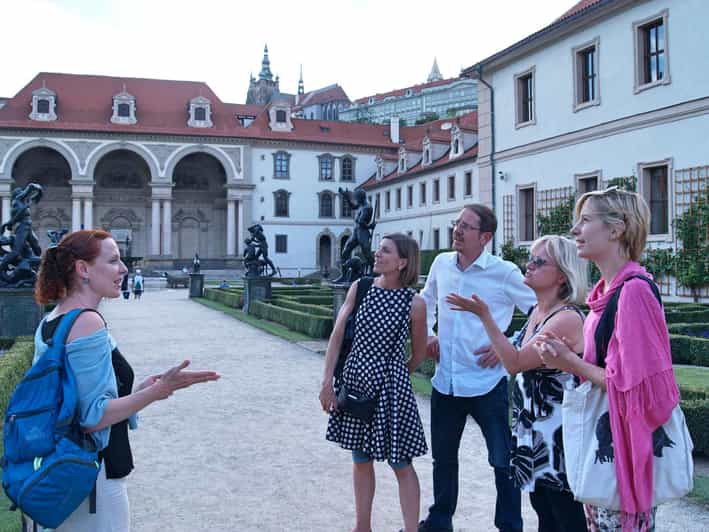
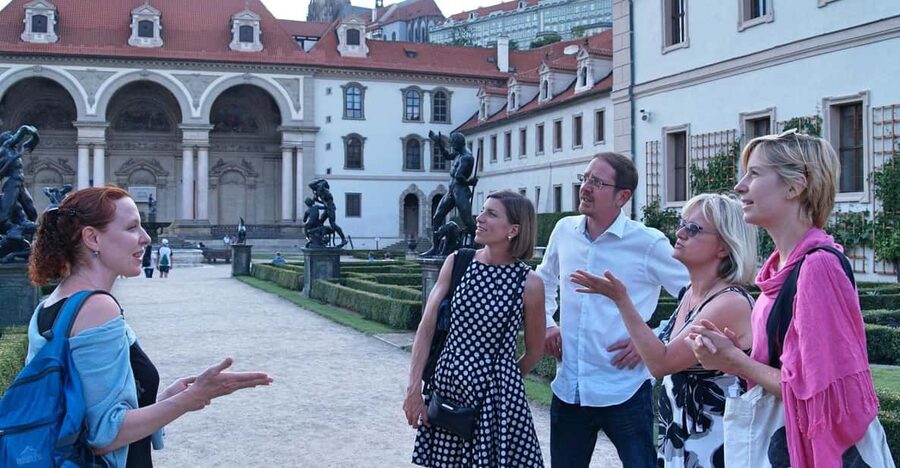
At the bottom, you reach Wallenstein Garden, and this is the moment where the tour’s Baroque tone clicks. Expect albino peacocks, Mannerist statues, a grotto wall, and mythical fountains. The peacocks make it feel alive, while the statues and fountains suggest a world where art isn’t meant to be quiet.
The guide also connects the garden to its commissioner, Albrecht von Wallenstein, and his dramatic life. When you hear that personal backstory, the garden’s theatrical choices start to make sense. It’s not random decoration. It’s a narrative environment that builds mood and identity.
If you like mythology mixed with real art history, you’ll probably enjoy this stop most. The “mythical” element isn’t just a label. It’s part of how Baroque gardens could turn politics and personal ambition into a spectacle you can walk through.
Vrtba Garden in Mala Strana: a walled Baroque space from 1720
Near the end, the tour shifts to the Lesser Town area, where you’ll see Vrtba Garden. This garden dates from 1720 and is described as a place you often won’t run into in the usual Prague visitor flow, even though it offers a clear window into noble life and Baroque landscaping.
Because it’s walled, it feels more contained than you might expect. That matters in a city like Prague, where sounds, crowds, and views can pull you away. Here, the walls help you focus on the design and the staged progression up toward the top.
One of the most memorable features you’ll hear about is the marine-themed grotto found at the very top courtyard. It’s the kind of detail that makes you stop and scan every angle, because it’s playful, but still part of a larger Baroque storytelling system.
At the top, you’re also rewarded with stunning views of Prague’s cityscape. This payoff is practical too. You get your widest sightlines right at the end, when you’re already in motion and ready to pause.
Like Prague Castle Gardens, Vrtba Garden admission fee is not included, so you’ll want to plan for that cost separately.
Price and value: what you get for about $123
At $123 per person for a 3-hour guided history walk, this isn’t the cheapest way to spend half a day. But it also isn’t overpriced if what you want is historical interpretation delivered on your feet.
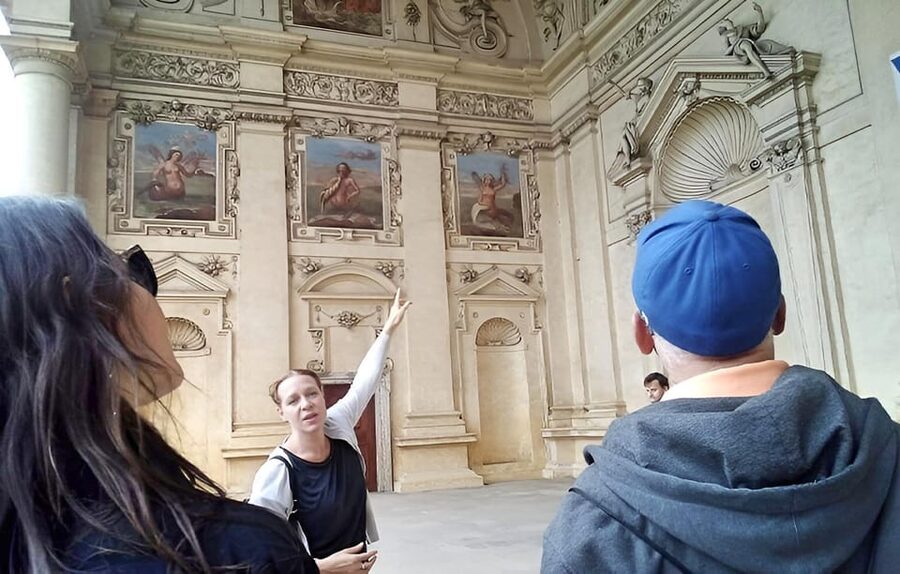
Here’s why the value can work well. First, you’re paying for a live historian guide who can explain why specific features exist. Stuff like the Singing Fountain’s bell bronze resonance, or the tulip introduction story, is much more satisfying with context than it is when you’re reading a sign.
Second, you’re covering multiple named garden spaces that connect Renaissance to Baroque. That arc is hard to piece together alone, especially in Prague, where gardens can be scattered and easy to misunderstand if you only focus on individual buildings.
Third, the tour saves you decision fatigue. You don’t have to guess which parts of the gardens are worth your attention. The guide chooses the stops that help you see the bigger picture, from Ferdinand I’s Italian influence to Wallenstein’s theatrical Baroque world, then into Vrtba’s refined Baroque enclosure.
If you’re the type who enjoys interpretive travel, the price starts to feel reasonable. If you only want scenery with minimal talking, you might want a self-guided option instead.
Who should book, and who might prefer a private route
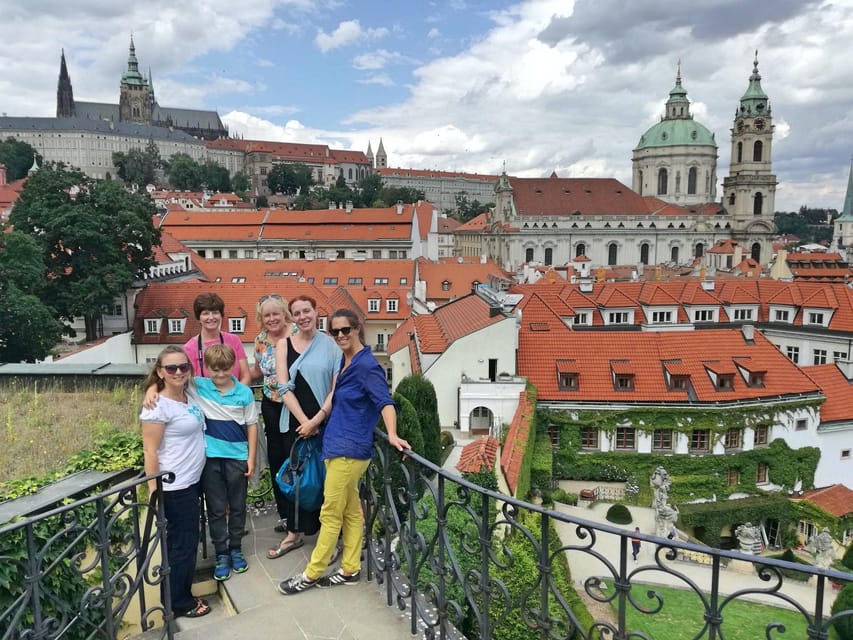
This tour fits you if you like art history with a practical walking plan. You’ll get the Renaissance-to-Baroque story, the specific garden features, and the “why it was built” explanations that make gardens feel more alive than a list of plants.
It also fits couples who want a calm pace and a guide who can keep things relaxed. One of the strong signals from feedback is that the tour can feel informative without being stiff, with guides like Miriam praised for being excellent, relaxed, and easygoing in tone.
If stairs are an issue, don’t ignore that. Since the route includes uphill and downhill sections with narrow or steep steps, a private tour can be a smart upgrade. It lets the guide tailor the route to your limits, skip some tough segments, and still keep the historical narrative intact.
Should you book this Prague Renaissance and Baroque Gardens walking tour?
Book it if you want a guided story that connects garden design to the people and ideas behind it. The combination of Belvedere Summer Palace, the Fig House and Orangery, the Wallenstein Garden theatrical details, and Vrtba Garden’s marine grotto creates a full arc in just three hours.
Pass or consider a different option if mobility is limited and you don’t want to handle stairs. Also consider your interest level in guided history: if you prefer quiet sightseeing only, you may find it more enjoyable to go on your own.
If you do book, bring comfortable shoes and expect a walk that blends garden beauty with real context. You’ll leave with a much clearer sense of how Prague’s rulers used gardens to project identity, taste, and authority.
FAQ
What is the duration of the Prague Renaissance and Baroque Gardens Walking Tour?
The tour lasts 3 hours.
Where do I meet for the tour?
Meet at the door of Bagel Lounge Malostranska.
Is the tour guided, and what language is it in?
Yes, it’s a live tour with an English-speaking guide, and the guide is a historian.
What’s included in the price?
Included are the 3-hour guided history walk and the historian guide.
What entrance fees are not included?
Gardens under Prague Castle admission fee and Vrtba Garden admission fee are not included.
Is the tour fully refundable if plans change?
Yes, it offers free cancellation up to 24 hours in advance for a full refund.
Is the route difficult if I have mobility issues?
The standard tour includes walking up and down stairs that can be narrow or steep. If you expect difficulties, you should consider a private tour so the guide can adjust the route to your limits.
Recently reviewed around Prague
- 1 Hour Prague Party Hummer Limousine Ride★ 5.0 · 27 reviews
- 1 hour ride in vintage limousine★ 5.0 · 49 reviews
- The Clinic: Escape room in Fun Arena Prague★ 4.7 · 3 reviews
- Tour of Prague Castle in italian language ticket included★ 4.9 · 25 reviews
- The essentials of Prague★ 5.0 · 3 reviews
- Prague: Lobkowicz Palace Ticket & Audio Guide★ 4.5 · 130 reviews
- The best Trike Bike Prague city tour★ 5.0 · 3 reviews
- Prague Castle: Admission Ticket With Transfer And Audioguide★ 4.5 · 111 reviews
Walking Tours, compared.

3-Hour Walking Tour of Old Town & Prague Castle
Read our review →
Ghost Walking Tour Where Legends Come To Life
Read our review →
Jewish Quarter Walking Tour with Admission Tickets
Read our review →
Prague Guided Walking Tour and Cruise with Authentic Czech Lunch
Read our review →
Old Town and Jewish Quarter Guided Walking Tour
Read our review →
Prague Ghost and Legend of Old Town Walking Tour
Read our review →
Prague 3-hour Afternoon Walking Tour including Prague Castle
Read our review →
Ghosts and Legends Nighttime Guided Walking Tour
Read our review →Browse the lists this tour appears in