
Reviewed · WALKING TOURS
Prague Art Nouveau and Cubism Walking Tour
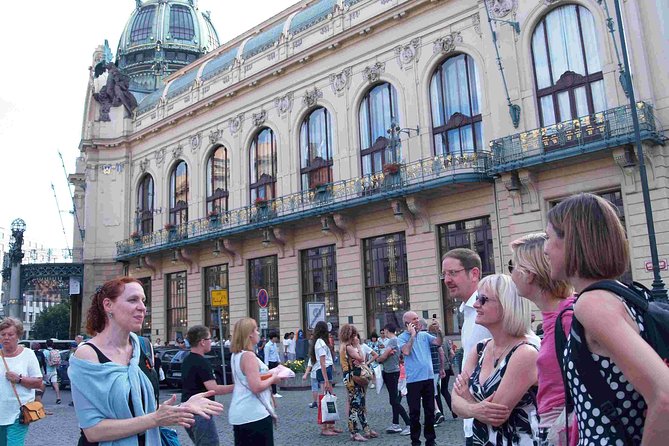
Prague is one of Europe’s best cities for reading design on the street. This Prague Art Nouveau and Cubism walking tour gives you a simple way to see what makes the city feel modern, right down to façade motifs and interior light fixtures. I like the way it teaches you to recognize Art Nouveau details fast, and I love that it includes elegant real-world stops like Lucerna bar and the Grand Hotel Europa.
The walk moves at a steady pace. If you want long photo sessions at every corner, you might feel slightly rushed in 3 hours, especially in chilly weather.
Guides can be professors, doctoral students, historians, journalists, art critics, and published authors, and you’ll see the payoff in clear explanations and storytelling. In particular, guides such as Robert, Vadim, and Bonita are known for strong context and humor that keeps the style talk from getting dry.
Key things you will notice on this Art Nouveau and Cubism walk
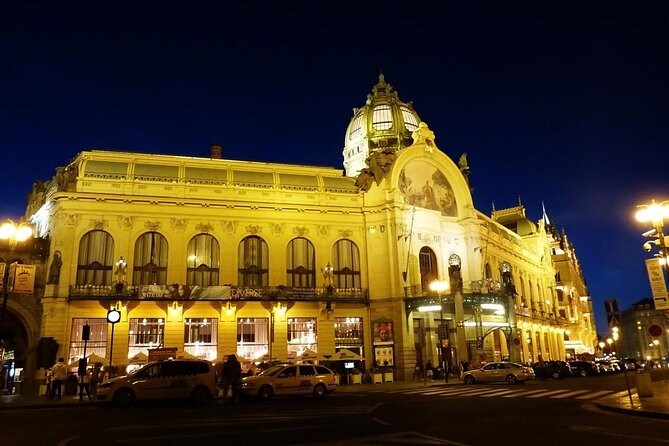
- Ginkgo biloba leaf motifs on façades, and what they hint about the style’s influences
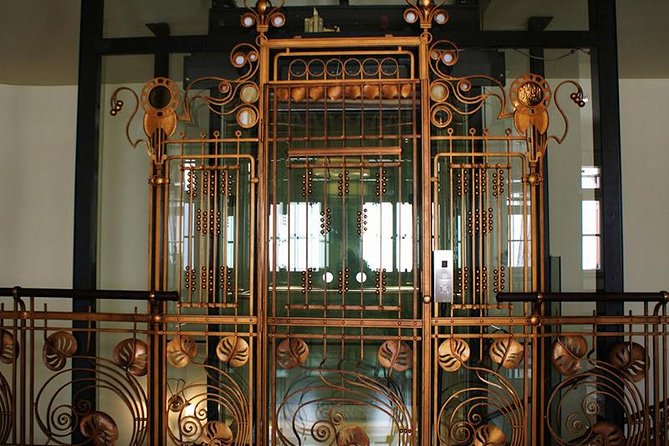
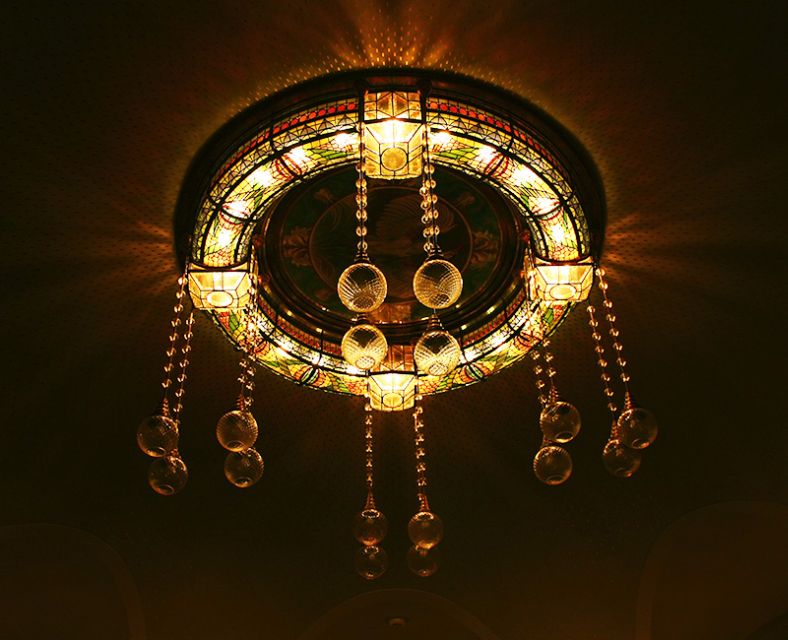
- Elaborate interior lighting, taught as a practical clue for spotting Art Nouveau spaces
- The pre-war café and restaurant culture, where style mattered as much as conversation
- Why Art Nouveau shows up so often in hotels, bars, restaurants, and stations
- A clear comparison to Cubist and Rondo-Cubist architecture, using key Prague examples
- Stops inside notable spaces when possible, plus short breaks for coffee and restrooms
Getting your eyes trained at the meeting point in Old Town
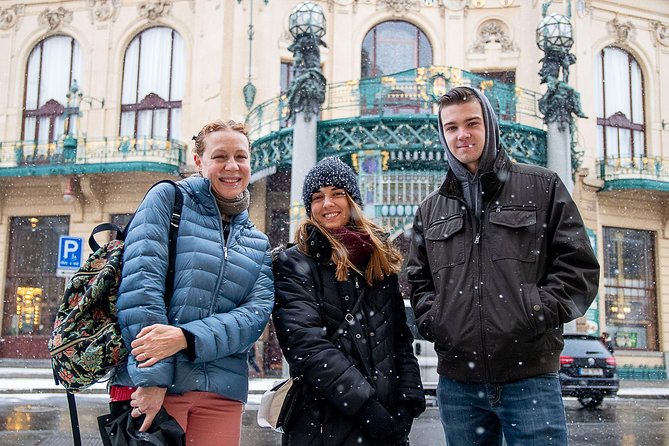
The tour starts at the House of the Black Madonna, at the Grand Café Orient, downstairs at the front doors on Ovocný Square (Ovocný 19, Prague 1). That matters, because you begin in the middle of the kind of Prague streetscape where architectural styles do not feel separate. They mix, overlap, and sit side by side.
At the start, you should expect a quick orientation on what you will be looking for. The goal is not to memorize dates. It is to learn a set of visual cues that you can take with you after the tour ends.
From there, the walk becomes a guided “reading session.” You’ll learn how Art Nouveau spreads through the city, not just as pretty ornament, but as a full design language. The guide also sets the time period up front: Art Nouveau emerged near the end of the 19th century and spread as a universal phenomenon, and Prague was eager to adopt it.
More walking tours in Prague:
- Prague: 3-Hour Walking Tour of Old Town & Prague Castle
★ 4.7 · 5,696 reviews - Prague: Ghost Walking Tour Where Legends Come To Life
★ 4.4 · 5,253 reviews - Prague: Jewish Quarter Walking Tour with Admission Tickets
★ 4.7 · 3,729 reviews
Art Nouveau Prague, from façade motifs to interior light fixtures
Art Nouveau in Prague is not one vague style. It is a package: shape, motif, and atmosphere. The tour teaches you to recognize those pieces in the real fabric of the city.
You’ll focus on specific, teachable clues. For example, you will look for ginkgo biloba leaves carved or worked into façades. The tour also connects these details to broader influences, including oriental influences that shaped how Art Nouveau artists and designers approached ornament. Even if you have walked through Prague before, this kind of cue-based approach helps you see things you would normally miss.
Inside spaces, the tour points you toward the hallmarks of Art Nouveau interiors. One of the biggest is lighting. You are taught to notice the detailed, decorative approach to fixtures, because in Art Nouveau design, light is part of the décor, not just a utility.
And then you get the social angle. Art Nouveau constructions in Prague show up in places where the public life of the early 20th century gathered: hotels, elegant bars and restaurants, and train stations. The tour connects that to the pre-war crowd, including the social elite who spent time in cafés and restaurants, and the early globetrotters who were enjoying the fruits of 19th-century industrialization before war changed everything.
Why hotels and bars matter more than you think
This tour leans into an important Prague pattern: many of the city’s most visible Art Nouveau buildings are places you associate with arrival, leisure, and status. That includes hotels, elegant bars and restaurants, and train stations.
It makes sense when you think about who used those buildings. These were the addresses where people dressed up, met friends, passed through on business or travel, and talked about the future. Art Nouveau was well suited to that mood. It fit the idea of a city that felt modern, stylish, and connected to wider European trends.
In other words, you are not just learning architecture. You’re learning why architecture was used as a social tool. When you see those buildings as places for the pre-war social elite and early international travelers, the style choices stop feeling decorative and start feeling intentional.
I like this framing because it also helps you understand what to look for on your own. After the guided walk, when you spot an Art Nouveau building, you can start asking a useful question: who would have gone there, and what would it have meant to them?
Lucerna bar stop, where Art Nouveau becomes atmosphere
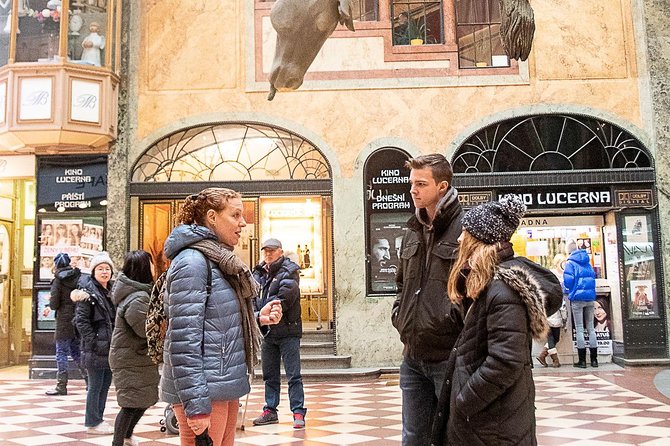
One of the scheduled highlights is the Lucerna bar, a stop built for exactly what this tour is trying to teach: how the style shows up in interior design.
When you arrive, your guide’s approach is practical. Instead of sending you into a room and hoping you notice something, the guide points out what to look for, especially around decorative elements and lighting cues that are typical of Art Nouveau interiors.
This is also a smart moment for a “reset” during a 3-hour walk. Reviews and real-world experience with this kind of tour approach suggest that guides often help with comfort, including warming up inside when the weather turns cold. If you’re traveling in winter, that can make the difference between tolerating a walk and actually enjoying it.
Even if you are not an architecture superfan, the Lucerna bar stop is where the style clicks. You begin to feel why Art Nouveau was so popular in leisure settings. It creates a mood, and the décor is part of the experience, not background noise.
Same city, a completely different kind of day:
- Prague: 50-Minute Sightseeing Evening Cruise
★ 4.2 · 33,780 reviews - Prague: Medieval Dinner with Unlimited Drinks
★ 4.4 · 19,847 reviews - Prague: Castle Tour with Local Guide and Entry Ticket
★ 4.6 · 10,422 reviews - Prague Castle 2.5-Hour Tour Including Admission Ticket
★ 4.7 · 8,927 reviews
Grand Hotel Europa, elegance as a design statement
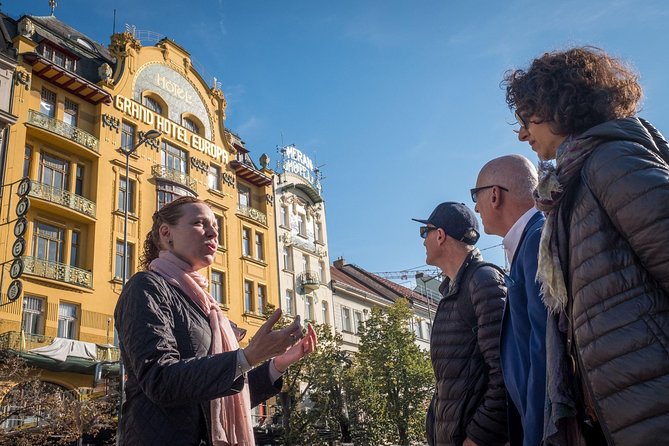
Another key stop is the Grand Hotel Europa. This is the tour’s other “showpiece” location, and it pairs well with the Lucerna bar visit.
If Lucerna bar helps you understand the Art Nouveau interior vibe, the Grand Hotel Europa stop helps you connect that vibe to the bigger story of Prague’s modern sophistication. Hotels were a big part of Art Nouveau’s city footprint for a reason. They were built to host people who cared about appearance, comfort, and status.
What I like here is how the tour keeps making parallels. You are not stuck inside one lane of style. You are reminded that Art Nouveau constructions often served as landmarks for the café and restaurant culture of the time, and they also worked as meeting points for people moving through the city.
The guide also brings you back to the idea of resurgent national identity. That comes up more directly later with Cubist and Rondo-Cubist architecture, but the Grand Hotel Europa stop prepares you to see how Prague used modern design to express both cosmopolitan taste and local pride.
Switching from Art Nouveau to Cubist and Rondo-Cubist style
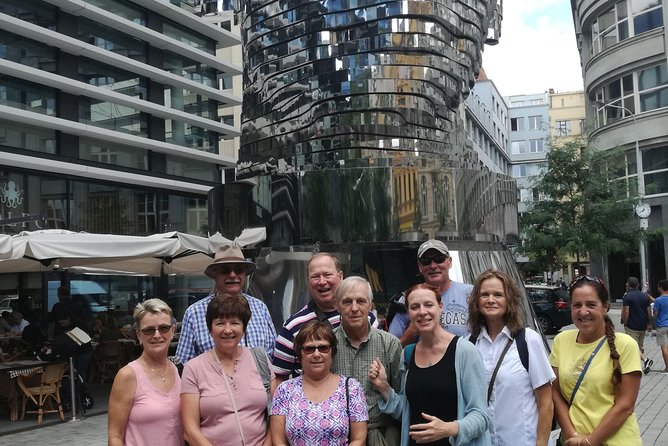
At some point you shift gears. This is not a left-brain only tour, but it is structured like one: you move from the flowing, decorative language of Art Nouveau into the sharper, modern statements of Prague’s Cubist and Rondo-Cubist architecture.
The tour explicitly sets up the comparison. It draws parallels throughout the walk, using Cubist buildings to show how Prague’s architectural identity evolved. You also get context about modern sophistication and resurgent national identity, not as abstract slogans but as something expressed through buildings.
This shift is where many style tours fall apart, because they either treat Cubism like a separate topic or they throw too much at you at once. Here, the pacing and comparison are the selling point. The guide helps you connect the dots between styles you might otherwise see as unrelated.
By the time you reach the Cubist-focused stops, you should feel like you have a working toolkit. You can compare what you saw earlier at Art Nouveau sites and look for the visual differences the guide wants you to notice, without needing an art degree.
House of the Black Madonna and the Bank of the Legions, compared up close
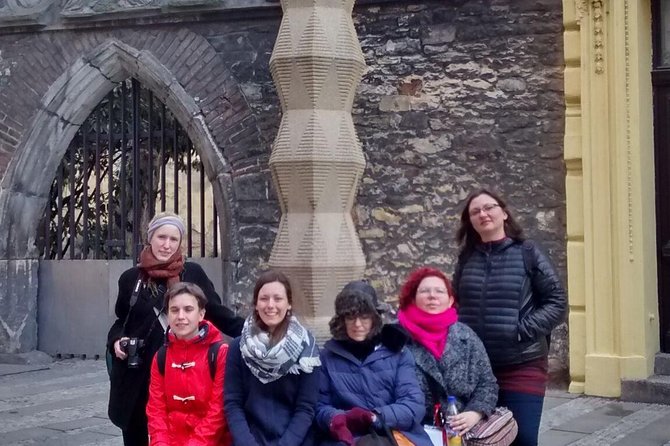
The tour uses specific Prague examples to anchor the style comparison. Two of the most important are the House of the Black Madonna and the Bank of the Legions.
You start at the House of the Black Madonna area at the beginning of the tour, and later it becomes a repeat reference point. That repetition is useful. You get a first look early on, then the guide can explain it again with Cubist context after you have learned how to view Art Nouveau cues.
The Bank of the Legions is brought in as another key example of Prague’s Cubist and Rondo-Cubist architecture. The guide’s job here is to help you see how Prague expressed a modern identity through architectural form, and how those choices differed from the Art Nouveau approach you were studying earlier.
In practical terms, this is what you should pay attention to during these stops:
- how the guide frames each building’s role in Prague’s modern image
- how the conversation shifts from decorative motifs to architectural statements
- how the guide uses comparison to keep the style logic clear
What the guide does with 3 hours, and why pace can be good
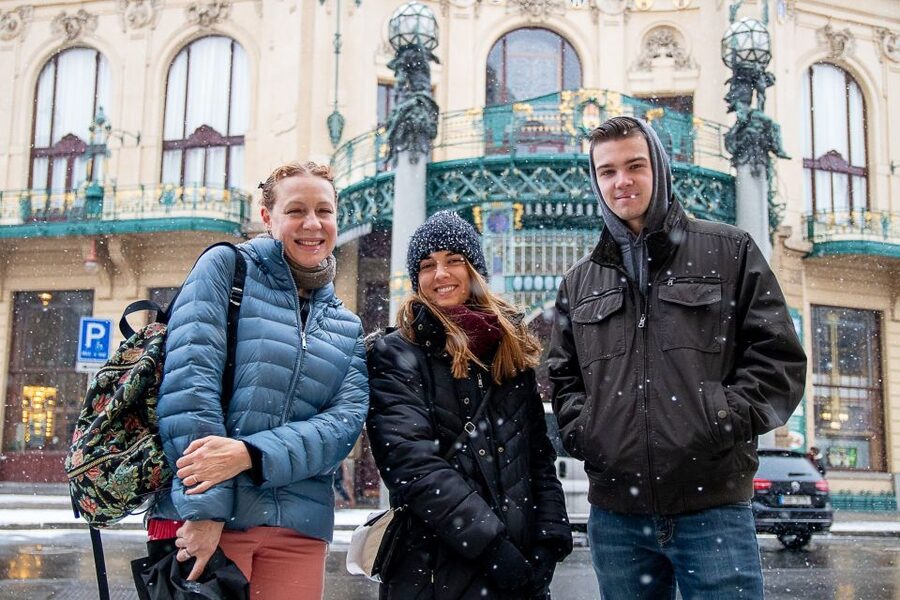
A 3-hour walking tour sounds short, and it is, which is why guide technique matters. This experience is designed to keep you moving. You should not expect long stretches of standing still staring at a wall.
The guides running this tour include people trained to teach and interpret, including professors and doctoral students. That shows up in explanations that are clear and built around recognition rather than lecture.
Humor also plays a role. Multiple guides associated with this experience are noted for mixing serious architectural context with light touches that keep people engaged. You’ll still learn a lot, but it won’t feel like you are stuck in a museum talk.
There are also small comfort breaks built into the reality of walking. You should expect pauses for coffee and restrooms when needed, and if weather is bad, the route is planned so you can get inside buildings for closer looks and a bit of warmth.
One caution: if you rely on capturing perfect photos every time, tell yourself in advance to be efficient. You will get chances to take pictures, but the guide keeps time tight so the full style arc fits into the 3-hour window.
How much is $123 really worth for this architecture focus?
The price is listed as $123 per person, and the duration is 3 hours, with a live English guide. So the value question is simple: what do you get for your time?
You get three things that usually cost extra on your own:
- a structured way to recognize Art Nouveau cues, like ginkgo biloba leaf motifs and interior lighting
- access to meaningful stops, specifically Lucerna bar and the Grand Hotel Europa, plus Cubist anchor sites like the Bank of the Legions and the House of the Black Madonna area
- a guide with deep professional training, including historians and art critics, not just general city knowledge
This makes the price feel less like paying for walking and more like paying for instruction in how to look. If you have ever wandered Prague and felt overwhelmed by style variety, this tour is built to solve that exact problem.
Also, small groups and private options are available. Even if you go in a standard group, small-group energy tends to make it easier to ask questions and keep the walk from feeling like a mass production.
If architecture is your priority, $123 for 3 hours with multiple high-value stops is a fair deal. If you want a relaxed stroll with lots of free time at every location, you might be happier with a longer general sightseeing tour.
Who should book this Prague Art Nouveau and Cubism tour
This tour is a strong match if you:
- want a focused architecture experience without needing prior knowledge
- like learning visual clues you can apply after you leave
- enjoy cafés, hotels, and public spaces where design affects daily life
- plan a short Prague stay and want the most “meaning per minute”
It also suits couples and small groups, especially if you want to spend time together but still have a shared topic to guide the conversation.
If you are not into architecture at all, you might consider it a niche pick. But even then, Lucerna bar and Grand Hotel Europa make it more than academic. You’re walking through the city’s idea of taste, from pre-war café culture to modernist statements in Cubist and Rondo-Cubist forms.
FAQ
What is the duration of the Prague Art Nouveau and Cubism walking tour?
The tour lasts 3 hours.
Where does the tour meet?
The meeting point is the House of the Black Madonna / Grand Café Orient, downstairs at the front doors on Ovocný Square, at Ovocný 19, Prague 1.
What stops are highlighted on the tour?
Key highlights include the Lucerna bar and the Grand Hotel Europa, plus Cubist examples such as the House of the Black Madonna and the Bank of the Legions.
Is the tour offered in English?
Yes, the live tour guide speaks English.
How much does the tour cost?
The price is $123 per person.
What kind of guides lead this experience?
The guides include professors, doctoral students, historians, journalists, art critics, and published authors.
Is there free cancellation?
Yes. You can cancel up to 24 hours in advance for a full refund.
Should you book this Prague Art Nouveau and Cubism walking tour?
Book it if you want a guided way to see Prague’s modern face through Art Nouveau details and then understand how Cubist and Rondo-Cubist architecture changed the city’s visual language. It is not a casual stroll, but the payoff is that you leave with practical recognition skills, not just a list of buildings.
Skip it only if your main goal is slow, flexible wandering, or if you feel uncomfortable with an efficient pace in 3 hours. If you like learning while you walk, and you care about what design says about culture, this one is an easy yes.
Recently reviewed around Prague
- 1 Hour Prague Party Hummer Limousine Ride★ 5.0 · 27 reviews
- 1 hour ride in vintage limousine★ 5.0 · 49 reviews
- The Clinic: Escape room in Fun Arena Prague★ 4.7 · 3 reviews
- Tour of Prague Castle in italian language ticket included★ 4.9 · 25 reviews
- The essentials of Prague★ 5.0 · 3 reviews
- Prague: Lobkowicz Palace Ticket & Audio Guide★ 4.5 · 130 reviews
- The best Trike Bike Prague city tour★ 5.0 · 3 reviews
- Prague Castle: Admission Ticket With Transfer And Audioguide★ 4.5 · 111 reviews
Walking Tours, compared.
3-Hour Walking Tour of Old Town & Prague Castle
Read our review →
Ghost Walking Tour Where Legends Come To Life
Read our review →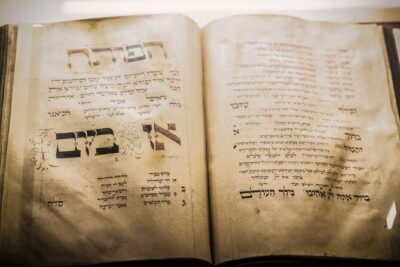
Jewish Quarter Walking Tour with Admission Tickets
Read our review →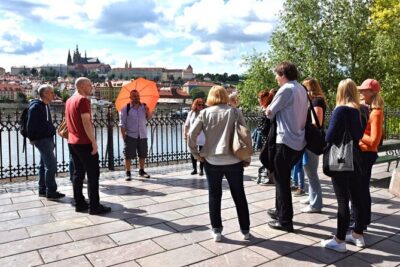
Prague Guided Walking Tour and Cruise with Authentic Czech Lunch
Read our review →
Old Town and Jewish Quarter Guided Walking Tour
Read our review →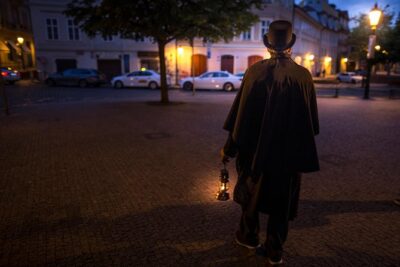
Prague Ghost and Legend of Old Town Walking Tour
Read our review →
Prague 3-hour Afternoon Walking Tour including Prague Castle
Read our review →
Ghosts and Legends Nighttime Guided Walking Tour
Read our review →Browse the lists this tour appears in