
Reviewed · WWII TOURS
Prague: 3–Hour Communism and World War 2 E-Bike Tour
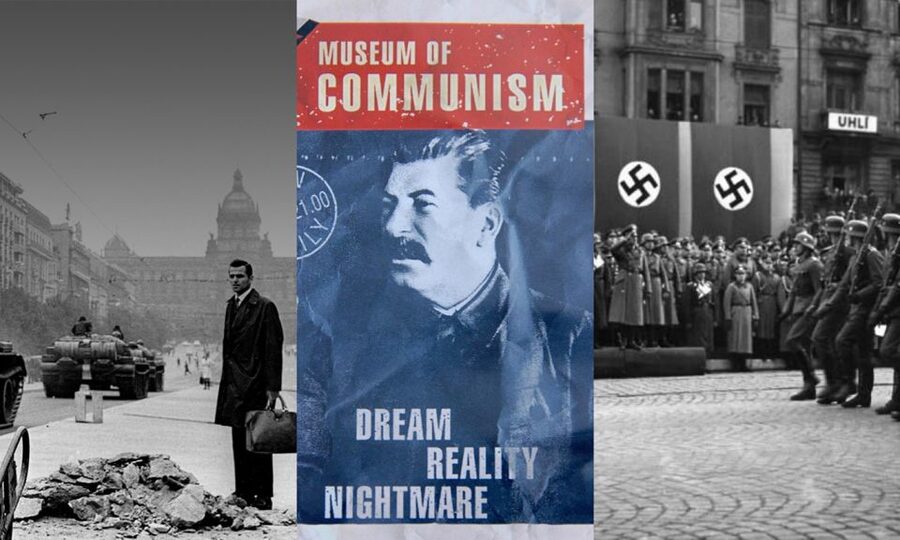
Prague’s twentieth-century story is heavy, but this 3.5-hour e-bike tour turns it into a moving map of Nazi occupation, Soviet Communism, and the people who resisted both. I love how the route links major landmarks like the John Lennon Wall and the Museum of Communism to the big political story you came for. One consideration: you ride through areas with cobblestones, and you may need to walk your bike through crowded stretches.
The best part is the human scale. With a small group limited to 10 people, guides such as Niam, Marek, Michal, Nayeem, and Tatiana can pause for questions and tailor explanations as you go. If you’re the type who likes context, this is a practical way to see key sites and understand why they mattered.
Key highlights you will care about
- Free Museum of Communism entry stops the story from feeling abstract
- Velvet Revolution student march routes give you a sense of how change happened on streets
- John Lennon Wall and Kafka Museum add Prague texture beyond politics
- SS Headquarters and Jewish Old Town anchor the WWII and Nazi parts of the tour
- E-bikes do the heavy lifting so you focus on history, not sweat
- Water, helmet, and poncho options keep the ride comfortable and safe
A 3.5-hour e-bike ride through Prague’s hardest twentieth century chapters
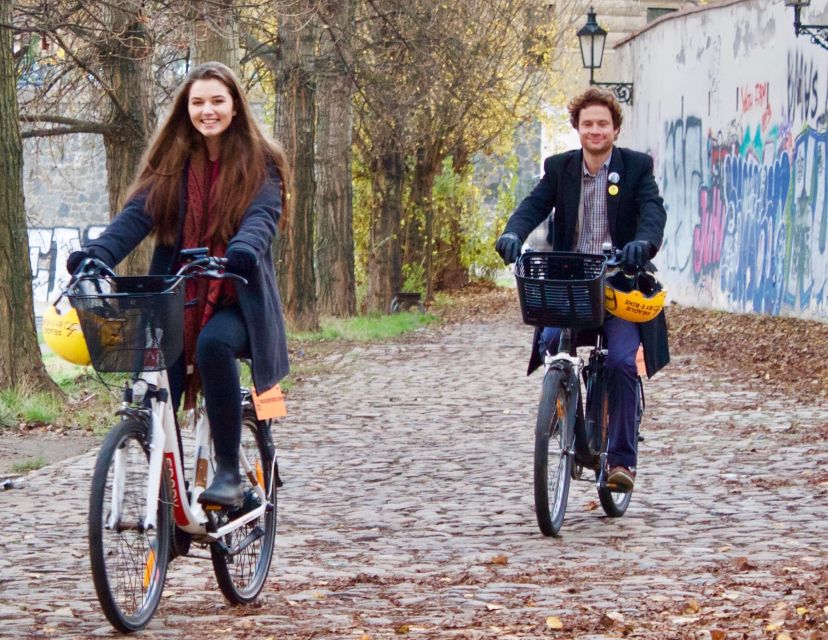
If Prague’s postcard views are your main plan, you might think a Communism and WWII tour would feel like a lecture. This one is different. You still get the politics, but you also get something physical and memorable: you travel between places where history actually happened, and you hear what you are seeing as you roll past it.
This is a small-group experience, limited to 10 participants, so it stays conversational instead of turning into a monologue. The tour packs over 30 sites, monuments, and significant locations into about 3.5 hours, which means you do not have to string together multiple museum days just to understand the big picture. And because it is an e-bike tour, you can cover a lot of ground without exhausting yourself.
I also like that the tour has built-in pacing. You get an active ride between stops, then you get a structured break with free entrance to the Museum of Communism. That break matters, because Communist-era Prague makes more sense when you can see objects, displays, and recreated settings rather than just hearing dates and slogans.
The main drawback is not the topic. It is the setting. Expect cobblestones in central Prague, and expect that some segments may require walking your bike through busier areas. That is not a dealbreaker, but it is worth knowing so you show up comfortable wearing closed-toe shoes and ready for some uneven pavement.
More WWII and resistance tours in Prague:
- Prague: WWII Guided Tour & The Crypt of Operation Anthropoid
★ 4.7 · 1,030 reviews - WWII in Prague Tour & The Crypt of Operation Anthropoid
★ 5.0 · 817 reviews - Small-Group World War 2 & Operation Anthropoid Tour in Prague
★ 5.0 · 231 reviews
Where you meet near Újezd, and how the ride stays comfortable
You meet at Prague by E-Bike, Besední 440/2, 118 00 Praha 1-Malá Strana, close to the tram station Újezd, in Prague 1. Plan to arrive 15 minutes early so you have time to check in, get geared up, and settle before the group rolls out.
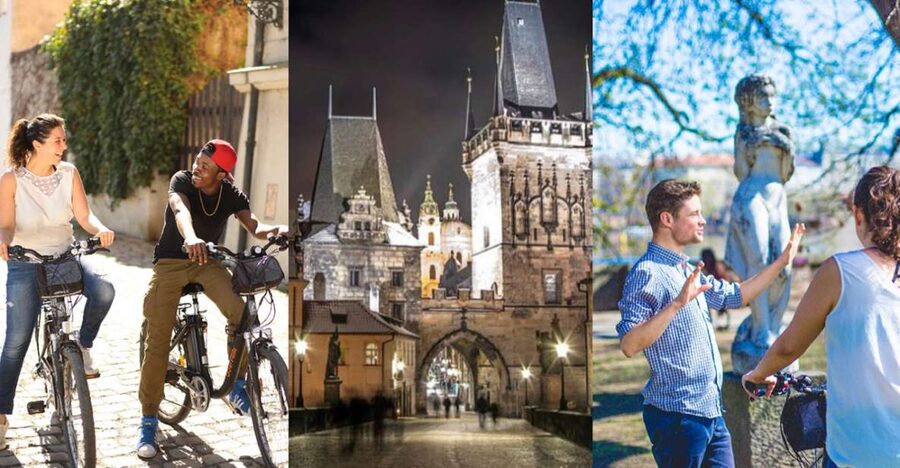
The basics are covered for you. You get an e-bike, plus a helmet. If you request it, you can also get a poncho, which is useful because Prague weather can change fast. You also get a bottle of water during the tour. At the end, you get one cold beer, which is a nice reset after a topic-heavy route.
What you should mentally prepare for is the mix of riding and short bike-walking moments. One small caution from past participants is that the paths through crowded areas can mean you walk the bike more often than you expect. The good news is that the tour is only 3.5 hours, and you are not stuck doing this for long stretches. The e-bikes take the strain off the longer transfers, so the walking segments feel like brief interruptions rather than the main event.
Group size also affects comfort. With a maximum of 10, and sometimes even smaller groups in practice, you are more likely to get personal attention. That matters when a guide is explaining emotionally charged material like wartime occupation and political repression, because you want to be able to ask a quick question and keep moving.
Old Town, Lennon Wall, and Kafka Museum: Prague beyond slogans
The tour starts by touching the classic Prague core, including Old Town. This is smart. It gives you a visual baseline so that when the story turns to occupation and Communist rule, you can actually orient the political events to the city you recognize.
From there, you hit two stops that are very Prague: the John Lennon Wall and the Kafka Museum.
John Lennon Wall is not just a photo opportunity. It is a symbol of how public space can carry dissent and memory. The tour’s focus on Communism and WWII makes the wall feel more than quirky street art, because you hear how Prague residents used public expression in tense times. Even if you only catch a portion of the wall during your stop, you will understand why people have cared so much about it for so long.
Kafka Museum is another strategic choice. Kafka is one of those Czech cultural names that helps you connect Prague to the broader European story of anxiety, identity, and power. In a tour that could otherwise feel strictly chronological, this kind of cultural stop gives your brain a place to breathe, then pulls you back in with context about how Czech life and ideas were shaped under pressure.
I like these stops because they show Prague’s dual nature: beauty and complexity in the same frame. You are not only learning what happened. You are also learning how the city holds the evidence.
The main practical note here is timing. Because the tour covers more than 30 stops, do not plan on lingering too long at every single landmark. You should treat each stop as a focused window, with the guide’s explanation helping you decide what to look at while you are there.
Communist memorials and the Museum of Communism break that makes it click
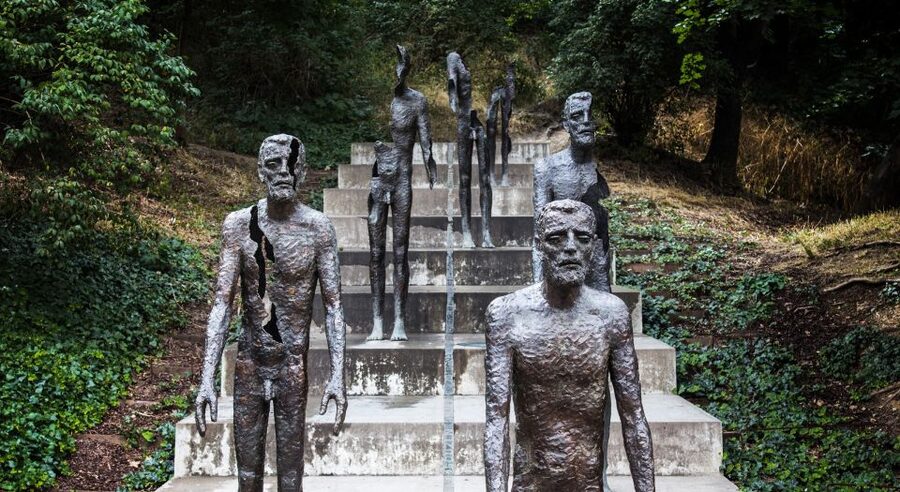
This is the part of the tour where the name makes sense. You visit key Communist locations, including the Communist Memorial and the Victims of Communism memorial. These stops are designed to anchor the story in real remembrance, not just abstract politics.
You also visit major sites tied to the Communist era and the broader Soviet influence. The guide links what you see to how the system worked in everyday life, and why people resisted. It can feel grim, but that is also why the tour’s pacing works. You are not left alone with the subject. You keep moving between meaningful locations while the guide keeps explaining the causes and consequences.
Then you get the biggest relief point of all: free entrance to the Museum of Communism. This stop is not only a break from riding. It gives you a level of detail the streets cannot provide.
In the museum, you can expect exhibitions that use items, images, and even rooms styled to reflect Communist-era life. That style of presentation matters because it helps you picture how power showed up in everyday settings. After you walk out from there, the earlier memorials and Communist sites make more sense as part of one long system rather than separate trivia.
It also gives you a natural pause during the tour. The museum break is a chance to cool down, rest your legs, and reset your attention before you continue toward the most emotionally charged wartime and resistance material.
One more practical point. If you tend to get cold or tired easily, plan to use this museum stop as your main rest window. The tour length is fixed, so this is where you can slow down without falling behind.
More communism and Cold War tours:
- Prague: Communism History and Nuclear Bunker Guided Tour
★ 4.7 · 2,417 reviews - Prague Communism History and Nuclear Bunker Tour
★ 5.0 · 1,742 reviews - Communism & Nuclear Bunker Tour + 70s Canteen Lunch (own expense)
★ 5.0 · 1,036 reviews - Prague: Communism and Bunker Tour with 70s Canteen Lunch
★ 4.8 · 250 reviews
Velvet Revolution footsteps, and the Anthropoid filming location at Cyril and Methodius Church
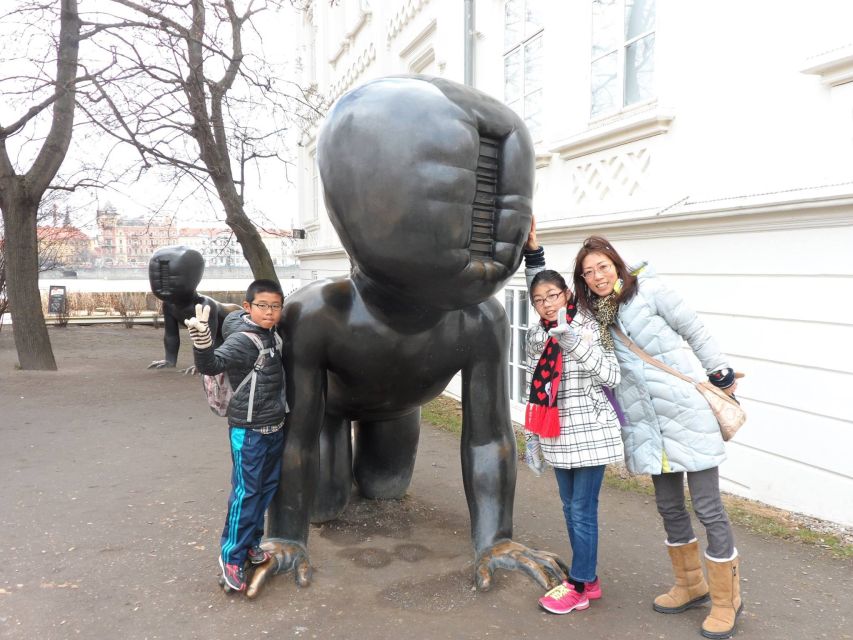
One reason this tour stands out from many “politics walks” is that it does not stop at monuments. It follows the footprints of the student march that helped spark the Velvet Revolution. That phrase matters because it shifts the story from leaders and documents to people in motion. You start to see how change happened through crowds, courage, and momentum.
You also visit places that connect the Velvet Revolution story to the city’s layout. The guide ties the route to the message: when authority cracks, everyday people can become history-makers. That makes your ride feel active instead of passive.
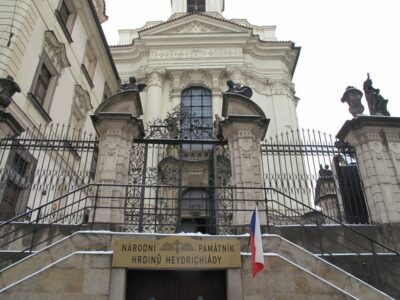
Another fun and surprisingly relevant stop is the filming location of Anthropoid at the Cyril and Methodius Church. Anthropoid is a 2016 war film, and the tour uses the church spot to connect what you learn about WWII to how the story keeps being retold. Even if you have never seen the film, you will get why this location would matter for cinematic storytelling, and it gives you a modern bridge into the older events.
This section is where I think the tour becomes most emotionally satisfying. The WWII material can feel distant until you connect it to later resistance. Then the Velvet Revolution route gives you a more hopeful angle, not by erasing hardship, but by showing what people did after hardship.
Because you are still on an e-bike, you can keep the energy up here. You are not just standing in place. You are moving through the city while the guide narrates the cause-and-effect chain that leads from occupation and repression to organized change.
SS Headquarters, Jewish Old Town, and anti-Nazi resistance sites
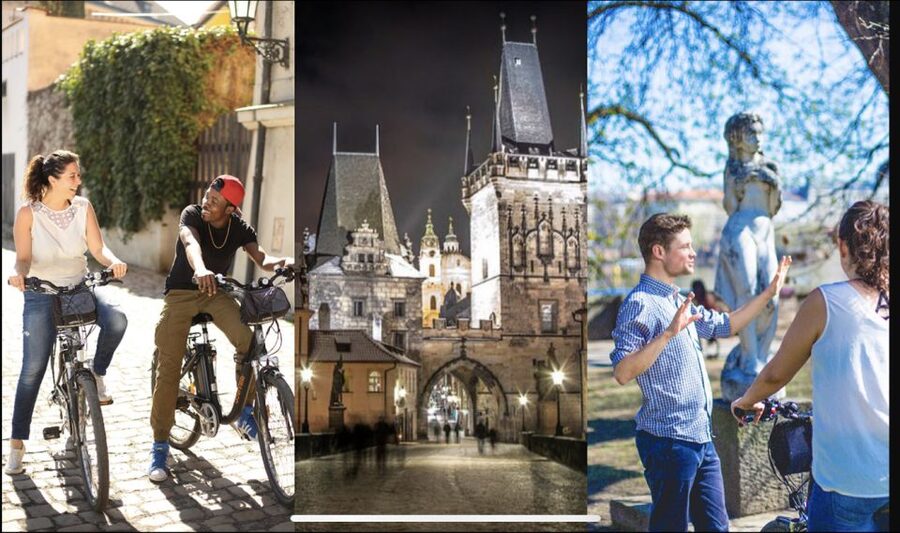
The WWII and Nazi parts of Prague can feel overwhelming on your own. This tour keeps the focus tight by pointing you to key places, including SS Headquarters and the Jewish Old Town, as well as anti-Nazi resistance landmarks.
This section is emotionally heavy, so the value here is not just location. It is explanation. The guide connects these sites to the broader wartime story, including the risks people faced and why resistance took the shapes it did.
SS Headquarters is a key stop because it represents the machinery of occupation and control. Seeing the location and hearing what the organization represented in context helps you connect the past to the concrete geography of the city.
The Jewish Old Town portion brings another necessary layer. You get to understand the community context alongside the wartime policies that devastated that community. Again, the main win is that the guide ties the human impact to the specific places you are standing near.
You also stop at sites linked to anti-Nazi resistance. That is important because resistance is more than a single hero story. It is networks, decisions, and moments under pressure. When the guide points out these landmarks, you start to understand how resistance existed even when the odds were awful.
One small caution: if you are sensitive to intense historical topics, pace yourself during these stops. The e-bike keeps you moving, but you may want to ask questions and pause when you need a moment. The small group size makes it easier to do that without feeling rushed.
WWII bombing locations and why the city looks the way it does
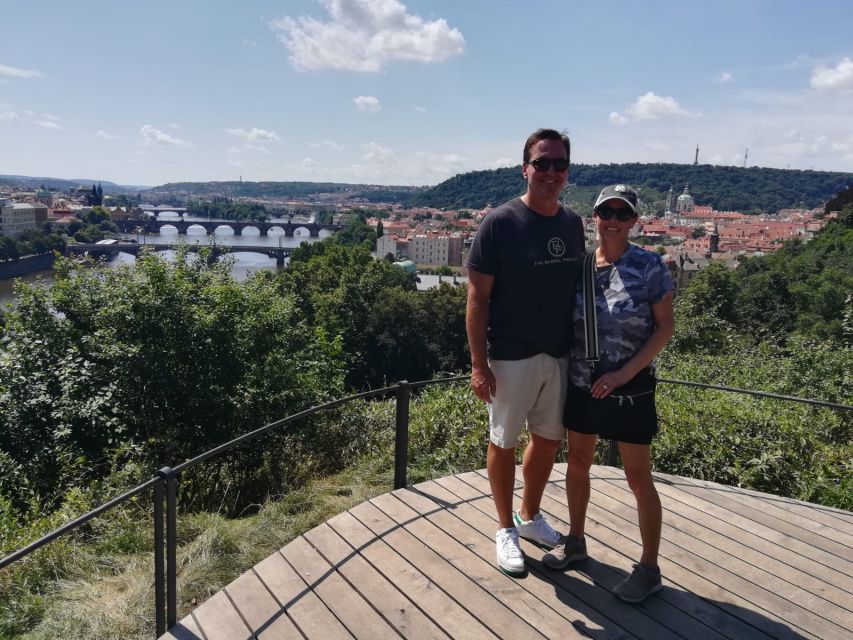
Prague is not a “one battlefield” city. But the scars of WWII show up in how the city carries memory. That is why the tour includes Second World War bombing locations. These stops add a different angle to the story.
Instead of focusing only on political control or resistance groups, bombing sites help you understand the physical impact of the war. You see how conflict reaches beyond front lines and becomes part of the urban environment.
In a short tour, it is easy to forget that history is not only made in politics offices and underground spaces. Bombings are the kind of events that disrupt normal life completely. Including them means you get the wider context for why civilians experienced fear, loss, and disruption.
From a practical travel point of view, this also helps you notice details you might otherwise skip. When you understand what you are looking at, the city becomes a clue book. The guide helps you turn random streets into meaning.
If you want one takeaway, it is this: the best way to understand Prague during WWII is to treat it like a living map. The tour does that for you, and the e-bike makes sure you can cover enough ground to connect the clues.
Price at $74: what you actually get for your money
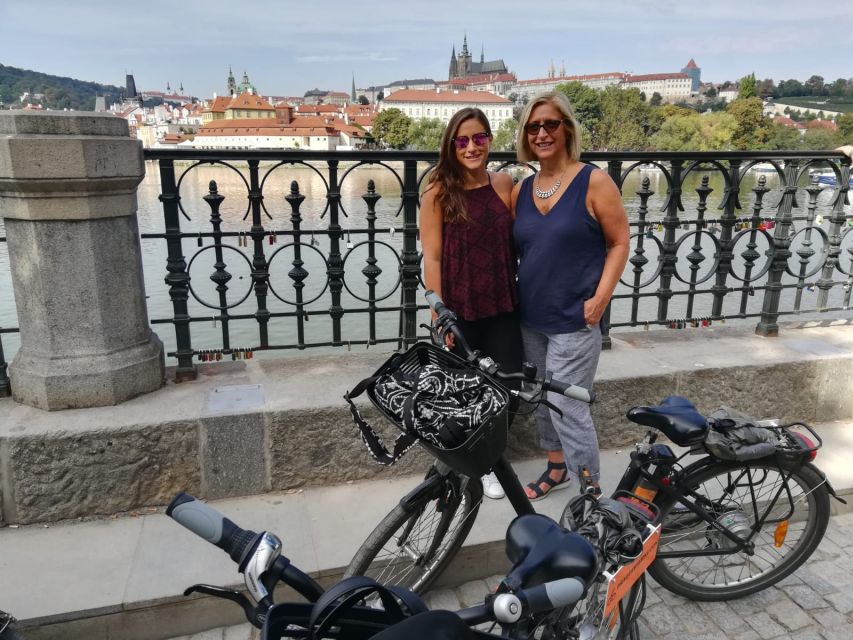
At $74 per person for a 3.5-hour experience, this is not the cheapest thing on the Prague list. But it is also not overpriced for what you receive.
Here is the value equation you should consider:
- You get an e-bike for the full route, so you do not need to plan transport between scattered sites
- You get a live English guide, and the group is limited to 10, which usually means more attention and fewer long waits
- You visit over 30 sites, monuments, and significant locations, so you get density rather than slow sightseeing
- You get free entrance to the Museum of Communism, which is a major included component, not a paid add-on
- You receive a bottle of water and a cold beer at the end, plus helmet and a poncho if requested
In other words, a big chunk of the cost is not just the guide. It is the logistics and the included museum entry that would otherwise require separate planning.
One more value angle: the tour seems designed for hot days too, since the e-bike helps you keep moving without feeling like you need a recovery day afterward. Still, remember the cobblestone reality, and wear shoes that handle uneven pavement.
If you like spending money on experiences that do the planning for you, this price will feel fair. If you prefer low-cost free walking tours and self-guided museum visits, you might decide to pick and choose. But if you want one guided story connecting Communist Prague, WWII occupation, and resistance, this is a strong one-ticket option.
Who should book, and who might skip
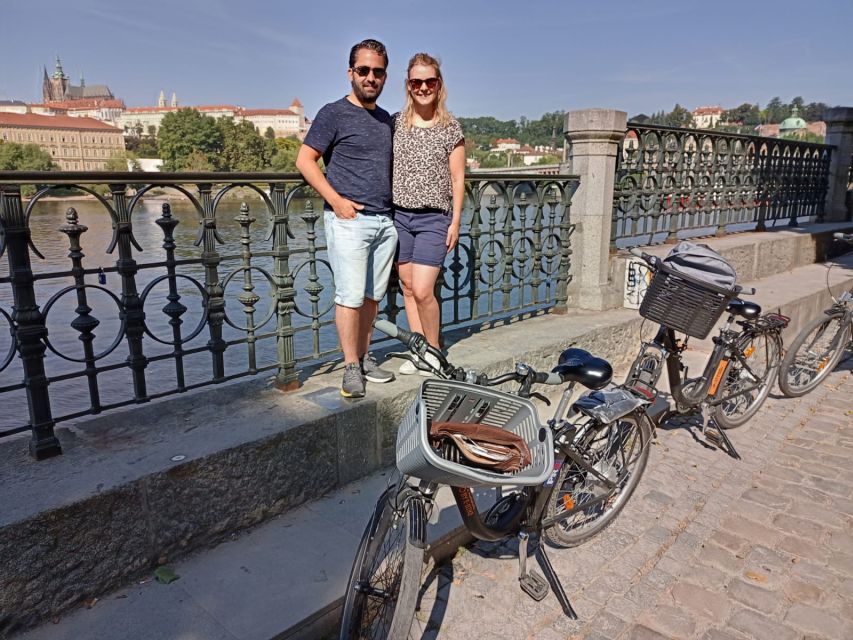
This tour fits best if you want context and you like getting your bearings fast. I think it is ideal for:
- First-time visitors who want more than the “old city postcard” version of Prague
- People who like city-walking tours but want help handling the hills, distances, and pacing
- Travelers who value a small group atmosphere and a guide who can answer questions
It might be less ideal if:
- You dislike cobblestones and you hate walking your bike through crowds
- You want lots of unstructured time at each stop, because the tour is packed and time is used intentionally
- You prefer light entertainment over heavy historical topics
Also, since you bring an ID (passport or ID card) and you are asked to arrive 15 minutes early, it helps if you are comfortable with a scheduled activity day.
Should you book the Prague Communism and World War 2 e-bike tour?
If your goal is to understand how Prague moved from WWII trauma into Soviet-era Communism and then toward the Velvet Revolution, I would book it. The combination of e-bike mobility, small group format, and the free Museum of Communism stop makes it feel like a complete story rather than a list of stops.
Go for it especially if you like guides who can connect places to meaning, and if you want the city’s political history without spending your whole day bouncing between separate tickets and neighborhoods.
FAQ
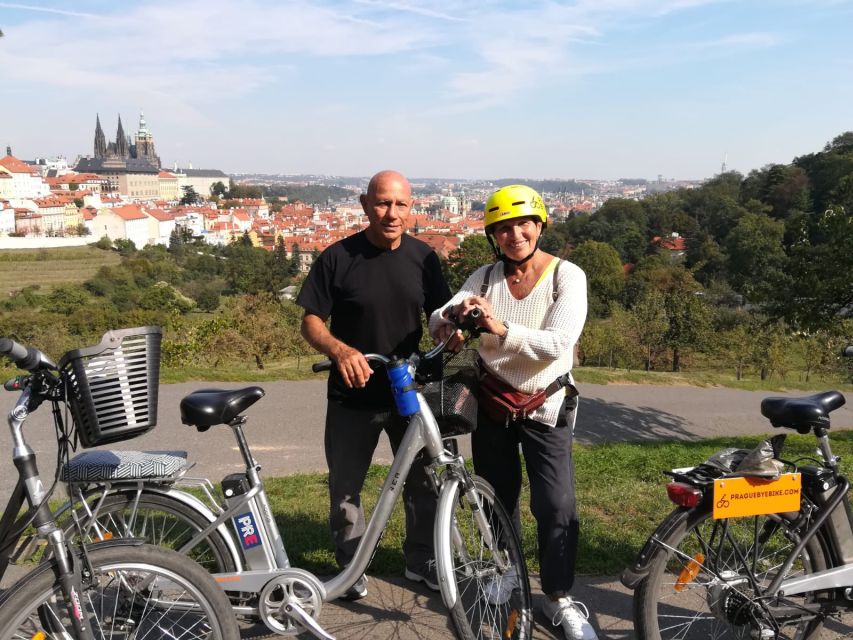
Where is the meeting point, and when should I arrive?
You meet at Prague by E-Bike, Besední 440/2, 118 00 Praha 1-Malá Strana, near tram station Újezd (Prague 1). Please arrive 15 minutes before the tour starts.
How long is the tour?
The duration is 3.5 hours. Starting times vary, so you will need to check availability.
What group size is it?
It is a small group with a limit of 10 participants.
Is the tour guide in English?
Yes, it is a live tour guide in English.
What do I need to bring?
Bring your passport or ID card.
Does the tour include free entrance to the Museum of Communism?
Yes. You get free entrance to the Museum of Communism during the tour, and the itinerary includes multiple other major sites across Prague.
Can I cancel, and can I pay later?
You can cancel up to 24 hours in advance for a full refund. You can also reserve now and pay later to keep your plans flexible.
More Bike and E-Bike Tours in Prague
- 3-hour Complete Prague Bike Tour
★ 5.0 · 3,674 reviews - Prague E-Bike City Tour with A Local Guide
★ 5.0 · 924 reviews - 7 BEST VIEWS – PRAGUE eBIKE TOUR
★ 5.0 · 793 reviews - Prague: Complete Bike Tour
★ 4.8 · 769 reviews
Recently reviewed around Prague
- 1 Hour Prague Party Hummer Limousine Ride★ 5.0 · 27 reviews
- 1 hour ride in vintage limousine★ 5.0 · 49 reviews
- The Clinic: Escape room in Fun Arena Prague★ 4.7 · 3 reviews
- Tour of Prague Castle in italian language ticket included★ 4.9 · 25 reviews
- The essentials of Prague★ 5.0 · 3 reviews
- Prague: Lobkowicz Palace Ticket & Audio Guide★ 4.5 · 130 reviews
- The best Trike Bike Prague city tour★ 5.0 · 3 reviews
- Prague Castle: Admission Ticket With Transfer And Audioguide★ 4.5 · 111 reviews
WWII Tours, compared.
WWII Guided Tour & The Crypt of Operation Anthropoid
Read our review →
WWII in Prague Tour & The Crypt of Operation Anthropoid
Read our review →
Small-Group World War 2 & Operation Anthropoid Tour in Prague
Read our review →
World War 2 and Operation Anthropoid Walking Tour
Read our review →
Operation Anthropoid Tour or Terezín Concentration Camp Tour
Read our review →Browse the lists this tour appears in