
Reviewed · WWII TOURS
Small-Group World War 2 & Operation Anthropoid Tour in Prague
Prague has a way of looking calm when it should not. This small-group WWII walk is interesting because it connects the Nazi occupation to specific streets and buildings tied to Operation Anthropoid, Reinhard Heydrich, and the resistance that fought back. You also get a clear storyline, so the city stops feeling like random postcard scenery.
Two things I like a lot are the focus on real locations (not just names on a timeline) and the storytelling style from guides such as Daniel and Allen, who keep the personal stakes in view as you move from stop to stop. One consideration: the topic is dark, and there is a fair amount of walking and standing, so it helps to wear comfy shoes and be ready for heavy history.
Key highlights you’ll feel in this Prague WWII tour
- Operation Anthropoid brought down to street level, with the Heydrich assassination and the follow-up manhunt tied to places in central Prague
- Every stop has a purpose, from the early political pressure that set the stage to the 1945 uprising aftermath
- Resistance hideouts and plotting are explained where they happened, so you can actually picture the decisions and risk
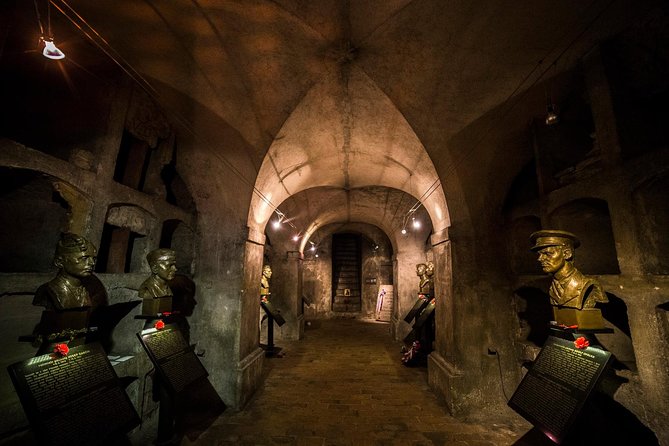
- You finish with an especially powerful visit, including a guided stop at St Cyril and Methodius and a memorial crypt tied to the Heydrich terror
- Small-group size (up to 30) makes it easier to ask questions and not get lost in the crowd
- You get context beyond the guidebook, including how the occupation affected daily life and Czech institutions
WWII and Operation Anthropoid, told where Prague still remembers
What makes this tour work is simple: it treats Prague like a map of cause and effect. You start in central Prague, then follow the logic of the Nazi occupation, from how the war became likely, to how power was enforced, to how assassination and sabotage escalated the terror. It is not a “look at this statue” walk. It is a guided route that helps you understand what you are seeing.
And because this is built around concrete addresses, you do not have to play detective on your own. Prague’s historic core can be gorgeous and confusing at the same time. Here, the guide acts like the thread that ties everything together, so you are not drifting between stops with the sinking feeling that you are missing the point.
The emotional weight matters too. There is no sugarcoating. You learn about executions, torture, betrayal, and collective punishment. This is exactly why the guide’s framing is so important. Without it, you would likely just read plaques and move on.
More WWII and resistance tours in Prague:
- Prague: WWII Guided Tour & The Crypt of Operation Anthropoid
★ 4.7 · 1,030 reviews - WWII in Prague Tour & The Crypt of Operation Anthropoid
★ 5.0 · 817 reviews - Prague: World War 2 and Operation Anthropoid Walking Tour
★ 4.8 · 193 reviews
Timing and pace: a tight 3-hour route with real standing
The tour runs about 3 hours, starting at 1:30 pm, and it is structured for a busy day. The meeting point is in Staré Město, at Týnská 627/7, and the tour ends at the Orthodox Cathedral of Saints Cyril and Methodius in Nové Město (Resslova 9a).
Expect moderate walking and some standing. A few stops are basically “look around and listen,” where the location itself matters more than what you can physically inspect. That is normal for occupation-history tours in old European cities, and it can be a plus if you enjoy explanations and photos. If you prefer highly visual sites only, you might find some segments more talk-heavy than expected.
Also, keep in mind the tour is not aimed at very young kids. The operator notes that the historical facts are intense, and children up to 6 are free, but a child must be accompanied by an adult. If you are traveling with kids who handle heavy topics well, you can consider it. If not, you might want a gentler option.
Stop-by-stop in Old Town: where the war story starts showing up
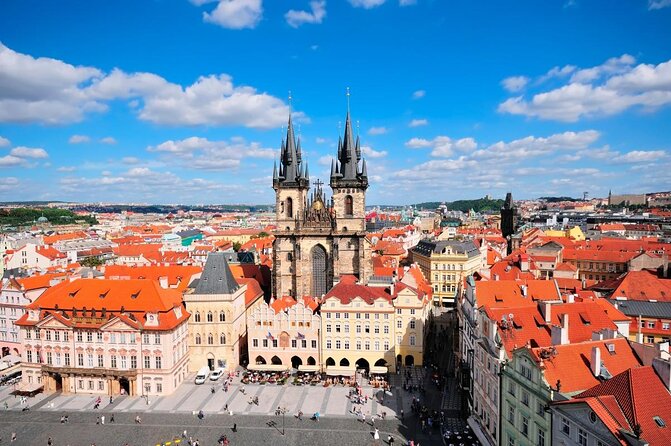
The tour begins right in the center, outside Mcgee’s Trips & Tickets at Týnská 627/7. The practical advantage of starting there is that you are already in the right zone for wandering. You are not crossing Prague to get to a single museum. You are staying in the core and learning to read it.
From there, you move through a set of stops that build the background first:
The post-WWI shock that set the trap
At U Budovce, you get the longer view: the Treaty of Versailles, the reshuffling of power with new nations, runaway inflation, and the economic stress that helped extremist politics grow. It is a reminder that WWII did not happen out of nowhere. It also helps you understand why hatred and nationalism became political fuel across Europe.
Same city, a completely different kind of day:
- Prague: 50-Minute Sightseeing Evening Cruise
★ 4.2 · 33,780 reviews - Prague: Medieval Dinner with Unlimited Drinks
★ 4.4 · 19,847 reviews - Prague: Castle Tour with Local Guide and Entry Ticket
★ 4.6 · 10,422 reviews - Prague Castle 2.5-Hour Tour Including Admission Ticket
★ 4.7 · 8,927 reviews
Sudeten politics and the Munich Agreement
At the Stone Bell House, the focus shifts to how specific regions and political movements were used to justify takeover. You hear about the Sudeten Deutsche Party, the Munich Agreement, and the steps that led into the Protectorate of Bohemia and Moravia. This is one of those segments that can feel a little “history class” at first, but it matters because it shows how occupation was prepared through agreements and pressure before troops and terror became the reality.
A Gothic landmark viewpoint that anchors the Old Town feel
Between the political stops, you get a moment to look at a Gothic church that has been a main church in this Old Town area since the 14th century. It is not there just for scenery. The point is contrast: the same streets that look timeless also held communities living through sudden control.
Old Town Hall scars from the 1945 Prague Uprising
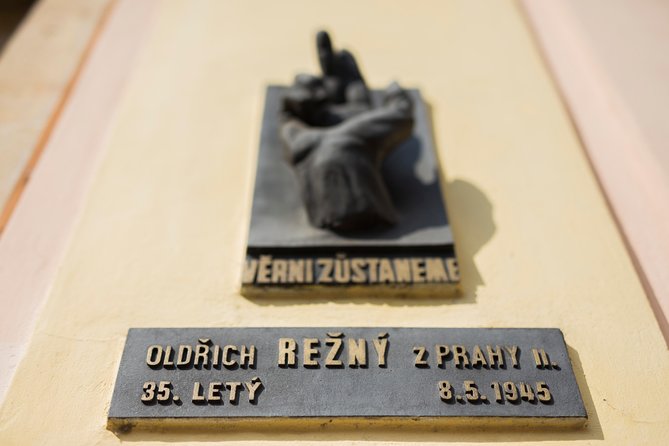
At Staroměstská radnice, you see evidence tied to the Prague Uprising in 1945, including a wing of the Old Town Hall destroyed during the fighting. The guide then connects that to what everyday life under occupation looked like, and how uprising energy turned into the endgame of WWII in Prague.
Even if you already know 1945 was the turning point, it hits differently when you are standing near the damage itself and hearing how it tied to people making risky choices under pressure.
Celetná, Heydrich, and the occupation tightened around daily life
As the tour continues toward what feels like the “pressure points” of occupation control, you start hearing details that make the Nazi takeover feel less abstract.
17 November 1939 and the shutdown of Czech institutions
At Celetná Street, the guide focuses on 17 November 1939, including the execution of Czech students and the closure of Czech universities. You also hear about the role of Konstantin von Neurath and how the Czech lands were folded into the Third Reich. Then the conversation turns to Reinhard Heydrich, including his appointment on September 27, 1941, framed as a turning point.
This section is where the “occupation” part stops being a broad word and becomes a mechanism: arrests, shutdowns, and control of education.
Resistance living close by: Josef and Marie Svatoš
At Melantrichova, the tour becomes more personal. You see a building with the apartment tied to Josef and Marie Svatoš, and you learn why places like this mattered for resistance operations. This is also where the tour brings up earlier resistance plotting, including Operation Benjamin and the Silver A and Silver B references.
If you like history that feels like it belongs to real people, this is one of your best segments. The guide’s job here is to translate a physical address into the mental picture of secrecy, risk, and coordination.
The Heydrich assassination trail: Operation Anthropoid in places you can walk
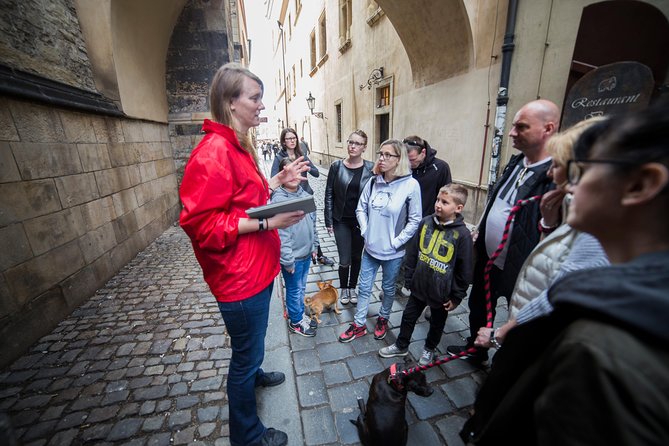
After setting the stage, the tour moves into the story you came for: the assassination of Heydrich and what followed.
The Baťa building and the exhibition objects
At Baťa, you learn how the location was used to display objects connected to the assassination. Even without dramatic ruins, the guide uses the site to show how events were staged, displayed, and weaponized for intimidation. It is a chilling reminder that information itself can be part of violence.
Wenceslas Square and the punishment that reached beyond individuals
At Wenceslas Square, the tour turns to the tragic fate of Lidice. You hear how on June 10, 1942, men were executed and women sent to concentration camps. The village ceased to exist. Learning this in the city center, rather than in a museum room, makes it harder to “box up” as history. It also underscores the Nazi practice of collective punishment.
Esplanade Hotel Prague: a Nazi favorite
At Esplanade Hotel Prague, you get another important contrast. This stop is about where comfort and power intersected with occupation. Hearing that it was a favorite hotel of the Nazis reframes the building from “a good address” into something morally compromised by use.
Petschek Palace and the Gestapo system: interrogation, torture, betrayal
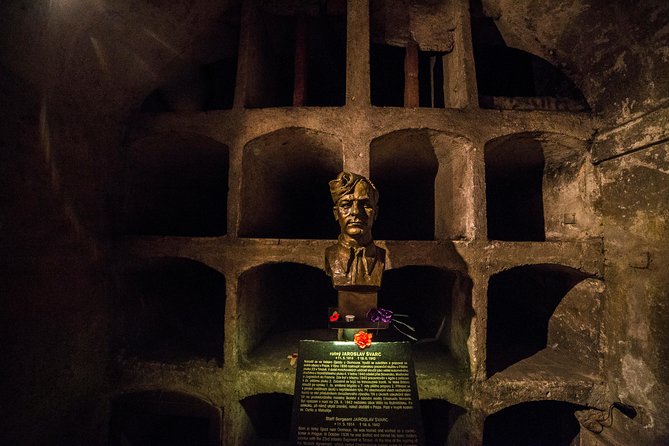
Now the tour goes straight into the machinery of terror.
At Petschek Palace, you hear how it functioned as a Gestapo headquarters, where Czechoslovaks were interrogated, tortured, and killed in large numbers. The stop is anchored by a specific turning point: June 16, 1942, when Karel Čurda enters the building and betrays his comrades in the hunt for Heydrich’s assassins.
This is one of those historical moments where you feel how quickly a plan can collapse when one link breaks. The guide’s explanations matter here, because betrayal can sound like a plot twist. In real life, it meant arrests, torture, and lives lost.
Unsuccessful operations and the quieter side of resistance
At Vodičkova, the tour mentions two covert operations, Tin a Bioscop, and notes that they were unsuccessful. This is valuable because not every resistance story ends in success. Hearing about failures keeps the history honest, and it helps you appreciate how high the risk was even when people tried.
Bombing of Prague in 1945
At Karlovo náměstí, you learn about the bombing of Prague in 1945. That rounds out the war picture, reminding you that the occupation was only one layer of suffering and disruption.
The ending you will remember: St Cyril and Methodius, then the crypt
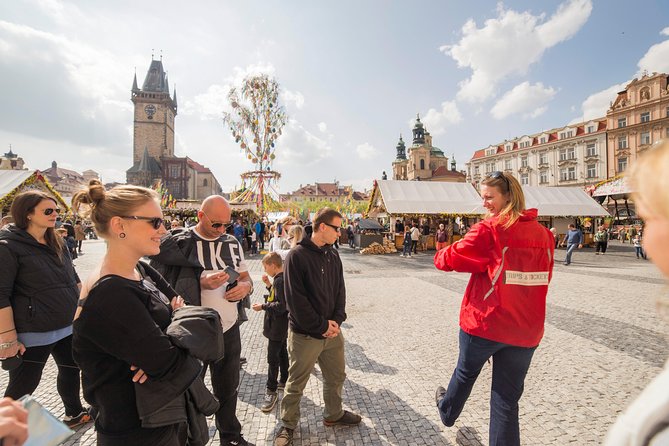
The tour closes with its most emotionally intense section.
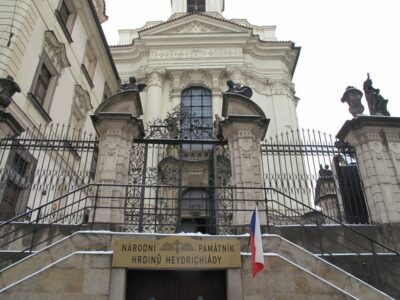
A guided visit at St Cyril and St Methodius Church
At St Cyril and St Methodius Cathedral, you get a guided visit, with entry included. This stop is not just architecture. It is part of the story of Nazi response after the assassination.
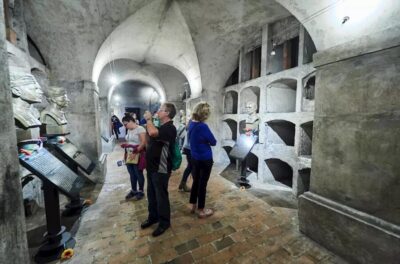
The National Memorial and the Heroes of the Heydrich Terror crypt
Next comes the National Memorial to the Heroes of the Heydrich Terror, including the crypt where Czech paratroopers paid the ultimate price. This ending is often described as the highlight, and for good reason. It gives you a place to let the story settle in your body, not just your head.
If you are the type who likes a “final stop with weight,” this ending works because it moves from explanation to remembrance. You are not required to cheer or to feel uplifted. You just get to understand what the resistance cost.
And if you are wondering whether the crypt is worth it without a guide: the guide’s job here is to point out what the site is saying, and why it matters to the wider Heydrich terror narrative.
What you actually get out of small-group guiding (and where it can fall short)
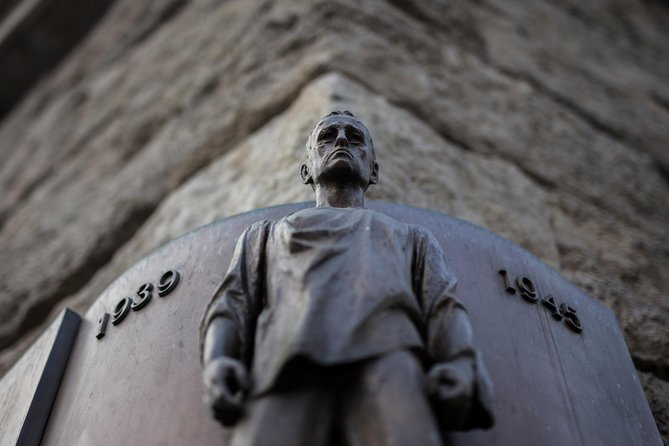
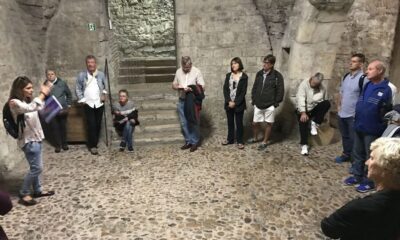
This is a small-group tour with a maximum of 30 travelers. That matters more than you might think in Prague’s center, where crowds can swallow your attention. Smaller groups also make it easier to ask questions, and in practice, guides can adapt. For example, one guide reportedly adjusted the pace when guests had evening concert tickets. That is not something you should bank on, but it suggests the guides know how to manage timing.
The biggest praise you’ll feel is consistency of storytelling. Guides such as Daniel, Allen, Dan, and Martin are repeatedly singled out for making the war in Prague feel human, not robotic. The guides do more than rattle off dates. They connect names to places, and places to decisions.
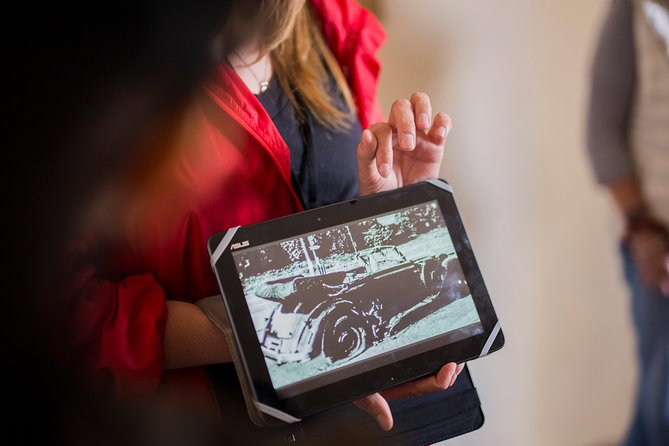
One possible drawback shows up in a different way. A couple of people mention that the tour can be more explanatory than visual at certain points, including times when the guide shows photos because there is not much to see on the street itself. Another person found the delivery overly monotonous early on and left after a short time. Those are not deal-breakers, but they are useful expectations. If you know you need high visual stimulation to stay engaged, you might want to bring a booklight focus, like a simple mindset of listening for key names and turning them into mental images.
Price and value: what $33.88 gets you in real-world terms
At $33.88 per person for about 3 hours, this tour is priced like a solid “small experience” rather than a premium day-long excursion. The value comes from two places:
1) It buys interpretation. WWII sites often look subtle from the sidewalk. The guide tells you what you are looking at and why it matters.
2) It organizes a route. Without guidance, you might connect fewer dots, or you might miss why certain buildings matter.
This price also includes the guided visit to St Cyril and St Methodius, plus the memorial crypt stop at the end. Most other stops are free from an admission standpoint, which keeps the day from turning into a pay-to-pay schedule.
For solo travelers, it is especially good value. You get structure, context, and a clear end point in the New Town area.
Who this tour is best for, and who should skip it
This tour is best for you if:
- You want WWII in Prague that stays focused on the occupation, Czech resistance, and the Heydrich assassination chain of events.
- You like history that is tied to addresses and buildings, not only museums.
- You enjoy a guided route that helps you understand what to notice as you walk.
You might want to skip it if:
- You expected battlefronts and dramatic combat scenes. Prague did not become a mass-battle city in the same way as some other places, and this tour is built around occupation, resistance, and response.
- You do not handle heavy topics well, since the story includes executions and collective punishment.
- You strongly prefer tours with lots of “look, then move on” visuals, because some stops lean on narration and photos.
Should you book this Operation Anthropoid tour?
Book it if you want a focused, walkable way to understand how WWII played out in Prague through Operation Anthropoid, the hunt for the assassins, and the terror that followed. It is also a great choice if you like being guided through city streets with a clear storyline, especially when sites can be easy to overlook on your own.
Skip it if you only want lighter sightseeing, or if you need a more purely visual tour format. If you are open to listening for three hours and you wear decent walking shoes, you will get a lot out of the route.
FAQ
How long is the WWII and Operation Anthropoid tour in Prague?
It lasts about 3 hours.
Where does the tour start and where does it end?
It starts at Týnská 627/7, Staré Město, Praha 1, and ends at the Orthodox Cathedral of Saints Cyril and Methodius, Resslova 9a, Praha 2, Nové Město.
What time does the tour begin?
The start time is 1:30 pm.
Is the tour in English?
Yes, it is offered in English.
How large is the group?
The tour is limited to a maximum of 30 travelers.
Is the church visit included?
Yes. The tour includes a guided visit to St Cyril and Methodius.
Are food and drinks included?
No. Food and drinks are not included.
Is admission included for the stops?
Most stops list admission as free, and the St Cyril and Methodius and the memorial/crypt end are included.
Is the tour suitable for children?
It is not recommended for small children because the material involves historical facts about WWII. Children up to 6 are free of charge, but children must be accompanied by an adult.
What should my fitness level be like?
You should have a moderate physical fitness level, since it involves walking and standing.
Recently reviewed around Prague
- 1 Hour Prague Party Hummer Limousine Ride★ 5.0 · 27 reviews
- 1 hour ride in vintage limousine★ 5.0 · 49 reviews
- The Clinic: Escape room in Fun Arena Prague★ 4.7 · 3 reviews
- Tour of Prague Castle in italian language ticket included★ 4.9 · 25 reviews
- The essentials of Prague★ 5.0 · 3 reviews
- Prague: Lobkowicz Palace Ticket & Audio Guide★ 4.5 · 130 reviews
- The best Trike Bike Prague city tour★ 5.0 · 3 reviews
- Prague Castle: Admission Ticket With Transfer And Audioguide★ 4.5 · 111 reviews
WWII Tours, compared.
WWII Guided Tour & The Crypt of Operation Anthropoid
Read our review →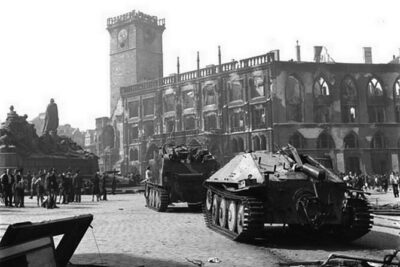
WWII in Prague Tour & The Crypt of Operation Anthropoid
Read our review →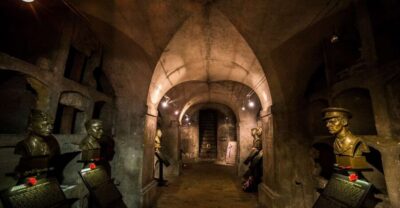
World War 2 and Operation Anthropoid Walking Tour
Read our review →
Operation Anthropoid Tour or Terezín Concentration Camp Tour
Read our review →Browse the lists this tour appears in