
Reviewed · TEREZIN CONCENTRATION CAMP TOURS
Private Former Concentration Camp Terezin Tour from Prague
Terezín is interesting in the hardest way: it is both a place of brutal Nazi imprisonment and a set of sites that help you understand how that system worked in daily life. I love the private guide approach, because you get explanations matched to your questions. I also love that entrance is included so you can move through the memorials without the usual ticket-line friction.
One consideration: this is not a light sightseeing day. Between the walking at the Small Fortress area and the emotional weight of the memorial spaces, you should plan for slow pacing and a lower stress mindset.
Key highlights you will feel right away
- Private group timing lets you set your own pace at each stop instead of watching the clock
- Skip-the-line entry saves you time and helps the day stay focused on the sites
- English-guided context connects the buildings, artifacts, and names into a clear story
- Six distinct memorial stops cover the fortress, the ghetto museum, the prayer hall, barracks, cemetery, and national cemetery
- Comfortable round-trip transport reduces the strain of going cross-country from Prague
Your 9:00 am plan from Prague (and why the timing matters)
This tour runs for about 6 hours, starting at 9:00 am. The day begins with a pickup at the Prague Marriott Hotel (V Celnici 8, Nové Město), and the operator can also pick you up from your hotel or an Airbnb as long as you share the exact address.
That schedule matters more than you might think. The memorial sites get busy, and a morning start helps you see key places with fewer interruptions. It also gives you time to sit with what you are learning, not just rush through it like a checklist.
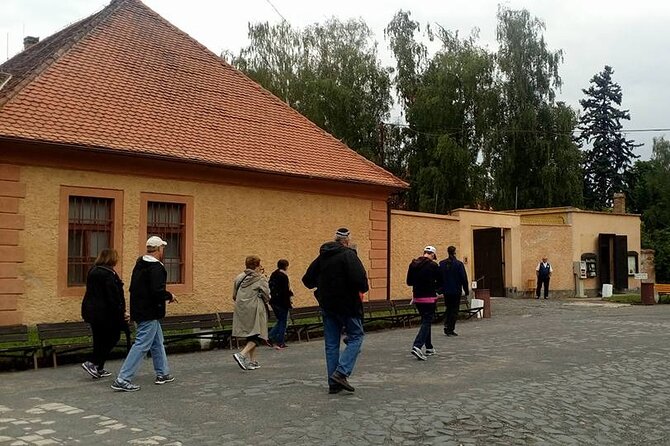
Dress is listed as smart casual, and that is practical advice for Terezín. You will want comfortable shoes, because you’ll be on uneven ground and moving through multiple facilities. Also, keep your phone charged for the mobile ticket and any quiet moments where you want to read labels carefully.
The big win here is that it is private. Your group goes together, and you are not competing with loud group energy while you’re trying to absorb what you’re seeing.
More Terezin memorial tours from Prague:
- From Prague: Terezin Concentration Camp Guided Tour w/ Audio
★ 4.5 · 1,959 reviews - Terezin Concentration Camp Day Tour from Prague
★ 4.0 · 1,007 reviews - From Prague: Terezín and Ghetto Museum Guided Tour
★ 4.3 · 571 reviews
Price and value: private transport plus included admissions
At $356.42 per person, this is not a budget outing. But you are paying for three things that add up fast on your own: transportation, an English guide, and entrance access across several memorial spaces.
If you try to do it independently, you will usually spend extra time coordinating transport, then still need to line up or figure out entry details at each stop. Here, the tour includes entrance for most of the major stops, and it also notes that you skip the ticket line. That is value, because your time inside the memorial grounds is the part that matters most.
The other value is the pacing. When the tour is private, you are better able to slow down where something hits you, rather than staying on the move because a larger group needs to keep moving.
Mala Pevnost (Small Fortress): from Joseph II to the Prague Gestapo
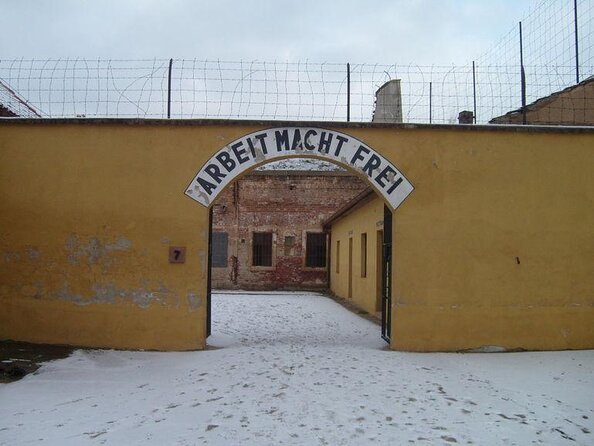
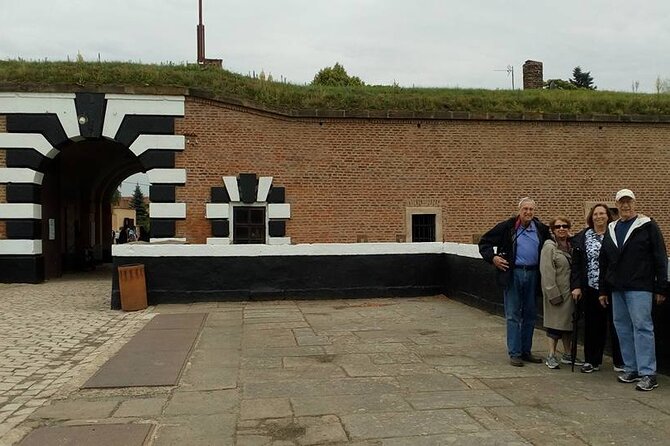
The first stop is Mala Pevnost, the Small Fortress. Even the setting tells a story. The fortress was built to be proud and impregnable, surrounded by walls and protected by flood trenches. It took about 11 years to build at the end of the 18th century, with the first cornerstone laid by Emperor Joseph II. It sounds like classic military architecture, but Terezín never became the thing its builders imagined.
In the mid-19th century, it became a jail, and one famous prisoner was Gavrilo Princip, the man whose actions helped trigger the First World War. He was brought here in 1914 before the town’s fate was sealed again under Nazi rule.
During the Second World War, the story turns sharply. In 1940, the Small Fortress became a prison for the Prague Gestapo, especially holding political prisoners. Then, about a year later, the entire town shifted into a collective and pass-through camp for Jews.
This stop is powerful because it helps you see continuity and change. A fortress made for defense becomes a tool of surveillance and control. When you go with a guide, you are not just looking at old walls, you are learning why those walls were used that way.
Practical tip: expect quiet, not chatter. If you feel emotional, that is normal. The best guides help you stay present and respectful without telling you what to think.
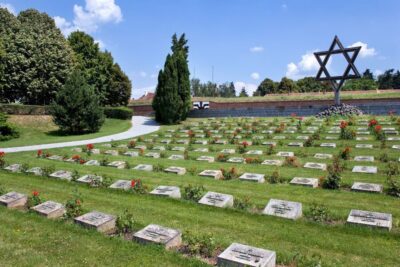
National Cemetery: what the exhumations reveal about 1945
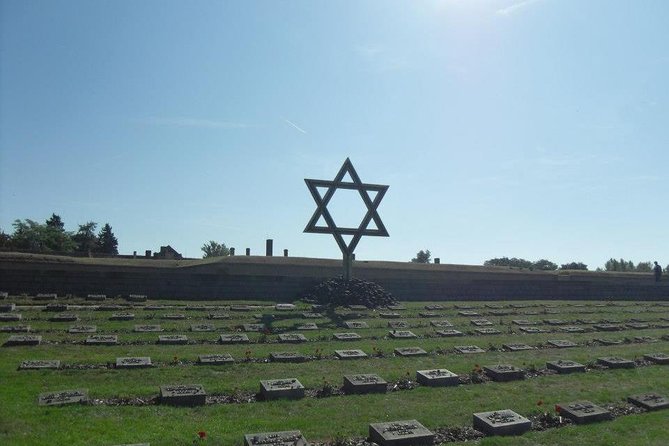
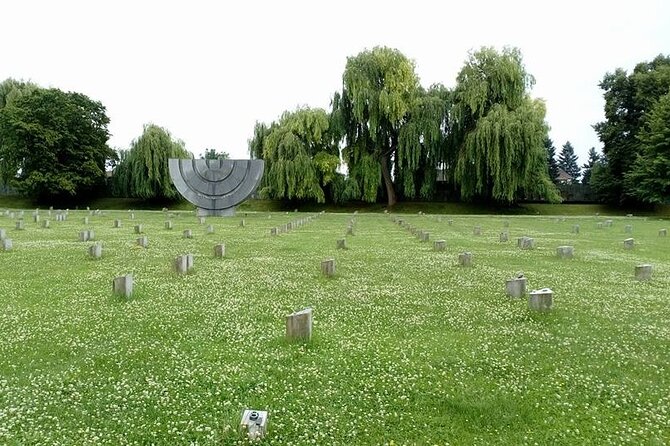
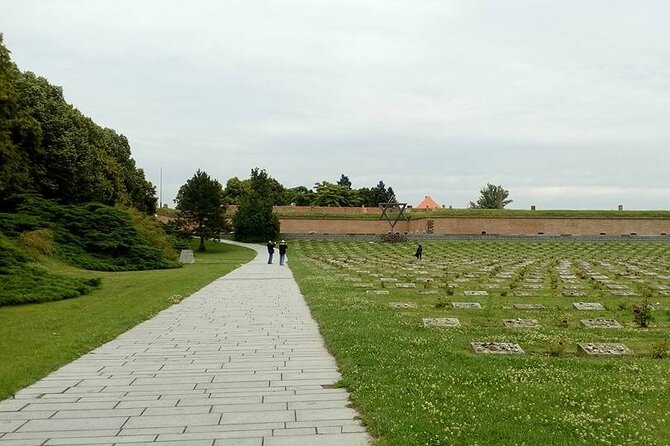
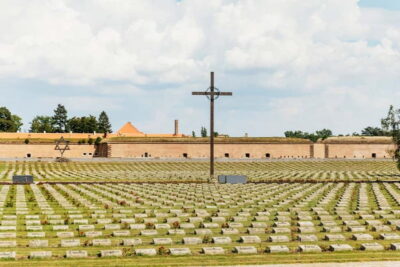
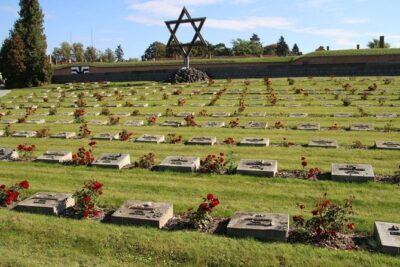
Next is Terezín Memorial – The National Cemetery. The cemetery was created artificially after liberation in 1945, and the impetus came from former prisoners and the heirs of those who died. At their request, physical remains were exhumed from six mass graves in the ramparts of the Small Fortress, where remains were deposited between March 1 and May 7, 1945.
One detail that helps you understand the end of the war here: the cemetery also includes people who arrived at the Small Fortress during the death march in May 1945. That means the story is not only about early imprisonment. It is also about what happened when the Nazi system was collapsing and killing continued in different forms.
Time is short at this stop, listed as 15 minutes, so you will likely want to ask your guide one or two questions that help connect what you saw at Mala Pevnost to what you are seeing here. If you try to read everything without help, it can feel like a blur. With a guide, the purpose of the cemetery becomes clearer fast: memory, not only documentation.
More private tours in Prague:
- Prague Old Town: Private Tour
★ 5.0 · 1,223 reviews - Prague Airport Private Arrival Transfer
★ 4.5 · 991 reviews - Prague Airport Private Departure Transfer
★ 4.5 · 780 reviews - Discover Prague Private Tour – 3 hours
★ 5.0 · 705 reviews
Ghetto Museum in the former school: the labels you will actually need
The Terezín Memorial – Ghetto Museum is where the day becomes more instructional. The ghetto was opened in the former municipal school in 1991, and the museum’s permanent exhibition opened later, in 2001, under the theme Terezín in the Final Solution of the Jewish Question, 1941-1945.
You can think of this stop as your “how did this work” section of the tour. The museum includes a Memorial Hall of the Children, drawings made by children from the ghetto, and a scale model of the ghetto with an electronic orientation system for visitors. There are also spaces for learning and film screenings, including a local reading room with documentary films.
What I like about this stop is that it gives you different kinds of evidence. You are not only reading about events. You are also seeing what people made, which can feel unsettling and humane at the same time. The goal is not to soften the tragedy. It is to show life under coercion, and the way memory survives through objects and art.
The listed time here is about 45 minutes, which is enough if you pace yourself. If your group prefers quieter looking over constant questions, this is where that works best.
The Small Jewish Prayer Hall and the hidden-room story of František Bubák
Then you visit the small Jewish prayer hall, founded during the ghetto period to meet prisoners’ spiritual needs. This is a smaller space, and that matters because it changes your emotional tempo. You are not standing in a huge site. You’re walking into a place that served faith and dignity.
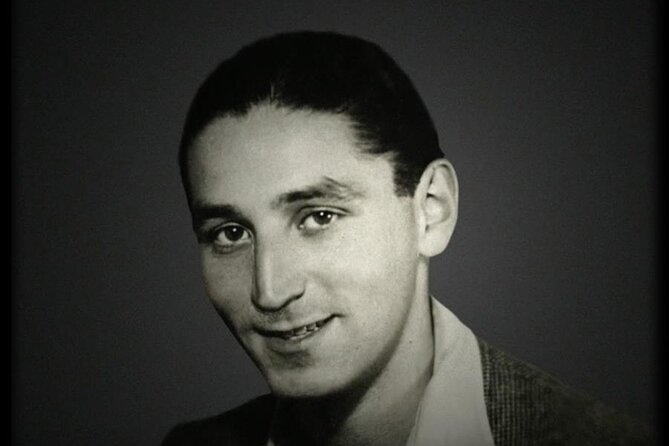
The prayer hall has a history that extends beyond WWII. It was owned by František Bubák and had served as part of a funeral parlor before the war. During 1942, Bubák was forced to leave Terezín, but after the war he reclaimed the property. His family feared repercussions under the Communist regime, so they kept the prayer room’s existence secret and used it as storage.
His descendants did not notify authorities until after the 1989 Velvet Revolution, and visitors could see the room since the late 1990s. That timeline gives you a lesson worth sitting with: the silence after catastrophe can last for decades.
The tour allocates about 30 minutes here. Use it to slow down. Ask your guide what changed after liberation, not just what happened during imprisonment.
Magdeburg Barracks: ghetto administration plus cultural life
The next stop is Magdeburska Kasarna (Magdeburg Barracks), the former headquarters of the ghetto’s local government. Officially, it handled internal affairs, though important issues were controlled by the camp SS command.
Today the building functions as an exhibition space, and after renovations it opened in 1997. The tour notes a replica of ghetto prison barracks, plus items connected to music, visual arts, literature, and theatre.
I appreciate this stop because it avoids a one-note story. Forced people had huge restrictions, but they also expressed themselves in ways that preserved humanity and hope. That might sound confusing when you’re standing in a concentration camp site, but the museum is trying to show how creativity can exist under extreme pressure without turning tragedy into something “inspiring.”
There is also an educational Meeting Centre inside. With a guide, you can usually connect the art and artifacts to what you already learned in the museum earlier, so you don’t feel like you’re just moving between unrelated displays.
Time here is about 30 minutes.
The Jewish Cemetery crematorium: a sober, specific look at the machinery of death
The final stop is the Jewish Cemetery. This part of the Terezín site focuses on the crematorium. The crematorium was built by ghetto prisoners by order of SS commanders, and operation began in early October 1942.
The description of what made it work is detailed, and that detail is the point. The central facility had four oil-powered incinerators supplied by Ignis Hüttenbau from Teplice-Šanov. The front section served for unloading corpses from coffins, and the crematorium bordered with an autopsy room. On one side there was an annex that housed guards made up of Czech police officers and prisoner workers assigned to the crematorium. At the highest mortality period, there were up to 18 prisoner workers rotating in permanent shifts. When mortality dropped, worker numbers decreased to four.
It was supervised by SS-Scharführer Heindl, and routine checks were also carried out by camp commanders.
This is the kind of stop where you want your guide. It is hard to interpret the layout and the timeline just by reading labels quickly. With an English guide, you can ask clarifying questions and get context that keeps you from turning this into a list of facts you rush past.
The time allocation is about 30 minutes, which means you should decide in advance what you need most. Do you want the technical overview of how the site operated, or do you want the human context of what it meant for prisoners?
If you need a moment after this stop, take it. Silence on the walk back to transport is part of honoring what you just learned.
How to get the most out of a private guide day
A private guide is not just a comfort upgrade. It changes what the day becomes.
I like tours like this when you want to ask questions that pop up while you’re standing in place. Why did the town function as both a ghetto and a transit site? How did the different memorial spaces relate to each other? What does the museum show that you cannot get from a few guidebook paragraphs?
The private format also helps you avoid the constant “move along” feeling. One useful piece of advice from real-world experiences is simple: this is better done without being surrounded by a large crowd. It is too emotionally concentrated for that.
Also, pace yourself like you would on a long museum day, not a quick city walk. Take breaks where you can, drink water, and give yourself permission to linger in the places that hit hardest. You are there to learn and bear witness, not to speedrun.
Should you book this private Terezin tour from Prague?
I would book this if you want an English-guided day with included access, private group pacing, and enough time at multiple memorial spaces to actually absorb the story. It is a strong choice when you feel you need structure, interpretation, and someone who can connect the sites instead of leaving you to piece it together alone.
I would think twice if your group is looking for a light, fast tour, or if you already know the material and only want a basic overview. This day is built for depth and for taking the sites seriously, including the heavy parts.
If you decide to go, choose the moment you will ask your guide your first question. Then let the day unfold from there. In a place like Terezín, good timing and a calm guide can make the difference between passing through and truly understanding.
FAQ
Where do we meet, and what time does the tour start?
The tour meets at Prague Marriott Hotel, V Celnici 8, Nové Město, 110 00 Praha-Praha 1, Czechia, with a start time of 9:00 am.
Do you offer pickup from hotels or Airbnb accommodations?
Yes. Pickup is offered from your hotel or an Airbnb. You just need to provide the exact name and address.
Is this a private tour?
Yes. It is listed as a private tour/activity, so only your group participates.
What language is the tour offered in?
The tour is offered in English.
Are entrance tickets included, and do you skip the ticket line?
Entrance tickets are included for the listed paid stops, and the tour notes that you can skip the ticket line with included entrance.
Which stops are included?
The tour includes: Mala Pevnost (Small Fortress), The National Cemetery, Ghetto Museum, Small Jewish prayer hall, Magdeburg Barracks, and The Jewish Cemetery.
Are children allowed, and what is the dress code?
Children must be accompanied by an adult. The dress code is smart casual.
Can I cancel for a full refund?
Yes. You can cancel up to 24 hours in advance for a full refund.
Recently reviewed around Prague
- Savor 10 Course Dinner in Chef’s Kitchen★ 5.0 · 20 reviews
- Prague for Men★ 5.0 · 11 reviews
- Private Lesser Town tour – Historical Treasure Hunt★ 4.5 · 7 reviews
- Photographer in Prague – Couple, engagement & portrait photoshoot★ 5.0 · 22 reviews
- Ebike Sunset tour of Prague★ 5.0 · 19 reviews
- 1-Hour Ride Across the Prague in Mini Hot Rod Car★ 5.0 · 37 reviews
- The Best of – private tour with PERSONAL PRAGUE GUIDE★ 5.0 · 107 reviews
- Prague on Stylish Retro styled E-Bike – Viewpoints & Sightseeing★ 5.0 · 20 reviews
Terezin Concentration Camp Tours, compared.
Terezin Concentration Camp Guided Tour w/ Audio
Read our review →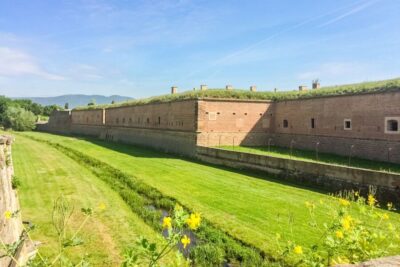
Terezin Concentration Camp Day Tour from Prague
Read our review →
Terezin & Bohemian Switzerland from Prague: Bastei, Narnia & Café
Read our review →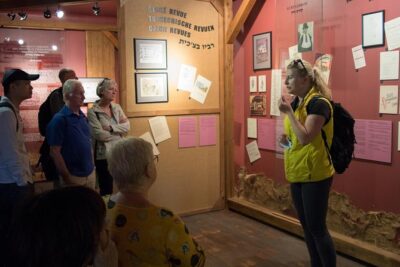
Terezin Concentration Camp Day Tour Including Admission From Prague
Read our review →
Terezin In-Depth Holocaust Tour From Prague’s Center (max 7 pax)
Read our review →Browse the lists this tour appears in