
Reviewed · WALKING TOURS
Private Prague Art Nouveau and Cubism Walking Tour
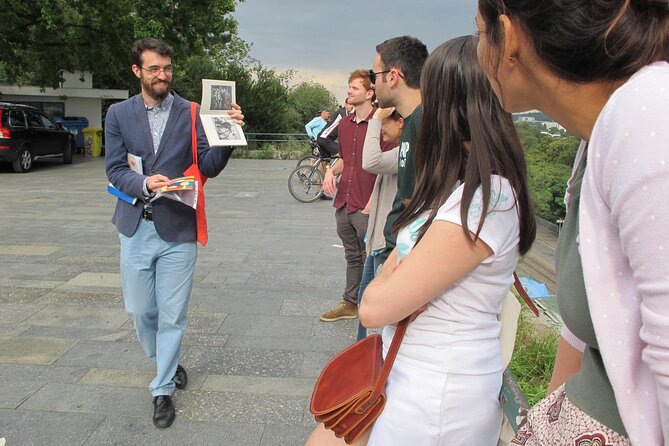
Prague has a second chapter to its architecture story, from the turn of the 1900s, when designers pushed style like it was an art sport. This private walking tour is interesting because you focus on the look and feel of Art Nouveau and Cubism, not just famous old towers. You’ll learn how style choices linked to Czech hopes about modern Europe.
I love that the route is built for seeing details up close, from curved sign lettering to ornate light fixtures. I also like that the tour pairs design talk with real places, like the Obecni Dum and Praha hlavni nadrazi main station dome. The vibe is helped a lot by guides with strong personal storytelling, like Robert Wesley (Czech born, with a Nigerian father) or Bonita, who blends art and culture in a way that makes the buildings feel human.
One drawback to plan for is simple: it’s a 3-hour walk with multiple stops, so if your mobility is limited, you may find it hard. For everyone else, it’s a smart way to spend a half-day that adds a modern layer to Prague’s older Gothic and Renaissance faces.
Key things you’ll enjoy on this Prague architecture walk
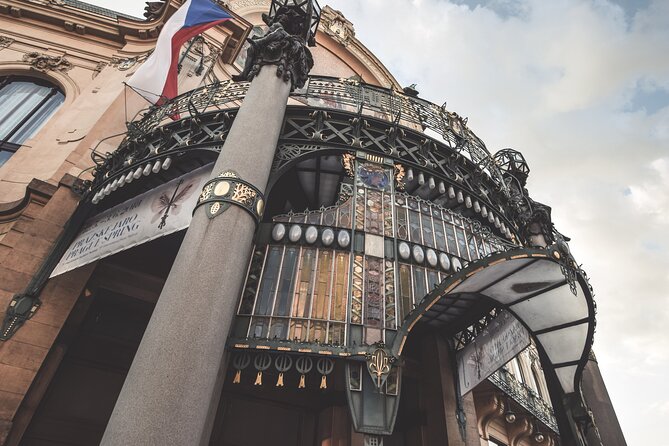
- Private historian guide: you get explanations timed to what you’re seeing, not a generic script.
- Real Art Nouveau details: you’ll learn to spot curvy typography, ornate light fixtures, and even oriental influences like gingko biloba motifs.
- Cubic punch plus Art Nouveau swoops: the route balances harder-edged Cubism with flowing Art Nouveau design.
- Landmarks with easy timing: short photo stops at major sites, so you keep momentum without ticket stress.
- A train-station moment: the Art Nouveau dome at Praha hlavni nadrazi is a highlight you won’t expect if you only think of the outside.
- Lucerna area time: you’ll see the arcades and also connect the Lucerna scene to Vaclav Havel’s family.
Cost, group size, and how this private tour really works
This is priced at $396.46 per group, for groups of up to 10 people, and it runs about 3 hours. Because it’s private, the value is best when you can travel with 2 to 6 people who really want architecture, or when you’re a small group that would otherwise split taxis and guide time.
If you’re traveling as a solo traveler, this may feel pricey compared to joining a larger group tour. If you’re booking with family or friends, the cost becomes much more reasonable fast, since you’re essentially paying for one guide, one route, and one focused walk.
Pickup is offered, but hotel pickup and drop-off aren’t always included automatically. If you don’t arrange pickup, plan to meet the guide about 15 minutes early at Grand Cafe Orient, Ovocný trh 19, Prague 1. And yes, there’s a mobile ticket, and the tour is in English, so you won’t be hunting for translation apps.
More walking tours in Prague:
- Prague: 3-Hour Walking Tour of Old Town & Prague Castle
★ 4.7 · 5,696 reviews - Prague: Ghost Walking Tour Where Legends Come To Life
★ 4.4 · 5,253 reviews - Prague: Jewish Quarter Walking Tour with Admission Tickets
★ 4.7 · 3,729 reviews
What to look for in Prague’s Art Nouveau versus Cubism
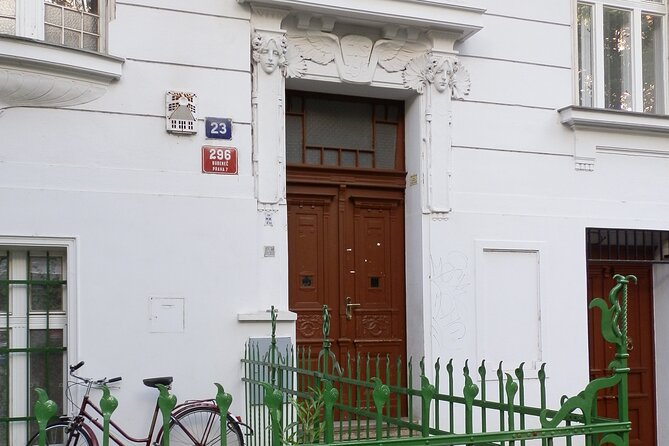
If you arrive thinking architecture is mostly about grand scale, this tour nudges your eyes toward the stuff that makes buildings feel alive. For Art Nouveau, you’ll learn to read the building like a poster from the same era. Look for curved lines, ornamental metalwork, and the way signage lettering can turn into design, not just information.
You’ll also hear about the style’s oriental influences, including references like gingko biloba leaves that show up as decorative motifs. That matters because Prague wasn’t designing in a vacuum. Designers were borrowing ideas across borders, then reshaping them into a distinctly Czech voice.
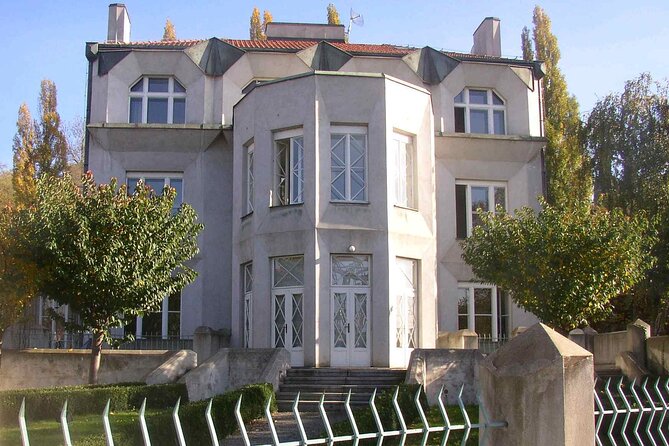
For Cubism, your focus shifts. Cubist architecture tends to play with geometry and sharp structure. The trick is not to get lost in modern art talk, but to notice how the façade breaks into planes and angles, giving the building a kind of constructed, almost staged energy.
And one practical tip: wear shoes that handle uneven pavement. This is a walk where you’ll keep stopping, turning, and looking up, often in short bursts.
Stop 1: House of the Black Madonna, Cubist style up close
Your walk starts at the House of the Black Madonna, a building known for its Cubist character. Even if you’re not a modern art expert, Cubist architecture is usually easier to spot than you expect. Instead of smooth curves and soft decoration, you’re looking for facets, sharp geometry, and a façade that feels like it’s been cut into parts.
This first stop is a smart warm-up. It gives you a visual “baseline” so later Art Nouveau details feel different, not just prettier. If you take a moment to step back and compare angles, you’ll get a clearer sense of how the style builds its look from structure rather than ornament alone.
Because the stop is short, don’t treat it like a photo session only. Treat it like a quick lesson. Ask yourself, what looks planar, what looks sharp, and how does that change as you walk to the next street?
Stop 2: Obecni Dum and the Czech Art Nouveau landmark effect
Next comes Obecni Dum, one of the iconic signals that Czech Art Nouveau wasn’t casual decoration. It was a public statement. Here, the façade and façade details tend to reward close attention. Think of this as architecture that wanted to look cultured and modern without losing local identity.
What I like about starting here is that Obecni Dum helps you understand the “why” behind the style. Art Nouveau in Prague wasn’t just copying European trends. It was tied to ambition and the sense that the country’s future would be connected to wider European currents.
Draw your attention to how ornament supports the overall design, instead of just covering it. A lot of Art Nouveau feels like it’s designed to be read in layers: base structure, then the decorative movement on top.
More private tours in Prague:
- Prague Old Town: Private Tour
★ 5.0 · 1,223 reviews - Prague Airport Private Arrival Transfer
★ 4.5 · 991 reviews - Prague Airport Private Departure Transfer
★ 4.5 · 780 reviews - Discover Prague Private Tour – 3 hours
★ 5.0 · 705 reviews
Stop 3: K+K Hotel Central Prague, the first Art Nouveau note that grows on you
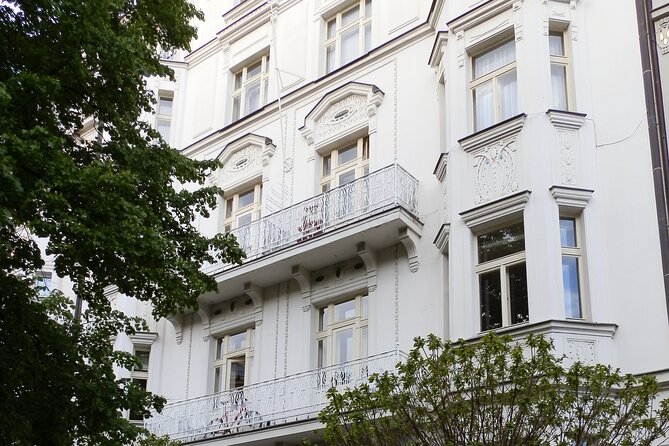
At K+K Hotel Central Prague, you’ll see what the label “the first Art Nouveau building in Prague” really means in the street-level experience. Early in a style, you often notice both confidence and experimentation. You can see the designers trying to make new visual rules while still using the materials and craft available at the time.
This stop is short, but it’s the kind where the best move is to look, then look again a few steps later. Art Nouveau details can change meaning depending on your angle, especially when curved elements and decorative lines guide your eye.
One practical thing: since it’s a hotel building, you may want to keep your viewing to respectful public areas. The goal is not to “tour” the property, it’s to understand the façade and the design language.
Stop 4: Café Imperial, an interior taste of Art Nouveau design thinking
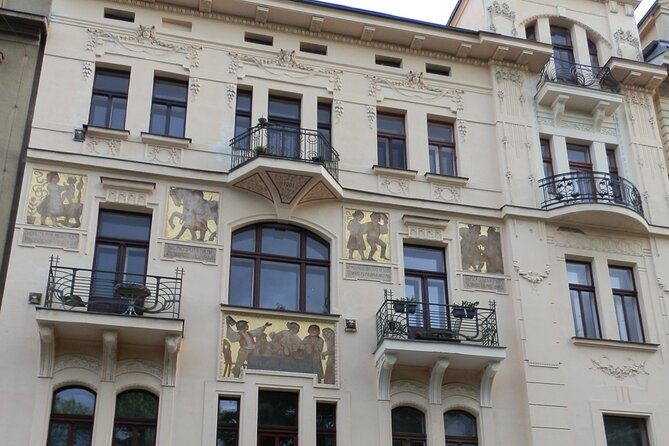
You’ll then shift from outside façades to the experience of an Art Nouveau interior at Café Imperial. Even with limited time, this stop helps you see why Art Nouveau designers cared about everyday spaces, not just monuments.
In a café setting, the design has to work for people moving through the room: light, signage style, and decorative flourishes all influence how the place feels. This is where the tour’s earlier talk about ornament and typography makes more sense. You’re not just looking at art, you’re experiencing how design shapes comfort and mood.
Because the stop is brief, don’t feel pressured to take in everything. Focus on one or two elements, like lighting or decorative patterns, then let the rest register as atmosphere.
Stop 5: Czechoslovak Legion Bank, Cubism with a purpose
The Czechoslovak Legion Bank stop is where the architecture talk gets emotional. This building is tied to the Czechoslovak Legion of the 1st World War, so the design choices are not only aesthetic. They’re also about identity and memory.
Cubist design here tends to feel purposeful, like structure and symbolism were working together. When you connect the building’s visual style to a historical mission, the façade becomes more than modern design for its own sake.
This is one of the most “meaningful” pauses on the walk. You can stand there and notice lines and geometry, but also think about how societies use architecture to honor events and communicate values.
If you like history with your art, this stop is the one that may stick with you the longest.
Stop 6: Praha hlavni nadrazi, the Art Nouveau dome you don’t expect
Then you reach Praha hlavni nadrazi, Prague Main Train Station, and it delivers an Art Nouveau surprise: a magnificent interior dome. Stations can be a letdown in “quick architecture” tours if all the focus stays outside. Here, the dome matters because it turns a travel utility space into a civic hall.
This is a great moment to look up. The dome is the kind of feature that rewards slow looking, even if your stop is not long. Notice how the interior design guides your attention upward and makes the station feel ceremonial.
Also think about timing. This is a stop that can get busy when trains arrive or crowds move through. If the room feels packed, take your best shot at key angles quickly, then move a step to regain a clear sightline.
Stop 7: Wenceslas Square, Art Nouveau meets Art Deco context
At Wenceslas Square, the tour shifts from specific buildings to a broader architectural conversation. You’ll discuss Art Nouveau and Art Deco architecture around the square, which helps you place Prague’s design story in time.
This part is useful because it trains you to spot transition. Art Nouveau has its own signature curves and ornament language. Art Deco, later on, tends to feel more streamlined, more graphic, and more focused on stylized form. Standing in a big public space makes the comparison feel real.
A practical way to enjoy this stop: don’t try to identify every façade. Instead, pick a couple of buildings you pass, then compare ornament style, window shapes, and the general “mood” of the façade.
Stop 8: Lucerna Arcade, Art Nouveau arcades and the Vaclav Havel connection
Next is the Lucerna Arcade, where the Art Nouveau interior of the arcades is the point. Arcades are made for slow wandering, and this is one of those rare stops where the architecture is designed for strolling, shopping, and lingering under a roofline built for views.
This is also where you pick up the modern Czech connection tied to the Lucerna Bar, which was owned by Vaclav Havel’s family. That detail is more than trivia. It shows how Prague’s design and public spaces connected generations, from the optimism of the early 1900s to the country’s later cultural identity.
Take a few minutes to move through the space, even if you only have a short time. You’ll notice how the arcade shape changes your sense of scale and how light plays differently than it does on open streets.
If you like photographing interiors, this is where you’ll want to slow down. Try a couple of angles so you capture the curved lines without losing the ceiling or the depth.
Stop 9: The upside-down statue at Wenceslas Square, symbolism in Czech context
Your final stop is the Upside-Down Statue of King Wenceslas Riding a Dead Horse. This is not an Art Nouveau or Cubist stop in the pure style sense. It’s a style conversation about symbols, Czech history, and the Czech National Revival.
The value here is that you stop treating architecture as a purely visual timeline. Prague uses monuments and sculptures to argue with its own past. That means you can read history in how the country chooses to reinterpret famous figures.
As you look at the statue, think about what it’s overturning. The tour helps connect that symbolism to Czech cultural memory, so the sculpture feels like it belongs to the same “design thinking” story as the earlier façades, even if it’s much newer in style.
If you want one final take-away, it’s this: Prague’s design conversation keeps going, even when the buildings change.
Your guide matters more than you think
With a tour like this, the guide can make the difference between seeing pretty buildings and actually understanding why they exist. In the reviews, guides like Robert Wesley (with his Czech background and Nigerian family story) and Bonita stand out for one reason: they connect architecture to lived culture.
That’s what I’d aim for if I were choosing this tour for myself. You want someone who can explain why a detail is there, what it borrowed, and how it reflects a moment when Czech artists and designers were pushing toward modern Europe.
If you book, don’t be shy about asking small questions like: what should I look for on this façade, or what detail in this building screams Art Nouveau versus just general decoration? A strong guide will have answers that make your photos better too.
Timing, walking pace, and how to make the most of a short 3 hours
Three hours sounds comfortable, but Prague sidewalks can add up fast. Plan on a steady walking pace with quick pauses to look and take pictures. Most of the stops are designed as “see it, learn it, move on” moments, so you won’t get stuck in one place.
Bring water if you’re doing this in warmer months. Also bring your phone battery for the mobile ticket and for photos, because you’ll likely want to take multiple shots of façades and interiors.
If your goal is to leave with a mental map of Prague’s styles, you’ll do best if you keep notes in your head. After each stop, ask yourself one question: what was the main style clue I noticed this time?
That simple habit turns a walking tour into a personal mini course.
Value check: is $396.46 per group worth it?
Here’s how I think about the price. You’re paying for a private historian guide and a route that focuses on two design movements that often get overlooked when people only chase older medieval sights.
If you split the cost among several people, it becomes a very reasonable way to get guided attention without the limits of a large group. If you’re solo, you’re paying for the privilege of going private, which is great if you care about details enough to make the guide’s explanations worthwhile.
Also, nearly everything on the walk is set up to be low-friction: the key stops are free or ticket-free for entry at the times you’re there. That keeps the value focused on learning and seeing, not on ticket lines.
Should you book this Prague Art Nouveau and Cubism walking tour?
Book it if you want Prague with a more modern lens. This tour is ideal when you love architecture that’s about design choices, not just famous dates. You’ll get Art Nouveau details that teach your eye to see, plus Cubist structure that adds contrast.
Don’t book it if long walks are a challenge for you. It’s still doable for many people, but it’s not a sit-everywhere tour.
My final advice: treat this as your “style training” afternoon. After it, Prague’s buildings will start telling you stories faster. You’ll spot Curves and geometry before you even realize you’re looking. And if you’re the type who enjoys noticing signage typography, interior light, and the small design decisions that shape daily life, you’re going to have a great time.
FAQ
Is this a private tour?
Yes. This is a private tour, and only your group participates. The group size is up to 10 people.
How long is the Prague Art Nouveau and Cubism walking tour?
The tour lasts about 3 hours.
What language is the tour offered in?
The tour is offered in English.
Is hotel pickup included?
Pickup is offered, but hotel pickup and drop-off are not included unless arranged. If you do not have pickup arranged, you meet 15 minutes early at Grand Cafe Orient, Ovocný trh 19 Prague 1.
What are the start and end points?
The tour starts in Prague and ends in Prague. The default meeting point is Grand Cafe Orient, Ovocný trh 19 Prague 1 if pickup is not arranged.
Do I need to pay for admission at the stops?
Admission is listed as free or ticket-free at the stops included on the walk.
How soon should I book?
On average, it’s booked about 8 days in advance, so earlier is better if you have a specific departure you want.
What kind of mobility is it best for?
Most travelers can participate, but the tour involves a lot of walking, so it may not be suitable for the mobility impaired.
What is the cancellation policy?
There is free cancellation. You can cancel up to 24 hours in advance for a full refund.
Recently reviewed around Prague
- Savor 10 Course Dinner in Chef’s Kitchen★ 5.0 · 20 reviews
- Prague for Men★ 5.0 · 11 reviews
- Private Lesser Town tour – Historical Treasure Hunt★ 4.5 · 7 reviews
- Photographer in Prague – Couple, engagement & portrait photoshoot★ 5.0 · 22 reviews
- Ebike Sunset tour of Prague★ 5.0 · 19 reviews
- 1-Hour Ride Across the Prague in Mini Hot Rod Car★ 5.0 · 37 reviews
- The Best of – private tour with PERSONAL PRAGUE GUIDE★ 5.0 · 107 reviews
- Prague on Stylish Retro styled E-Bike – Viewpoints & Sightseeing★ 5.0 · 20 reviews
Walking Tours, compared.
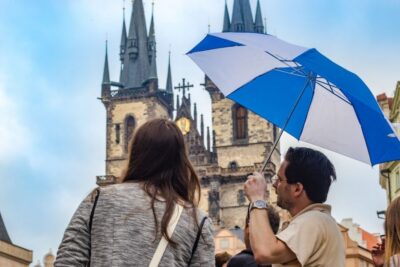
3-Hour Walking Tour of Old Town & Prague Castle
Read our review →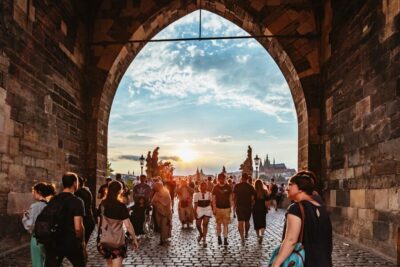
Ghost Walking Tour Where Legends Come To Life
Read our review →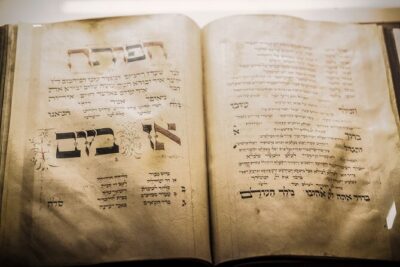
Jewish Quarter Walking Tour with Admission Tickets
Read our review →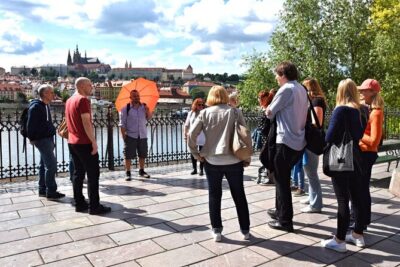
Prague Guided Walking Tour and Cruise with Authentic Czech Lunch
Read our review →
Old Town and Jewish Quarter Guided Walking Tour
Read our review →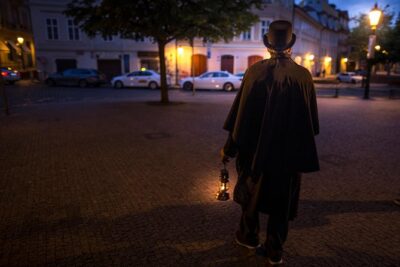
Prague Ghost and Legend of Old Town Walking Tour
Read our review →
Prague 3-hour Afternoon Walking Tour including Prague Castle
Read our review →
Ghosts and Legends Nighttime Guided Walking Tour
Read our review →Browse the lists this tour appears in