
Reviewed · MUSEUMS
Museum Story of Prague
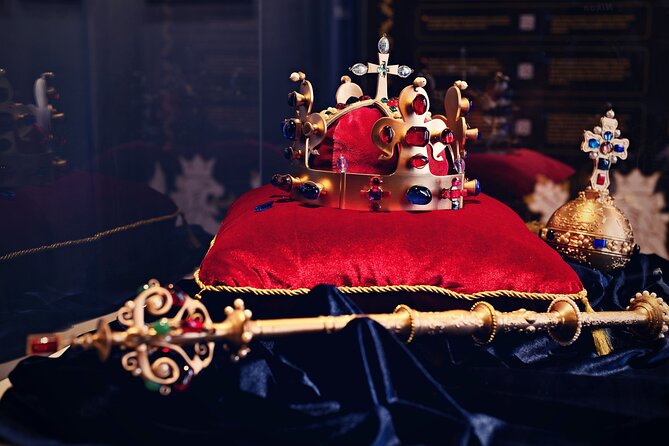
Prague can feel like a postcard city. This museum is different. It strings you through the city’s big turning points with interactive exhibits and film and audio that keep things moving, even when the rooms get dim and moody.
I especially liked the way the timeline is staged floor by floor, with the medieval world and the Golem in one set of rooms, then the darker 20th century in the next, and the Velvet Revolution on top. The museum also includes a hidden room and some oddball, hard-to-photograph exhibits that make it feel more hands-on than a typical display hall.
One thing to consider: the experience uses lots of QR codes for extra content. If you do not love scanning, you might find yourself slowing down less than planned, or skipping some of the code-driven material.
Key Highlights You’ll Actually Care About
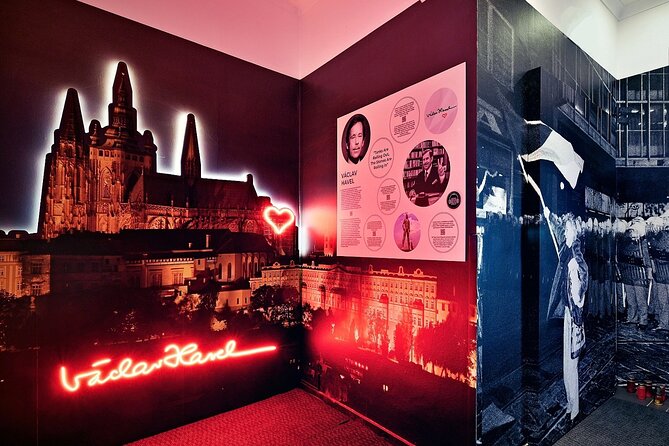
- A floor-by-floor story arc that moves from medieval Prague to occupation years, then to the Velvet Revolution
- The Golem moment in dimly lit halls, with a towering presence that works better in person than in photos
- Mixed reality plus film and audio that helps you follow what’s happening without reading every label
- A hidden room and exhibits you will likely not see captured in typical photos
- Hard history handled carefully, including Nazi and Soviet occupation themes
- No practical torture demonstrations, even though medieval torture is covered
Story of Prague Museum: A 90-Minute Time Machine With Film and Audio
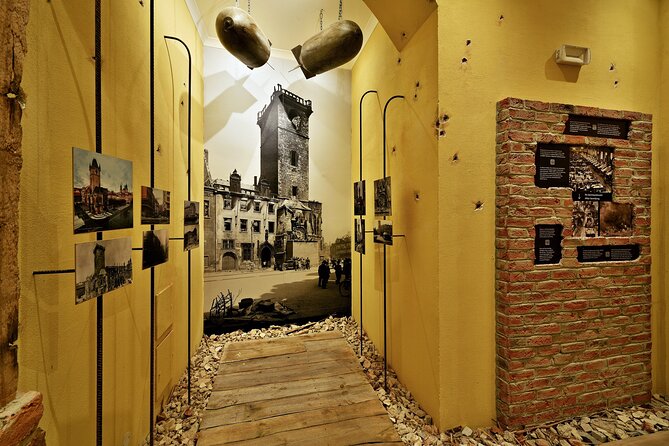
If you want Prague history without feeling stuck in a classroom, this museum is built for you. The overall idea is simple: you walk through themed rooms and let storytelling tools do the heavy lifting. You get film installations, audio elements, and interactive displays that try to make the past feel like a sequence you can track.
The pace is also realistic. Expect about 1 hour 30 minutes. That is long enough to feel the timeline connect, but short enough that it will not wreck your day or force you to choose between the museum and the rest of Prague.
More museums and galleries in Prague:
- Prague: Museum of Fantastic Illusions Entry Ticket
★ 4.3 · 4,337 reviews - IAM Illusion Art Museum Entry Ticket
★ 4.2 · 1,664 reviews - Prague: Museum of Senses Admission Ticket
★ 4.0 · 1,445 reviews
Why this museum feels more useful than a pile of plaques
A lot of museums in big tourist cities give you facts first and meaning later, if at all. Here, the meaning comes through the way scenes are arranged. You are not just reading about knights and kings, then jumping to 20th century politics. You see how the museum frames Prague as a place that keeps getting tested, rebuilt, and redefined.
The value angle on the $19.27 price
At $19.27 per person, this is not an impulse-buy bargain, but it also is not priced like a luxury show. For the money, you are paying for admission plus a structured experience that runs about 90 minutes and tries to keep you engaged with interactive tech, audio, and film. If you like “learning with momentum,” the price can feel fair. If you only want static exhibits and you hate screens, you may judge it differently.
Inside the Museum: How the Floors Build the Timeline
This is one of those experiences where the building layout matters. The museum is organized into three floors, and each one has a clear mood and theme. Instead of random stops, you get a guided emotional journey, even though you are walking yourself through the spaces.
Across the museum, you can expect interactive displays rather than only flat, label-based information. That difference matters because you will spend less time decoding text and more time following scenes.
Same city, a completely different kind of day:
- Prague: 50-Minute Sightseeing Evening Cruise
★ 4.2 · 33,780 reviews - Prague: Medieval Dinner with Unlimited Drinks
★ 4.4 · 19,847 reviews - Prague: Castle Tour with Local Guide and Entry Ticket
★ 4.6 · 10,422 reviews - Prague Castle 2.5-Hour Tour Including Admission Ticket
★ 4.7 · 8,927 reviews
What you should expect when you arrive
The museum has a mobile ticket option, and the admission ticket is included. You start at 10:00 am, so plan on getting there a bit early if you want time to get oriented before the first rooms pull you in.
Also, it is near public transportation. That helps if you want to fit the museum into a packed Prague day without a long detour.
Stop 1: Knights, the Hussites, and the Golem in Dim Halls
The first part is where the museum feels most theatrical. You move through scenes built around Prague’s early power stories, including the era of knights and kings. From there, the museum guides you into major religious and political turning points, with special attention to figures and movements such as Jan Žižka and the Hussites.
One detail I like from a visitor comfort standpoint: when the museum covers medieval torture, it does so without practical demonstrations. You still get the theme and the historical reference, but it avoids turning the experience into something you would have to endure in a graphic, hands-on way.
Old Town Hall and the Astronomical Clock, but in story form
You also cover the construction of the Old Town Hall and the Astronomical Clock. Instead of treating them like isolated landmarks, the museum connects them to how Prague built identity through civic power and public spectacle. If you are planning to visit the Old Town later, this part helps you show up with more context and better questions.
The Golem: why that one hits harder in person
Then comes the big “whoa” moment. In dimly lit halls, you meet a towering Golem figure tied to Prague folklore and mysticism. Even if you have heard the legend before, seeing it in the museum’s atmosphere tends to land differently than a quick photo outside.
This kind of centerpiece matters because it gives your brain an anchor. It becomes a marker in the story, so when the museum moves into later centuries, you feel the contrast more clearly.
What Makes the Interactive Displays Work (and When They Don’t)
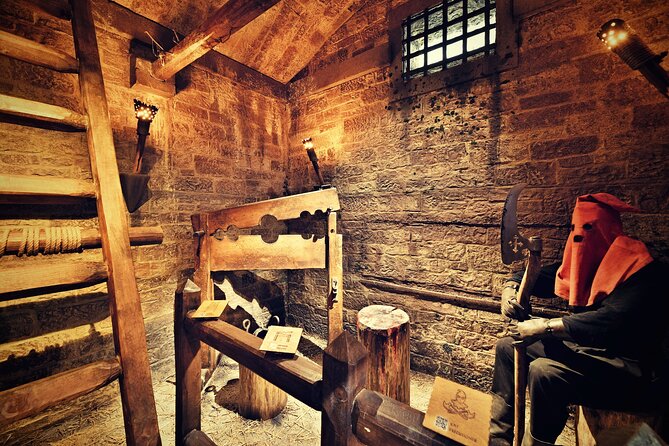
The museum’s approach is part tech, part storytelling. There are film installations, audio elements, and interactive displays. In other words, it is not just “watch a video and leave.” It tries to blend your movement through the rooms with what you hear and see.
QR codes: helpful extra content, but watch your pace
A note worth taking seriously: the museum uses QR codes for additional material, and the system can feel heavy if you are the type who wants every extra layer. If you start scanning one code after another, you might end up spending more time on the accessories than on the story itself. I recommend deciding up front: either scan selectively, or treat the codes as optional and focus on the rooms and film/audio first.
You will still get the timeline if you do not read every QR prompt.
Stop 2: Nazi Occupation, Bombing of Prague, and Soviet Rule
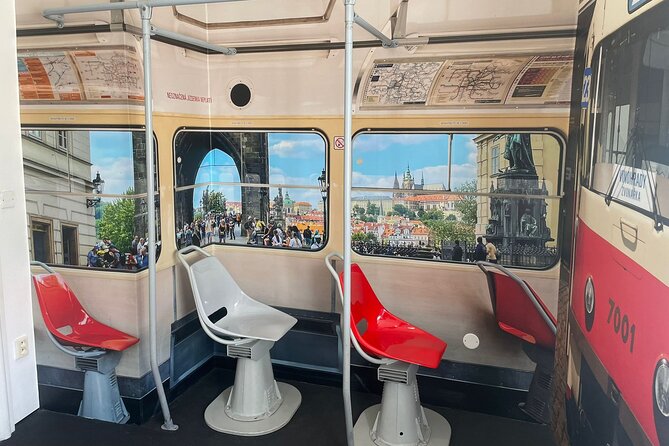
The second floor shifts tone fast. This part revisits the Nazi occupation, the bombing of Prague, and the later Soviet occupation. The museum does not soften the subject, and it does not pretend these years were only “interesting events.” It frames them as a period of control, disruption, and survival.
This matters because Prague is famous for beauty, but modern Czech history also includes trauma. A museum that acknowledges that side gives you a fuller visit, especially if you plan to walk the city afterward and notice the layers.
Why this middle section is valuable
If your Prague day is mostly cathedrals and bridges, it is easy to miss how the city’s 20th century shaped the present. By centering occupation and bombing, the museum gives you context for the Czech emphasis on resilience and independence.
Even if you already know the broad facts, you may find the framing helps you remember them in the order they occurred. That is usually the problem with history when you rely on memory only.
Stop 3: The Velvet Revolution and Czech Achievements
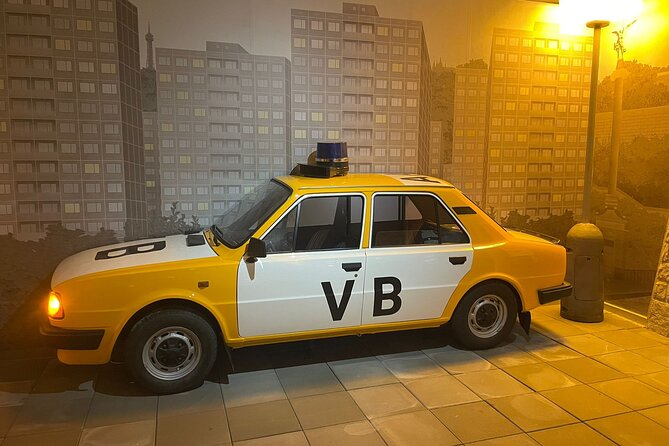
Then the museum lifts the mood on the third floor. You get the Velvet Revolution, and the experience moves into themes about Czech global achievements. This is a big emotional transition, and the way the museum organizes it helps you leave the darker topics without ending the visit on a wall of sadness.
How to connect this floor to what you see in Prague
The Velvet Revolution theme is not just a historical point. It is a lens. After this, your Prague walks can feel more meaningful because you understand that the city’s identity is tied not only to medieval legends and clocks, but also to late-20th century freedom and change.
If you like being able to explain a city to yourself as you walk, this last floor helps.
The Hidden Room and Those Exhibit Details That Rarely Show Up in Photos
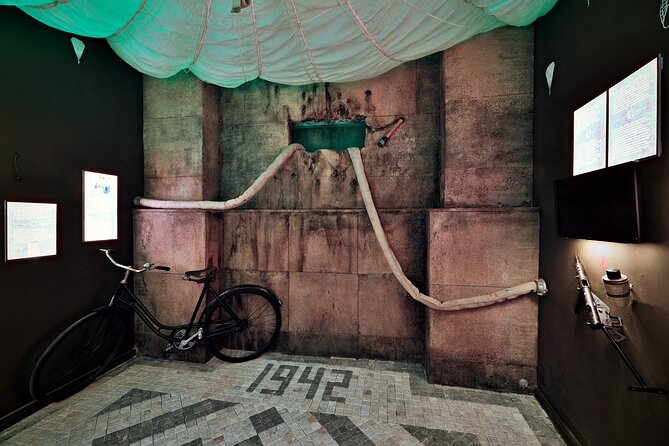
Two standout things from the overall design are the hidden room and the presence of unique exhibits that you likely will not see captured in photos.
That is a big deal for people who already feel museum fatigue. If everything is visible and instantly photographable, it can blur together. But when an experience includes elements that resist quick documentation, it usually means you have to be present to get the full effect.
It also makes the museum feel less like a “tourist checkbox.” You are there for an experience, not just a set of images to post.
How Much Time You Need, and How to Plan Your Prague Day
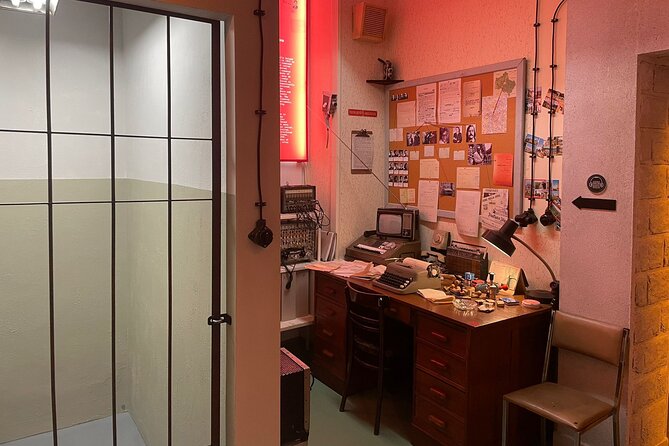
Because the museum is about 1 hour 30 minutes, I treat it like a good mid-day or early afternoon anchor. If you start at 10:00 am, you can still enjoy a longer afternoon outside, and you will have context for the Old Town area if you revisit it later.
Also, it is near public transportation. That is practical for a city day where you may bounce between neighborhoods and do not want to fight transit timing.
A practical pacing tip
Do not try to speed-run the story. Even though the exhibits are interactive, the timeline matters. If you rush, you might miss why the Golem shows up where it does, or why the museum places occupation history right after the medieval civic and religious material.
Go at a steady pace. If the QR codes start pulling you away, either limit scanning or switch to a “watch and listen first” mindset.
Who This Museum Fits Best
This is a strong fit for:
- People who want Prague history in a guided, story-driven flow
- Travelers who learn better through audio, film, and interactive rooms
- Anyone who likes medieval legends, including the Golem, but also wants real 20th century context
It may be less satisfying for:
- Visitors who dislike QR codes and technology-driven prompts
- People who prefer purely traditional exhibits with minimal screens and minimal scanning
- Anyone who wants only surface-level highlights and would rather not confront occupation and bombing themes
Should You Book the Story of Prague Museum?
If you are looking for value that feels educational without feeling heavy, I think this museum is worth booking. The ticket price is reasonable for a structured 90-minute experience that includes admission and uses film, audio, and interactive displays to keep the timeline clear.
I would book it if you want Prague beyond the postcard views, and you like the idea of medieval to modern history in one continuous arc. I would hesitate only if you strongly dislike QR codes or you want a museum that is mostly quiet, label-based, and strictly chronological without any technology layer. If that sounds like you, you can still do Prague, but you might pick a different kind of museum stop.
FAQ
How long is the Story of Prague Museum experience?
It runs for about 1 hour 30 minutes.
What time does the experience start?
The start time is listed as 10:00 am.
Is a ticket included in the price?
Yes. Admission is included, and the tour is sold as a ticketed museum experience.
Can I use a mobile ticket?
Yes. The experience features a mobile ticket.
Where is it in Prague, and is it easy to reach?
It is in Prague, and it is noted as being near public transportation.
When will I receive confirmation?
Confirmation will be received at the time of booking.
Is the experience suitable for most travelers?
Most travelers can participate.
Does the museum include medieval torture content?
It covers medieval torture, but it is described as without practical demonstrations.
Is free cancellation available?
Yes. Free cancellation is available up to 24 hours in advance for a full refund.
Recently reviewed around Prague
- Savor 10 Course Dinner in Chef’s Kitchen★ 5.0 · 20 reviews
- Prague for Men★ 5.0 · 11 reviews
- Private Lesser Town tour – Historical Treasure Hunt★ 4.5 · 7 reviews
- Photographer in Prague – Couple, engagement & portrait photoshoot★ 5.0 · 22 reviews
- 1-Hour Ride Across the Prague in Mini Hot Rod Car★ 5.0 · 37 reviews
- The Best of – private tour with PERSONAL PRAGUE GUIDE★ 5.0 · 107 reviews
- Ebike Sunset tour of Prague★ 5.0 · 19 reviews
- Prague on Stylish Retro styled E-Bike – Viewpoints & Sightseeing★ 5.0 · 20 reviews
Museums, compared.

IAM Illusion Art Museum Prague Fast Pass Ticket
Read our review →

Ticket to Audiovisual Light Art at Lumia Gallery
Read our review →
Browse the lists this tour appears in