
Reviewed · WWII TOURS
Prague: World War II and Communist History Tour
What makes this tour so interesting is how it links WWII and Communism to the Prague you can still see today. I especially love the way guides such as Adam, Tony, Zac, and Daren turn big events into street-level stories that actually make sense. I also like the built-in mix of landmark stops and lesser-known links to what happened. One drawback to consider: a few key moments happened in places that do not advertise their 20th-century role now, so you will need to stay alert and let your guide do the connecting.
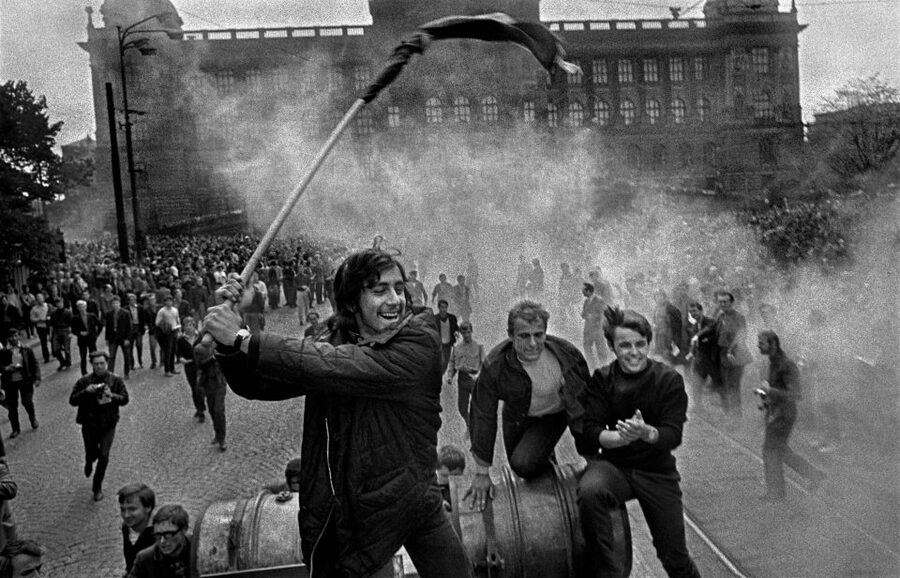
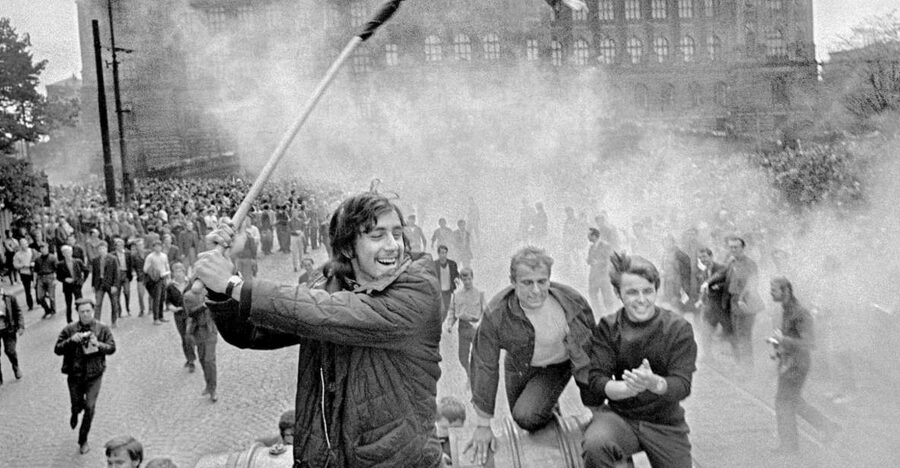
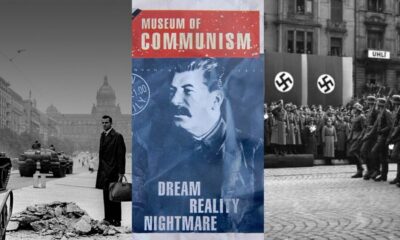
Over 150 minutes, you move through the Nazi occupation, the Czech uprising, the Communist coup, and then the long, tense years that followed. The story includes the euphoria of the Prague Spring, the trauma of the Warsaw Pact invasion, and the pressure of Normalization, plus the persecution of groups like the Plastic People of the Universe and the dissident record, Charta 77.
It ends in the emotional pivot of 1989, with the Velvet Revolution and Václav Havel rising to power. This is a live, English walking tour, and guides have kept the energy up in everything from winter cold to pouring rain.
Key things I’d highlight before you go
- A clear timeline in 150 minutes that moves from Nazi occupation through 1989, without losing the thread
- The assassination story tied to a specific site connected to the Nazi security leadership
- Landmarks you actually recognize like the Municipal House, Dancing House, Jewish Quarter area, and Wenceslas Square
- Communist-era details with real names and real consequences like Charta 77 and Václav Havel
- Storytelling that stays lively even when the subject matter turns heavy, with humor that does not flatten the facts
- Easy follow-up ideas for movie nights such as Anthropoid and Munich, suggested by guide-led experiences
Why Prague’s streets explain WWII and Communism so well
Prague can feel like a postcard city until you slow down and look at the layers. This tour is interesting because it does not treat 20th-century history as a separate topic. Instead, it shows how occupation, resistance, and political power worked through daily life, neighborhoods, and key public spaces.
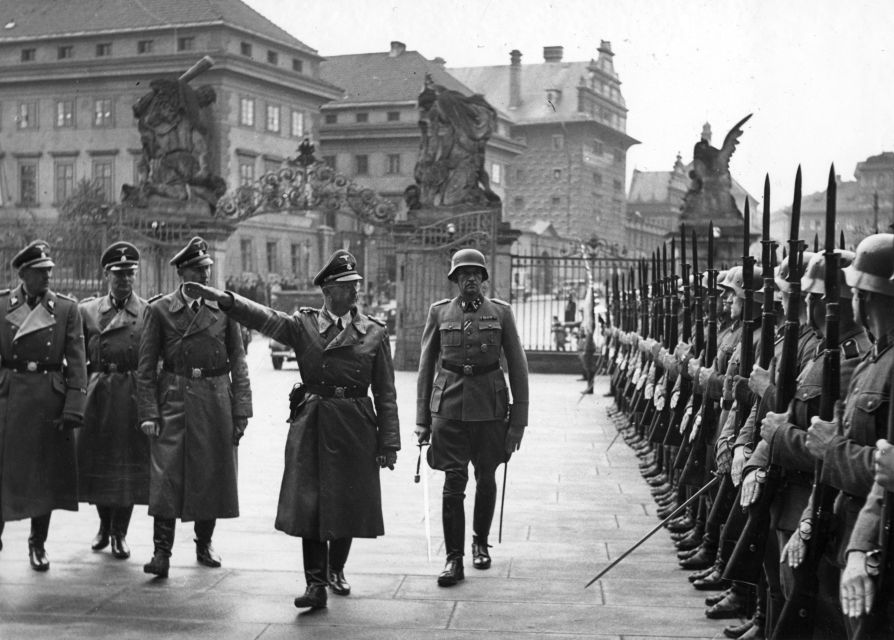
You start with Nazi rule and the way it reshaped a modern, industrializing society into something brutal. Then you watch the story transition into the Czech uprising and the Communist coup, which did not “end the suffering” in any simple way. Prague kept changing, and the tour makes that progression feel logical, even when the emotions swing hard from hope to fear.
I also like that you get the Prague Spring turning point, followed by the Warsaw Pact invasion, and then the long period people later called Normalization. That part matters, because many visitors only know the slogan version of Communism. Here you learn what it meant in practice, including pressure on culture and the risks facing people who spoke up.
Finally, 1989 lands with the Velvet Revolution and Václav Havel. That is the kind of ending that feels earned, because you have just walked through the costs of dissent.
More WWII and resistance tours in Prague:
- Prague: WWII Guided Tour & The Crypt of Operation Anthropoid
★ 4.7 · 1,030 reviews - WWII in Prague Tour & The Crypt of Operation Anthropoid
★ 5.0 · 817 reviews - Small-Group World War 2 & Operation Anthropoid Tour in Prague
★ 5.0 · 231 reviews
Meeting at Týnská 639/4, then keeping a tight 150 minute pace
The meeting point is Týnská 639/4, in Staré Město (Old Town). Plan to arrive a little early so you can find the group before the walking starts. With only 2.5 hours on the clock, the guide will keep things moving, with frequent stops and short bursts of context.
The practical value here is focus. You are not doing a long “random walk through history.” The whole route is designed around cause and effect: how Nazi control tightened, how resistance formed, how politics shifted, and how public life reacted under Communist rule.
One small detail that helps is that the route can use quick transit to reduce unnecessary walking. At least some past groups have been given a tram ticket to save time, which makes a difference when you are on a schedule. Still, treat this as walking-first. Comfortable shoes are not optional.
If you like asking questions, this tour usually fits well. Multiple guides have been praised for answering people’s curiosity, and the format supports follow-ups rather than forcing you to stay quiet.
Nazi occupation and resistance, told on the move
The tour starts in the period when Nazi occupation reshaped Prague from the inside. You get a sense of how quickly progressive, industrial, and socially active life could be turned into a controlled, fearful system.
Then the resistance becomes more than a headline. You hear local perspectives and specific events that help explain why people acted, what they risked, and why the aftermath could be brutal. The story does not ask you to admire resistance as a concept. It shows the cost, which is the only honest way to understand that kind of courage.
One of the big “aha” moments for many history-minded visitors is how the narrative builds. Instead of dropping unrelated facts at every stop, the guide sets up the logic. Nazi power, Czech resistance, retaliation, and shifting political control all connect in a way that feels like a chain, not a list.
If you are sensitive to darker subject matter, go in knowing the tour covers persecution and retaliations. Some stops do not have obvious modern markers, which is why the guide’s storytelling matters so much. You are basically touring an invisible archive of events.
Operation Anthropoid and the assassination site you can actually visit
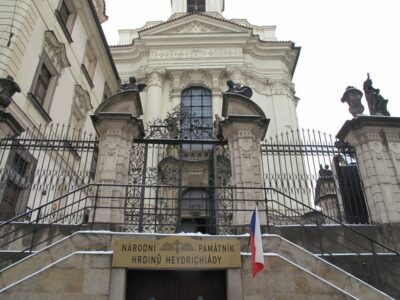
One of the tour highlights is the place connected to the assassination of the Nazi head of the security services. That is a rare feature for a walking tour, because it gives you a direct geographic anchor for a famous plot.
This is also where the tour can become unexpectedly emotional. You are not just hearing about a plan. You are standing in the city where the resistance acted and where the consequences echoed.
Some guides take extra time here, which makes sense. The details you get help you understand the scale of the undertaking, and what “success” and “failure” meant in a heavily policed environment. It is one of those moments where history stops being abstract.
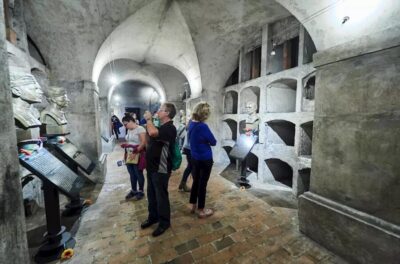
You should also expect references to Operation Anthropoid by name. If you already know the story from books or film, the tour helps you map it onto the streets and buildings, so the plot becomes spatial. If you do not know it yet, you will still come away with a solid timeline and a clear sense of why this assassination mattered beyond the headline.
More communism and Cold War tours:
- Prague: Communism History and Nuclear Bunker Guided Tour
★ 4.7 · 2,417 reviews - Prague Communism History and Nuclear Bunker Tour
★ 5.0 · 1,742 reviews - Communism & Nuclear Bunker Tour + 70s Canteen Lunch (own expense)
★ 5.0 · 1,036 reviews - Prague: Communism and Bunker Tour with 70s Canteen Lunch
★ 4.8 · 250 reviews
Municipal House, Jewish Quarter, Dancing House, and Wenceslas Square stops that matter
This tour is built around recognizable Prague landmarks, but it uses them for a purpose. You are not just taking photos. You are learning why these places mattered to political power, public life, and community identity during the 20th century.
Here’s how those key stops help your understanding:
At the Municipal House, you get a sense of how public spaces carried political symbolism and civic life. It is a natural place to talk about shifting regimes because it sits at a crossroads of culture and public identity.
In the Jewish Quarter area, the focus tends to be on what Nazi occupation and later policies meant for Jewish communities. Even when the street scene looks calm today, your guide connects it to what happened under occupation.
The Dancing House is a useful contrast. It is modern-feeling architecture in a city that has seen constant reinvention. That makes it a strong stop for explaining how Prague moved through time and political pressures, while still keeping an identity as a creative place.
Then there is Wenceslas Square, which is one of Prague’s most important public stages. Even if you only know it as a street to cross or a place to meet friends, the tour reframes it as a political stage, where crowds, messages, and state control all had meaning.
One caution that comes up in the experience: some stops look ordinary today. That can mean fewer “present day” clues, so your guide’s narration does the heavy lifting. If you enjoy listening and connecting, this is a feature, not a bug.
From Communist coup to Normalization, culture under pressure
After the Nazi period, the tour shifts into the Communist era with clear steps: the Communist coup, the letdown of political change, and the sense that freedom was being traded away.
This part matters because you learn that Communist control was not only about government buildings. It reached into culture, everyday life, and what kinds of ideas people could safely express.
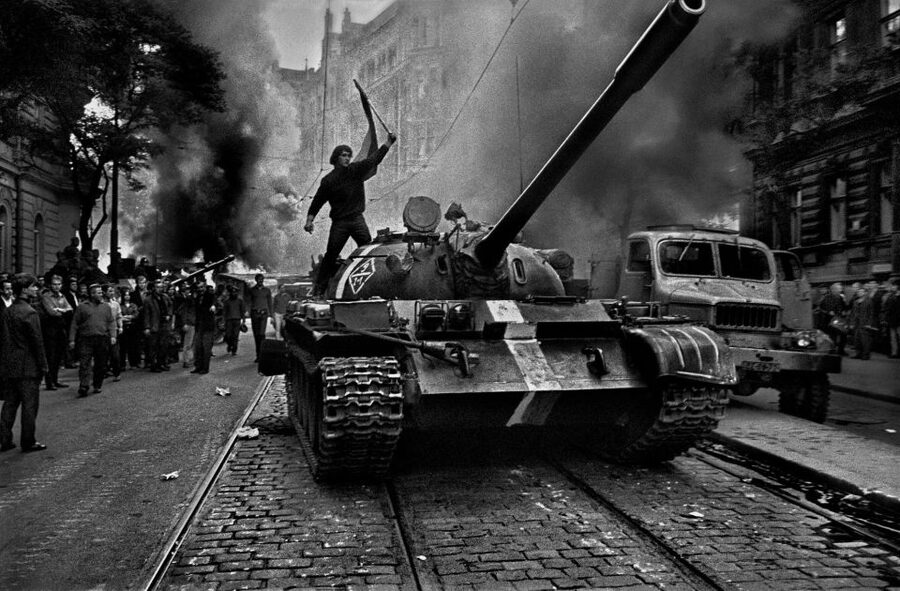
You hear about the Prague Spring, then what followed when outside forces and the Warsaw Pact invasion crushed the hope for reform. That contrast is important. Prague did not lose control gradually. The story makes it feel abrupt and painful.
Then comes Normalization, a word that can sound dry until the tour explains the consequences. You learn how dissident voices were pushed aside and how even artistic circles became targets. References to the persecution of the Plastic People of the Universe show you how culture could be treated like political opposition.
Charta 77 is another name you carry with you after the tour. The point is not just that it existed, but what it represented, and why signing or speaking up could put people in danger.
The Prague Spring to the Velvet Revolution, ending with Václav Havel
The tour’s emotional arc is one of its strengths. You do not just jump from WWII to 1989. You watch the middle years, including the suppression of reform hopes and the long pressure of Normalization.
When the Velvet Revolution arrives, it feels like a payoff because you have already understood what had been restricted and why dissidents mattered. This is where Václav Havel comes in. You learn why he was swept to power, and you get a sense of the wider circle of dissidents who helped make the revolution more than a single-person story.
What I like about this ending is that it stays grounded. It is not treated like a movie finale. It is presented as a political change that grew out of people taking risks, resisting pressure, and pushing for a future that felt different.
By the time you reach the final big public spaces and finish the walking loop, you are not only impressed by dates. You understand the human pattern: fear, resistance, compromise, crackdowns, then sudden openings when momentum turned.
Guides make the difference, and the best ones keep it human
A walking tour lives or dies on the guide, and this one has a strong track record. People have praised guides by name for both storytelling skills and command of detail, including Adam, Tony, Zac, Daren, Sean, and Amanda.
The most consistent praise pattern is that the hours pass quickly because the guide keeps the narrative moving and answers questions without getting tangled. Guides have also used humor in a way that keeps the pace comfortable, even when the subject matter is heavy.
If you want to get the most from the tour, come prepared to listen actively. Bring a notepad if you like, or at least jot down names like Charta 77 and Václav Havel while you are still thinking in that timeline. When the story makes a connection, you want to catch it before it moves on.
A practical trick: ask your guide for suggested films afterward. One strong follow-up example from a past experience was watching Anthropoid and Munich after the tour, which can help you reinforce the timeline with a different format.
Price and value: is $34 per person worth 2.5 hours?
At $34 per person for a 150 minute live walking tour, you are paying for more than movement across a city. You are paying for interpretation, sequencing, and context that you cannot reliably recreate from self-guided sightseeing.
That value is especially good if you care about political history and want the story connected to real places. If your ideal Prague day is mostly monuments and viewpoints, you might find this heavy and information-dense. But if you want to understand how Prague became what it was in the 20th century, this price is fair for the amount of content and the number of major sites covered.
Also consider this: history tours often get repetitive. Here, the format aims to keep a timeline forward from WWII to Communism to 1989. The guide is doing the sorting, so you do not have to.
Who this tour is perfect for, and who should think twice
This tour is a great fit if you:
- like political and social history tied to real streets
- want a guided timeline rather than reading about each period separately
- enjoy landmarks like Municipal House and Wenceslas Square but want them explained beyond architecture
- appreciate dissident stories and cultural pressure under Communist rule, including Charta 77
You might think twice if:
- you prefer light topics only, because the tour includes persecution and retaliation
- you are the type who wants every stop to have a big visible marker, because a few key points rely on the guide’s narration where modern signage is absent
- you are short on time and cannot spare the 2.5 hours of steady walking and listening
Should you book this Prague WWII and Communist History Tour?
If you want Prague with meaning, this is a strong booking. The combination of a tight timeline, specific historical locations, and guides who tell the story with energy makes it feel like one continuous lesson rather than scattered facts.
Book it if you enjoy understanding how power changes a city. Skip it if you want only scenery and no political weight. Either way, you will leave with names, places, and connections you can use when you explore the rest of Prague on your own.
FAQ
Where is the meeting point for the tour?
The meeting point is Týnská 639/4, Staré Město, 110 00 Praha-Praha 1, Czechia.
How long is the Prague World War II and Communist History Tour?
The tour lasts 150 minutes, which is about 2.5 hours.
What language is the tour guide?
The tour includes a live guide in English.
How much does the tour cost?
The price is $34 per person.
Is this experience a walking tour?
Yes. It is a 2.5-hour walking tour.
What major historical periods does the tour cover?
It covers the Nazi occupation, the Czech uprising, the Communist coup and Communist rule, the Prague Spring, the Warsaw Pact invasion, Normalization, and the Velvet Revolution of 1989.
Which areas and landmarks will we visit?
The tour includes important stops related to these events, including the Municipal House, Jewish Quarter, Dancing House, and Wenceslas Square.
Will the tour include the assassination location tied to Nazi security leadership?
Yes. The highlights include where the Nazi head of the security services was assassinated.
Can I cancel for a full refund?
Yes. You can cancel up to 24 hours in advance for a full refund.
Can I reserve without paying right away?
Yes. The offer includes reserve now and pay later, so you can book your spot and pay nothing today.
More History-Led Tours in Prague
- Prague: Oldtown, Medieval Underground & Dungeon History Tour
★ 4.2 · 8,244 reviews - Prague Old Town, Medieval Underground and Dungeon Historical Tour
★ 4.5 · 3,227 reviews - Prague: Historic City Center Bus Tour with Top Sights
★ 4.4 · 2,360 reviews - Prague Historic Pub Tour with Drinks Included
★ 5.0 · 2,084 reviews
Recently reviewed around Prague
- 1 Hour Prague Party Hummer Limousine Ride★ 5.0 · 27 reviews
- 1 hour ride in vintage limousine★ 5.0 · 49 reviews
- The Clinic: Escape room in Fun Arena Prague★ 4.7 · 3 reviews
- Tour of Prague Castle in italian language ticket included★ 4.9 · 25 reviews
- The essentials of Prague★ 5.0 · 3 reviews
- Prague: Lobkowicz Palace Ticket & Audio Guide★ 4.5 · 130 reviews
- The best Trike Bike Prague city tour★ 5.0 · 3 reviews
- Prague Castle: Admission Ticket With Transfer And Audioguide★ 4.5 · 111 reviews
WWII Tours, compared.
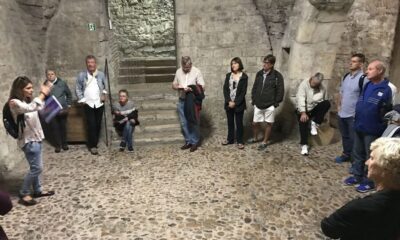
WWII Guided Tour & The Crypt of Operation Anthropoid
Read our review →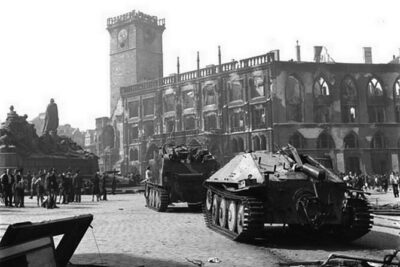
WWII in Prague Tour & The Crypt of Operation Anthropoid
Read our review →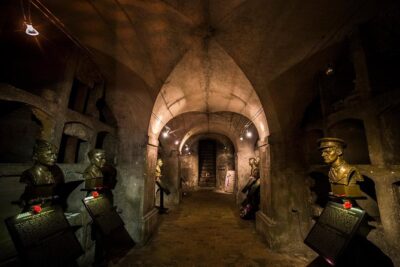
Small-Group World War 2 & Operation Anthropoid Tour in Prague
Read our review →
World War 2 and Operation Anthropoid Walking Tour
Read our review →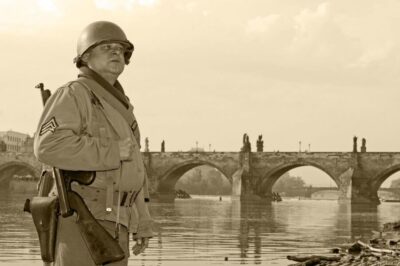
Operation Anthropoid Tour or Terezín Concentration Camp Tour
Read our review →Browse the lists this tour appears in